
Sermon for 2 Lent | Abraham, Peter, and a mustard seed

Then Jesus began to teach his disciples that the Son of Man must undergo great suffering, and be rejected by the elders, the chief priests, and the scribes, and be killed, and after three days rise again. He said all this quite openly. And Peter took him aside and began to rebuke him. But turning and looking at his disciples, he rebuked Peter and said, “Get behind me, Satan! For you are setting your mind not on divine things but on human things.” (Mark 8:31-33)

I don’t know if Paul had this story in mind when he wrote today’s chapter of the letter to the Romans, but his rivalry with Peter might have colored the way he painted the story of Abraham’s faith.

Abraham

Before the portion of Genesis that we read this morning (Genesis 17:1-7, 15-16), Abram:

  • had already followed God to the land he showed him, “along with his wife Sarai, his brother’s son Lot, and all their possessions, and all the persons they had acquired”
  • had already gone down to Egypt because of a famine
  • had already separated from Lot so they wouldn’t get in each other’s way, then come back to rescue him
  • had already been blessed by Melchizedek
  • had already made a covenant with God, and “it was reckoned to him as righteousness”
  • and had already had a son, Ishmael, with Sarai’s servant girl Hagar, who went into exile with the boy

Today, God gives Abraham a new name, and God says Sarah will give birth to a son.

Here’s how Abraham responds, at least according to Paul:

He did not weaken in faith when he considered his own body, which was already as good as dead (for he was about a hundred years old), or when he considered the barrenness of Sarah’s womb. No distrust made him waver concerning the promise of God, but he grew strong in his faith as he gave glory to God, being fully convinced that God was able to do what he had promised. Therefore his faith “was reckoned to him as righteousness.” (Romans 4:19-22)

Peter

Now before Jesus started talking about suffering and dying, Simon

  • had already left his nets and followed him
  • had already seen a man with an unclean spirit healed
  • had already seen his mother-in-law healed, for goodness’ sake
  • had already seen a leper healed
  • had already seen a paralyzed man get up and walk
  • had already seen a tax collector leave the money follow Jesus
  • had already been appointed one of the Twelve and given a new name, Peter
  • had already heard Jesus teach in parables, calm a storm, heal a demoniac, raise a girl to life and heal a suffering woman

And Peter had already gone out on a mission with the rest of the apostles and done all of these impossible things himself!

And then …. Jesus fed 5,000 people, walked on water, cured a deaf man, and fed 4,000 more people.

And then Peter said, “You are the Messiah, the Son of the living God”

Today, Jesus talks about yet another impossible thing: “the Son of Man must undergo great suffering, and be rejected by the elders, the chief priests, and the scribes, and be killed, and after three days rise again.”

Peter starts to argue with Jesus, saying that’s not how it’s going to be! We’re on a roll here – look at everything we’ve accomplished – and it’s just going to keep getting better from now on!

Jesus is sharp in his rebuke, calling Peter on the carpet in front of everyone. “Get behind me, you adversary, you tempter! (That’s what “Satan” means.) You’re focused on human things, not divine.”

I can just imagine Peter’s face burning red with shame.

In his book Falling Upward: A Spirituality for the Two Halves of Life, Richard Rohr writes “Jesus praised faith and trust – even more than love. It takes a foundational trust to fall, or to fail, and not to fall apart.”

How Peter must be humbled by Jesus’ rebuke, though he still has to fall, and fail, a couple more times before he finally falls upward into the identity his name points to: Peter the Rock.

The Mustard Seed

But today I want to turn from rocks, and from the mountain-top where the tempter lives, and focus down on a little mustard seed.

Jesus said, according to Matthew, that “if you have faith the size a mustard seed, you will say to this mountain, ‘Move from here to there,’ and it will move; and nothing will be impossible for you” (Matthew 17:20).

Both Abraham and Peter had trust.

Both of them had seen God acting and had followed God in trust.

Abraham also had just enough faith to be “fully convinced that God was able to do what he had promised.”

That little faith, small as a mustard seed, was “reckoned to him as righteousness.”

However, Peter is most like us – that’s probably why he’s first among the Twelve apostles.

Like Peter, we have already seen Jesus and his Spirit acting in our lives:

  • In two powerful Faith Alive weekends that have revitalized the congregation
  • In vibrant healing ministries that we offer each other every week
  • In so many Bible studies, EfM groups, and reading groups every week
  • Through our mission partners and mission prayer links
  • Through our children and young people
  • In our retired clergy, so generous with their wisdom and time
  • In the 85 people who came out on Wednesday night to gather with our bishop for a Lenten study

But like Peter we have a hard time hearing Jesus when the talk turns serious, when he sets his face toward Jerusalem and the cross.

The transformative dying that Jesus describes, what we now call the Way of the Cross, demands of us not just trust that Jesus is leading us where we need to go, but faith that our falling and failing actually moves us upward toward the share in the kingdom that he promises.

That kingdom, Jesus says, is within us (Luke 17:21).

That kingdom, he says, “is like a mustard seed, which, when sown upon the ground, is the smallest of all the seeds on earth; yet when it is sown it grows up and becomes the greatest of all shrubs, and puts forth large branches, so that the birds of the air can make nests in its shade” (Mark 4:31-32).

Jesus says elsewhere that unless a grain of wheat is planted and dies, it cannot rise into new growth (John 12:24).

We are so like Peter in our falling and our failing — afraid to let go of our success, afraid to risk even a tiny mustard seed of faith.

Today, may we be like Abraham, fully convinced that God, in Christ, can do what he has promised.

“For those who want to save their life,” Jesus says, “will lose it, and those who lose their life for my sake, and for the sake of the gospel, will save it.”

Our little faith is enough. Our little mustard seed of faith, if we are willing to lay it down for Jesus’ sake, and for the sake of the good news, is enough.

And that little mustard seed of faith will “be reckoned to us as righteousness,” just as Paul said it would be.

He also said, “The promise rests on grace … “

And the grace of our Lord Jesus Christ, and the love of God, and the fellowship of the Holy Spirit be with us all, now and for ever. Amen.

Avoid stupid controversies

Can anything good come out of Nazareth? (John 1:46)

Nathanael might have been reading Philip’s status update on Facebook, for all we can tell. His reply sure sounds like the snarky comments we post when we read something we don’t agree with.

The dismissive behavior we display on Facebook and Twitter is really nothing new; in the second-century letter to Titus (c. 110 AD) we hear the writer’s strong warning to Christians against the kind of behavior we engage in so often, a verse worth memorizing because it stands the test of time.

Avoid stupid controversies … (Titus 3:9)

But why? The writer expands on his idea. “Avoid stupid controversies, genealogies, dissensions, and quarrels about the law, for they are unprofitable and worthless.”

Worthless

Arguing about stupid Episcopal Church controversies, trying to prove a point by citing the canons, stirring up partisan passion about how misguided the leaders at 815 are, debating who’s right and who’s wrong — none of these things communicate the inspiring truth about what God is doing in the world.

And it’s not just our internal church controversies that are stupid.

You don’t have to have an opinion about every story, every commentary on the evening news. You don’t even have to watch the news.

Your compelling evidence, exhaustively cited, won’t change the mind of that guy on Twitter. Besides which, no one wants to read your 57 nested tweets on the same subject (unless it’s #AddAWordRuinAMovie or #LentMadness).

Your dismissive comments on Facebook about Obama or Bush, gun control or transgender rights, Palestine or Israel, Guy Fieri or Anthony Bourdain — and your obsessive sharing of political posts (left or right) do not change anyone’s mind.

Usually, they just make you look like a jerk.

Unprofitable

Not only is it a waste of time to engage in stupid controversies, it doesn’t actually help.

How does your arguing reflect the God we Christians worship, who hates nothing he has made and forgives the sins of all who are penitent (BCP 264)?

How do your opinions demonstrate your “new and contrite heart” and the humility of one who remembers “that you are dust, and to dust you shall return”?

How does your evidence against someone point to the God of all mercy and the “perfect remission and forgiveness” he offers for everyone?

How do your dismissive comments acknowledge your own “wretchedness”?

Pro tip: They don’t. Srsly.

Eager, not anxious

On Saturday mornings, we pray “that we, putting away all earthly anxieties, may be duly prepared for the service of [God’s] sanctuary” (BCP 99).

We are anxious about so many things, and the news cycle and social media feed that anxiety. We feel like we have to be up-to-date, have to weigh in, have to have an opinion on everything.

What if we were instead eager for one thing?

What if we were eager to rest in God’s grace, so freely given to us, so freely shared with everyone?

What if we were eager to share that grace ourselves?

What if instead of arguing, we tried listening? Instead of offering opinions, we shared experiences? Instead of listing the evidence against, we tried hearing the evidence for? Instead of dismissing, we tried admitting?

What if we admitted other people into the rest we share? What if we admitted them into the sanctuary?

What if, instead of Nathanael’s snarky “Can anything good come from there?” we offered our humble invitation: “Come and see”?

Bearing and being changed

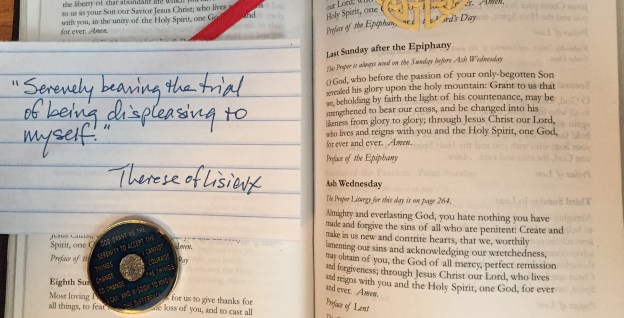
In one of the talks in the online course related to his book Breathing Under Water: Spirituality and the Twelve Steps, Richard Rohr describes the process of recovery in the words of Thérèse of Lisieux:

Serenely bearing the trial of being displeasing to myself.

And listen to Joan Chittister on the centenary of Thomas Merton’s birth:

What Merton calls us to do as part of this slow but fulfilling process [of spiritual development] depends on the raw and ruthless debunking of the self to the self that is the ground of humility.

In these last days of Epiphany, we approach the season of Lent, a season that the Church invites us to observe “by special acts of discipline and self-denial,” and we pray:

That we, beholding by faith the light of [Jesus’] countenance, may be strengthened to bear our cross, and be changed into his likeness from glory to glory (BCP 217).

Being displeasing to ourselves is not the point; being raw and ruthless in our debunking of ourselves is not the point.

Being changed into Jesus’ likeness is. Being changed from glory to glory is.

Lent is the season where we deliberately turn our gaze toward the crucified and risen Christ of Easter, the one to whom John the Baptist points us in this morning’s Gospel reading (John 1:19-28). But in Lent we are also made more keenly aware of “every weight and the sin that clings so closely” (Hebrews 12:1).

We commit ourselves once more in Lent to the helpful practices of the faith, knowing with the ancient Israelites that “if we diligently observe this entire commandment before the Lord our God, we will be in the right (Deut. 6:25). But on Ash Wednesday and throughout Lent we are also reminded of “our self-indulgent appetites and ways” (BCP 268).

Thérèse of Lisieux offers powerful wisdom in this situation, for we find our serenity in bearing our trials and continually returning to God’s pleasure in us. “Grant me the serenity to accept the things I cannot change,” we pray.

Merton’s words ring true, too, for desiring abundant life in God, we can be ruthless in ridding ourselves of everything that holds us back. “Grant me the courage to change the things I can,” we pray.

And finally, it is only with our gaze on “God the only Son, who is close to the Father’s heart” (John 1:18) that we have a prayer of receiving “the wisdom to know the difference.”

God, grant me the serenity to accept the things I cannot change;
the courage to change the things I can;
and the wisdom to know the difference.

Day by day I will fulfill my vows

So will I always sing the praise of your Name,
and day by day I will fulfill my vows. (Psalm 61:8)

Nineteen years ago today, I was ordained as a deacon in the Episcopal Church. About four years before that, however, I really became serious about reading the Bible.

Like most cradle Episcopalians, I grew up in the church hearing Scripture read Sunday by Sunday. I was in Sunday School every week. No choice, really, since my father was the parish priest.

I was six when I started serving as an acolyte, and I was 12 when I first read a lesson in church — the story of Creation (Genesis 1:1 — 2:2) at the Great Vigil of Easter.

I knew from an early age that I would eventually be ordained to serve the Church.

After I married my Lovely Wife in 1989, we attended her Seventh-Day Adventist church on Saturdays with her mother and sang in the choir of my Episcopal church on Sundays. Among the Seventh-Day Adventists I was confronted with the truth that though as an Episcopalian I was familiar with the Bible, I really did not know my way around it at all. I had heard it all my life, but had never really read it.

By 1992 I was in the discernment process that leads to ordination, about a year from beginning Deacons’ School, and that lack of knowledge of the Bible troubled me.

So I resolved to begin reading the Bible in a more disciplined way. The first thing I did to jump-start the project was to read the whole Bible in a year, and two books helped me do that.

The first was Edward P. Blair’s Illustrated Bible Handbook, which includes a plan for reading the books of the Old and New Testament in an order that makes sense of the Scriptural story rather than just beginning “in the beginning.” Though Blair’s book is long out of print, I have found inexpensive copies on Amazon over the years (since I keep loaning mine out and having to replace it!).

The second was the Revised English Bible, the translation recommended by the Book-of-the-Month Club for its readability. The fresh English translation (at least it was fresh more than 20 years ago) makes reading the Bible feel like reading a novel — the stories feel less stilted and reading flows more naturally.

However, the most important Bible reading resource I ever found is The Prayer Book Office by Howard Galley. Sadly, this introduction to the Episcopal Church’s Morning and Evening Prayer is also out of print. Copies are hard to find and precious.

The primary way Anglicans and Episcopalians read Scripture is in the context of our worship. We organize Scripture readings not only for our Sunday services of the Holy Eucharist, but also for the prayer book services of daily Morning and Evening Prayer. The tables of readings that we organize for Sundays and for weekdays are called lectionaries. In the Book of Common Prayer you will find the Sunday lectionary starting on page 888 and the Daily Office lectionary on page 934.

After I had read the Bible through in a year, it was the Daily Office that proved to be the mainspring of my spiritual practice.

In the Daily Office lectionary, we read through the bulk of the Old Testament once every two years, the New Testament every year, and the Psalms every seven weeks.

That means in the 22 years or so since I began praying Morning and Evening Prayer regularly, I’ve read through the Old Testament at least 11 times, the New Testament 22 times, and the whole Psalter more than 165 times.

And that doesn’t count all the Bible reading I did for three years in Deacons’ School, or every Sunday since then in church, or for four years now as an Education for Ministry (EfM) mentor rereading the Old and New Testaments with my students each year.

This is honestly not about boasting (as St. Paul might say), but about beginning.

The rector of the parish where I now serve as deacon, St. Thomas Episcopal Church in Menasha, Wisconsin, reminded us last Sunday that you can read the Bible in a year anytime. If you missed starting on New Year’s Day, you can start now, and when February 2 of next year rolls around, it will have been a year!

I simply urge you to read the Bible as much as you can. Perhaps you’ll follow a one-year plan like the Bible Challenge, perhaps your favorite translation is the New International Version or The Message, perhaps you’re not Episcopalian but your denomination also has a lectionary you can follow.

Whatever else may be going on in your life, begin.

Start reading the Bible. Day by day, let the Scriptures work in you. Week by week, make Bible reading part of the rhythm of your life. Year by year, let the Scriptures teach you what it means for you to sing the praise of God’s Name and to fulfill your vows.

+ + + + +

Blessed Lord, who caused all holy Scriptures to be written for our learning: Grant us so to hear them, read, mark, learn, and inwardly digest them, that we may embrace and ever hold fast the blessed hope of everlasting life, which you have given us in our Savior Jesus Christ; who lives and reigns with you and the Holy Spirit, one God, for ever and ever. Amen.

On them he has set the world

He raises up the poor from the dust;
he lifts up the needy from the ash heap,
to make them sit with princes
and inherit a seat of honor.
The pillars of the earth are the Lord’s,
and on them he has set the world. (1 Samuel 2:8)

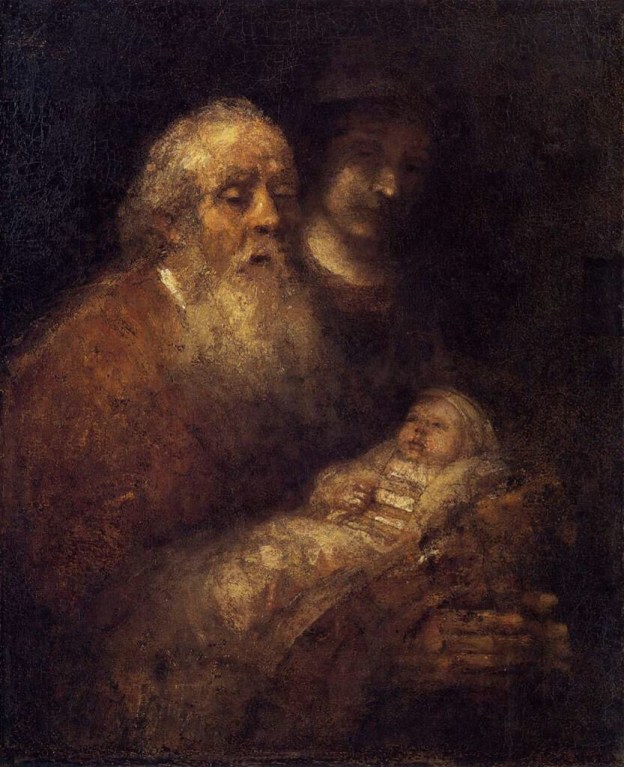
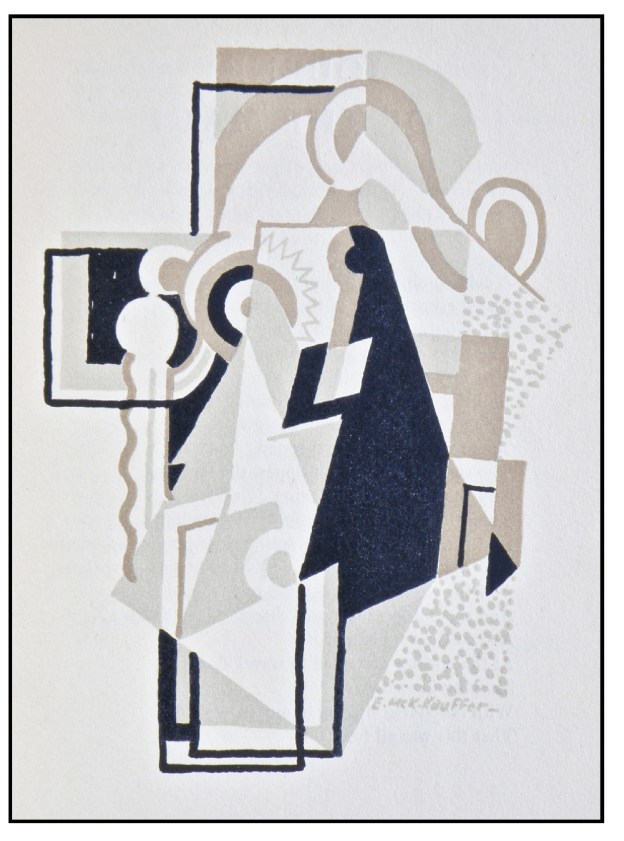
In Rembrandt’s depiction of the Presentation, the aged Simeon is worshiping God in the Temple as the child Jesus is placed into his praying hands.

Simeon is one of the “pillars of the earth,” a devout person who can say with the Psalmist that:

The Lord grants his loving-kindness in the daytime;
in the night season his song is with me,
a prayer to the God of my life. (Psalm 42:10)

Into his outstretched arms, onto this pillar of the earth, Mary and Joseph set the world.

Just as Simeon is no mere old man, the child Jesus is no mere boy. The Word made flesh, without whom nothing was made that was made, rests in the praying arms of a strong tower, if we but had the eyes to see it.

What child do you know who is more than just a child, who represents the hopes and fears of a family?

What older person have you met whose strength, whose faithful wisdom, is hidden from view?

The Psalmist asks the question we might ask in our blindness, and then answers the way Simeon, a pillar of the earth, might answer.

Why are you so full of heaviness, O my soul,
and why are you so disquieted within me?
Put your trust in God;
for I will yet give thanks to him,
who is the help of my countenance, and my God. (Psalm 43:5-6)

There are no strangers

In Louisville, at the corner of Fourth and Walnut, in the center of the shopping district, I was suddenly overwhelmed with the realization that I loved all those people, that they were mine and I theirs, that we could not be alien to one another even though we were total strangers. It was like waking from a dream of separateness, of spurious self-isolation in a special world, the world of renunciation and supposed holiness.

I have the immense joy of being man, a member of a race in which God Himself became incarnate. As if the sorrows and stupidities of the human condition could overwhelm me, now that I realize what we all are. And if only everybody could realize this! But it cannot be explained. There is no way of telling people that they are all walking around shining like the sun.

This changes nothing in the sense and value of my solitude, for it is in fact the function of solitude to make one realize such things with a clarity that would be impossible to anyone completely immersed in the other cares, the other illusions, and all the automatisms of a tightly collective existence. My solitude, however, is not my own, for I see now how much it belongs to them — and that I have a responsibility for it in their regard, not just in my own. It is because I am one with them that I owe it to them to be alone, and when I am alone, they are not “they” but my own self. There are no strangers!

From Conjectures of a Guilty Bystander by Thomas Merton, excerpted here.

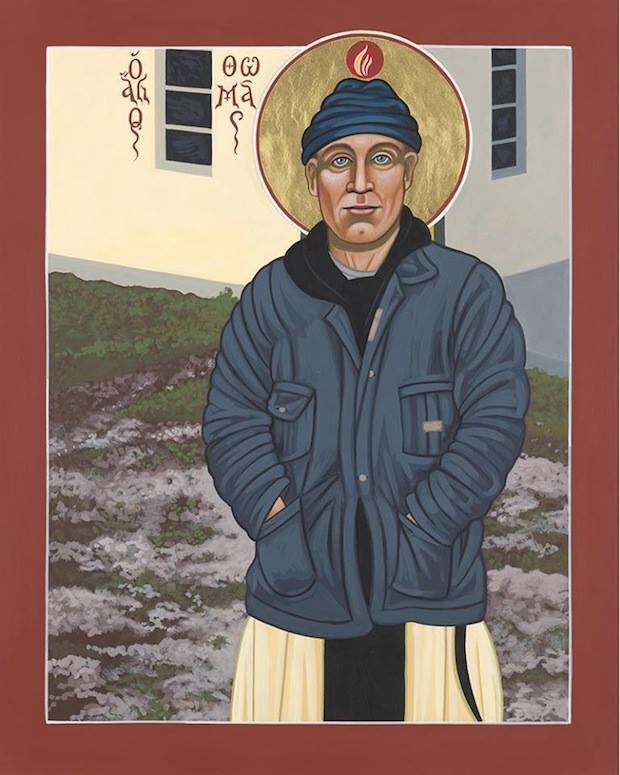
Thomas Merton icon by William Hart McNichols, from an article by Jane Christmas in the Anglican Journal.

Traveling light

[Jesus] called the twelve and began to send them out two by two, and gave them authority over the unclean spirits. He ordered them to take nothing for their journey except a staff; no bread, no bag, no money in their belts; but to wear sandals and not to put on two tunics. He said to them, “Wherever you enter a house, stay there until you leave the place. If any place will not welcome you and they refuse to hear you, as you leave, shake off the dust that is on your feet as a testimony against them.” So they went out and proclaimed that all should repent. They cast out many demons, and anointed with oil many who were sick and cured them. (Mark 6:7-13)

I don’t know if it’s exactly what Jesus had in mind, but I do try to travel light as I go about my business.

I’ve written elsewhere about viewing my hotel room as a sort of monastic cell. For me, the point is that I am at home wherever I happen to be. The town may be different, but hotel rooms are pretty much the same everywhere, and I pack my suitcase the same way every week.

Peter Matthiessen, author and world traveler, even turned and bowed to his hotel room as he left, as a mark of his gratitude for the hospitality he had enjoyed. He explained his practice in an interview with Jonathan White:

My first Zen teacher, Soen-roshi, always made a little bow of gratitude to the world around him, and I learned that from him. It’s a wonderful habit. Even if I’m leaving some neutral or lifeless place, like a motel room, it feels right to thank the room for its hospitality. In Zen practice, one bows to the buddha principle, the imminence of awakening, within oneself. I love that idea. A bow is a wonderful way to appreciate this moment, pay respectful attention to the world around you.

Now understand: Our voluntary simplicity as we go about the Lord’s business is not the same as the poverty too many people experience in their daily lives. Perhaps, however, our simplicity can make room for us to see what’s happening around us. Perhaps traveling light can give us the freedom to respond quickly when we recognize a need.

That same spirit of voluntary simplicity (see Acts 2:43-47) may have been working among those same disciples some years later as they considered what to do about Paul, their former persecutor, who now said he had a mission to preach the Gospel to the Gentiles. Perhaps their simplicity gave them the freedom to recognize that God was acting in a new way. Perhaps their traveling light gave them the freedom to respond to the Gentiles’ need for the Gospel.

When James and Cephas and John, who were acknowledged pillars, recognized the grace that had been given to me, they gave to Barnabas and me the right hand of fellowship, agreeing that we should go to the Gentiles and they to the circumcised. They asked only one thing, that we remember the poor, which was actually what I was eager to do. (Galatians 2:9-10)

Our voluntary simplicity, our freedom to recognize God acting in new ways, and our remembering the poor are ways in which we follow Jesus’ instructions to his first disciples.

God grant that our repentance and our willingness to share our lives with others will likewise bear the fruit of peace and fellowship.

Collect for the Third Sunday after the Epiphany

Give us grace, O Lord, to answer readily the call of our Savior Jesus Christ and proclaim to all people the Good News of his salvation, that we and the whole world may perceive the glory of his marvelous works; who lives and reigns with you and the Holy Spirit, one God, for ever and ever. Amen.

Singing, fasting, praying, and working

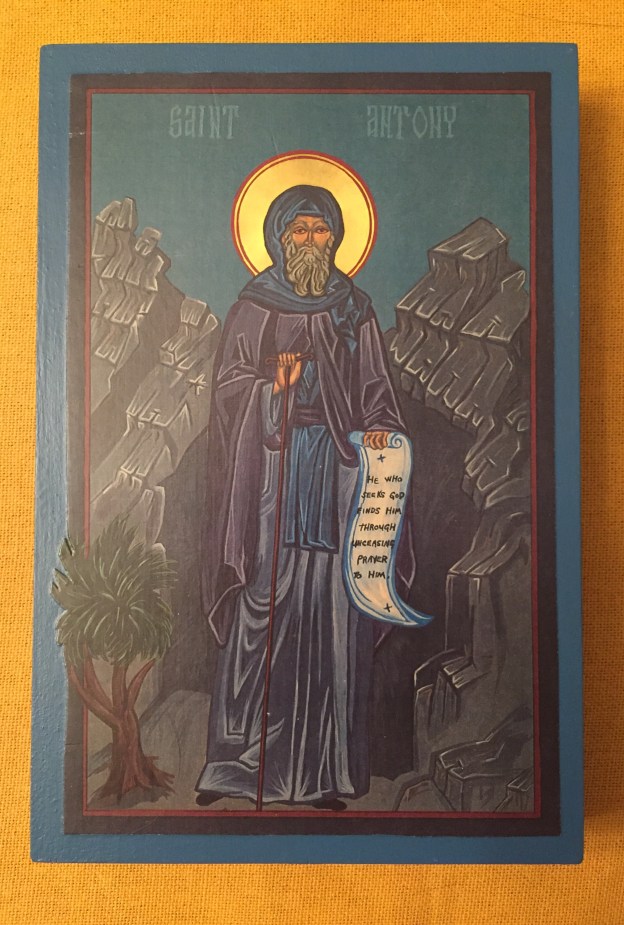
Athanasius, bishop of Alexandria, wrote this about Antony, who lived as a monk in the Egyptian desert and created a rule for monks in the third century:

Antony was like a physician given by God to Egypt. For who met him grieving and did not go away rejoicing? Who came full of anger and was not turned to kindness? … What monk who had grown slack was not strengthened by coming to him? Who came troubled by doubts and failed to gain peace of mind?

How can you give joy to others? Turn their anger to kindness? Strengthen those who are growing slack? Give people around you peace of mind?

What habits of singing, fasting, praying, and working would help you to be that kind of person? What people would help you to live that kind of life?

O God, by your Holy Spirit you enabled your servant Antony to withstand the temptations of the world, the flesh, and the devil: Give us grace, with pure hearts, to follow you, the only God; through Jesus Christ our Lord, who lives and reigns with you and the Holy Spirit, one God, for ever and ever.

The password that opens the heavens

Yesterday, several members of our deanery went to the Chazen Museum of Art on the campus of the University of Wisconsin to see an exhibit of The Saint John’s Bible.

The Saint John’s Bible is the first handwritten and hand-illuminated Bible commissioned by a Benedictine abbey since the invention of the printing press. It represents 15 years of work by a team of calligraphers and artists under Donald Jackson in Wales and a Committee on Illumination and Text at St. John’s Abbey in Collegeville, Minnesota.

The exhibit at the Chazen Museum includes actual pages from The Saint John’s Bible and a display of the calligraphers’ tools, including hand-cut quills and tools for applying gold leaf. There is a video documentary about the process of creating the Bible, and an example of a full-size “Heritage Edition” bound in oak boards and rich leather.

+ + + + +

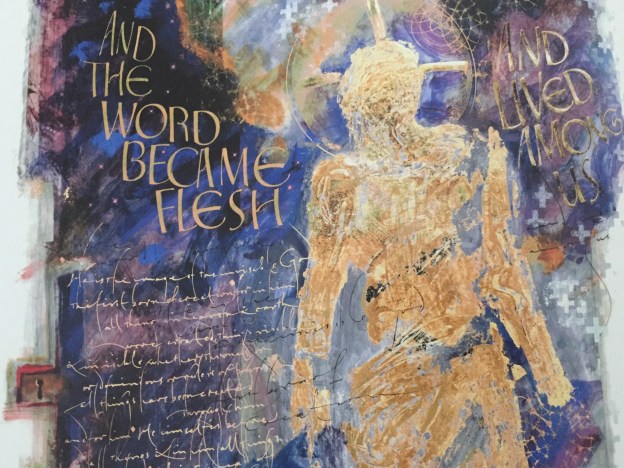
One of the most arresting pages in The Saint John’s Bible is the frontispiece to the Gospel of John. I own the reproduction volume of the Gospels and Acts, so the featured image for this post is a closeup of that page.

Donald Jackson uses gold leaf to signify God, and the figure of the Word made flesh shines brightly from the cosmic background (based on images from the Hubble telescope) behind him. The art underscores the way John connects the coming of Christ to the account of creation in Genesis.

Verses from Paul’s hymn in the letter to the Colossians appear to the left of the figure:

He is the image of the invisible God,
the firstborn of all creation;
for in him all things in heaven and on earth were created,
things visible and invisible,
whether thrones or dominions or rulers or powers —
all things have been created through him and for him (Col. 1:15-16)

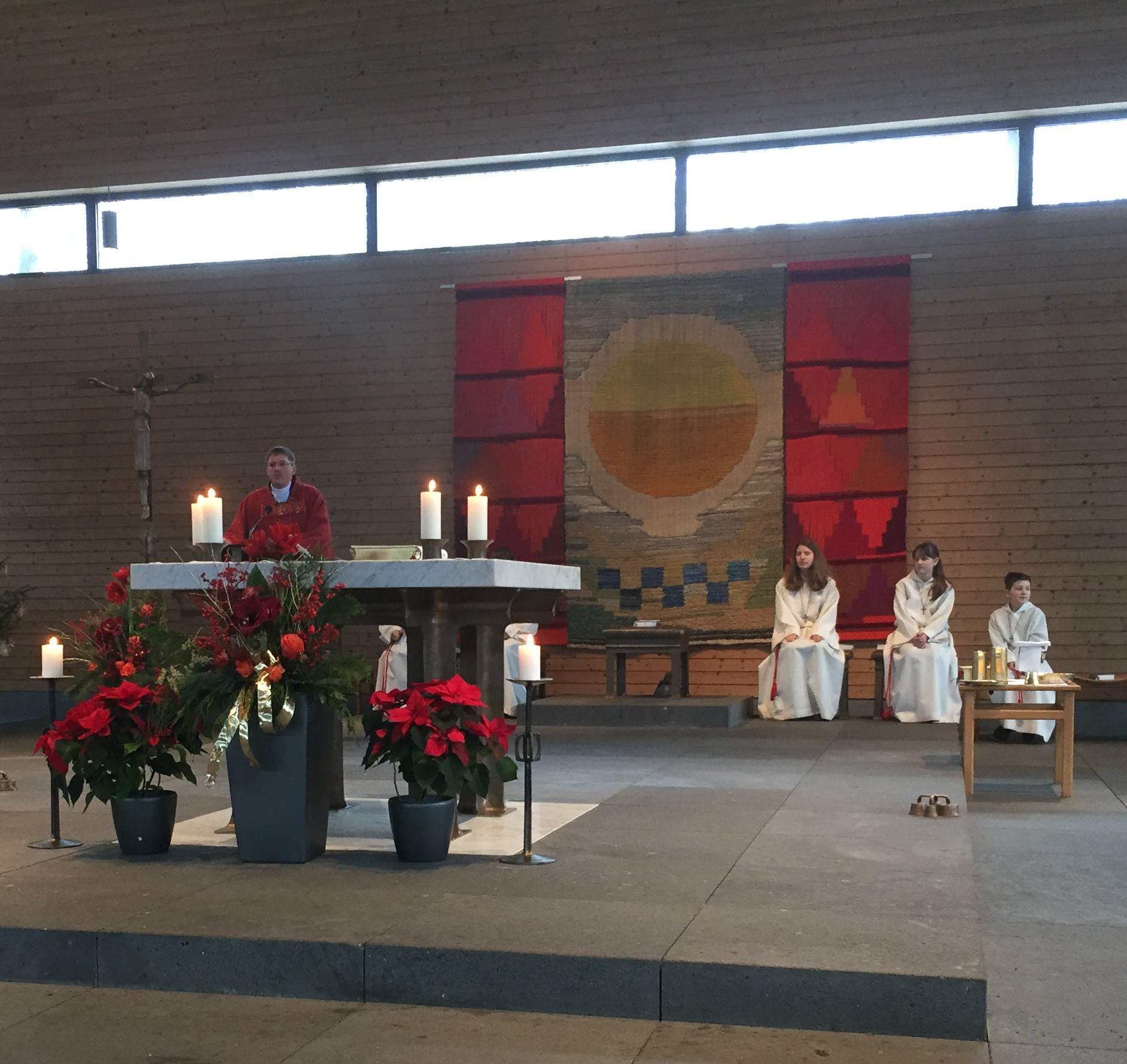
The keyhole along the left edge of the image reminds me of the sermon I heard in Munich on December 26, St. Stephen’s Day. We attended the Eucharist with my wife’s Tante Barbara at her neighborhood church, Maria Trost.

Sermon at Maria Trost Kirche, Munich

Sermon at Maria Trost Kirche, Munich

The priest spoke of this opening passage of John’s gospel, describing Jesus as not just the “word” of God, but as the “password” whose coming opens the heavens to human beings.

Stephen, he went on to say, was one of the first who knew the password, who exclaimed as he was being stoned, “Look, I see the heavens opened and the Son of Man standing at the right hand of God!” (Acts 7:56).

+ + + + +

In the introduction to his companion book Word and Image: The Hermeneutics of The Saint John’s Bible, Michael Patella OSB, chair of the Committee on Illumination and Text, writes:

Readers should not be surprised if they find that their engagement with The Saint John’s Bible opens their imaginations, hearts, souls, and intellects to new ways of conceiving God. In addition, they may also find themselves entering a deeper relationship with God (xiv).

The Saint John’s Bible is a beautiful, sacramental expression — in ink and gold leaf, vellum and leather, word and image — of the “immeasurable riches of [God’s] grace in kindness toward us in Christ Jesus,” as today’s Epistle reading suggests.

May meditating on its words and images, and on the Word made flesh whom it reveals, open the heavens to you, too.

The Journey of the Magi

‘A cold coming we had of it,
Just the worst time of the year
For a journey, and such a long journey:
The ways deep and the weather sharp,
The very dead of winter.’
And the camels galled, sorefooted, refractory,
Lying down in the melting snow.
There were times we regretted
The summer palaces on slopes, the terraces,
And the silken girls bringing sherbet.
Then the camel men cursing and grumbling
and running away, and wanting their liquor and women,
And the night-fires going out, and the lack of shelters,
And the cities hostile and the towns unfriendly
And the villages dirty and charging high prices:
A hard time we had of it.
At the end we preferred to travel all night,
Sleeping in snatches,
With the voices singing in our ears, saying
That this was all folly.

Then at dawn we came down to a temperate valley,
Wet, below the snow line, smelling of vegetation;
With a running stream and a water-mill beating the darkness,
And three trees on the low sky,
And an old white horse galloped away in the meadow.
Then we came to a tavern with vine-leaves over the lintel,
Six hands at an open door dicing for pieces of silver,
And feet kicking the empty wine-skins.
But there was no information, and so we continued
And arriving at evening, not a moment too soon
Finding the place; it was (you might say) satisfactory.

All this was a long time ago, I remember,
And I would do it again, but set down
This set down
This: were we led all that way for
Birth or Death? There was a Birth, certainly
We had evidence and no doubt. I had seen birth and death,
But had thought they were different; this Birth was
Hard and bitter agony for us, like Death, our death.
We returned to our places, these Kingdoms,
But no longer at ease here, in the old dispensation,
With an alien people clutching their gods.
I should be glad of another death.

-T.S. Eliot (1927)