
Category Archives: Daily Office

Piercing darts of love

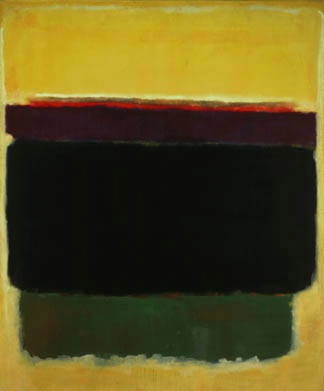
rothko blue-and-gray

But as for me, O Lord, I cry to you for help;
in the morning my prayer comes before you.

Lord, why have you rejected me?
why have you hidden your face from me? (Psalm 88:14-15)

In our English spiritual tradition one of the landmarks is a book from the late 1300s called The Cloud of Unknowing.

The anonymous author, most likely a country parson from the East Midlands, is counseling a younger monk with practical, pastoral advice about mystical prayer, especially dealing with the difficulty that arises when it seems that God has withdrawn — what John of the Cross some 300 years later called “the dark night of the soul.”

The author suggests that we should imagine, as it were, a “cloud of unknowing” hiding God from our senses. Our prayers should be as “piercing darts of love” aimed toward God through the cloud.

The hope of this pastoral approach to prayer is that eventually we will come to love God as he is, not for the consolations he provides. God’s seeming withdrawal, and our time spent under the cloud, can help us to mature in our love for God.

+ + + + +

Our Old Testament reading this morning is a poignant story of another wise priest, Eli, counseling the young man Samuel. Though “the word of the Lord was rare in those days” (1 Sam. 3:1), Eli helped Samuel to recognize that God had something to say to him. When Samuel heard the judgment of God against Eli’s sons, he “lay there until morning,” as if under a cloud.

Eli insists that Samuel tell him everything; he knows God is judging him and his sons, but he says “It is the Lord; let him do what seems good to him” (1 Sam. 3:18). Though Eli will receive no consolation, he continues to love the Lord.

And Samuel? I can’t help but see the “piercing darts of love” foreshadowed when the story tells us that “as Samuel grew up, the Lord let none of his words fall to the ground” (1 Sam. 3:19).
I’ve got a wild story to tell you

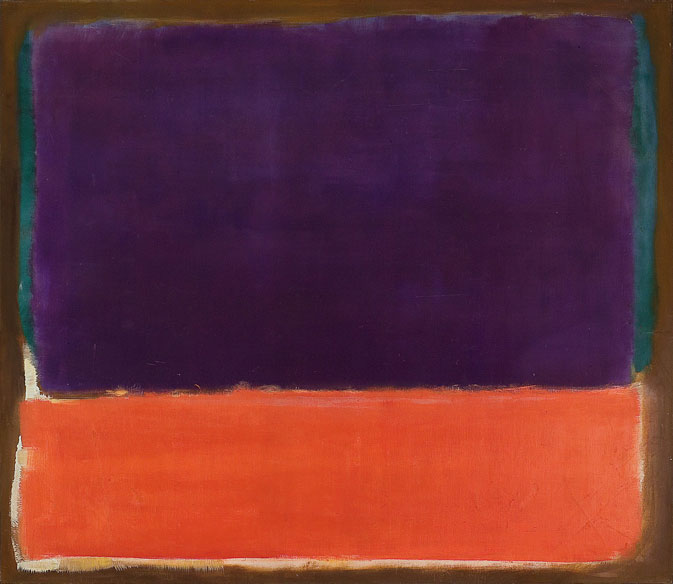
rothko_no14

All were amazed and perplexed, saying to one another, “What does this mean?” But others sneered and said, “They are filled with new wine.” But Peter, standing with the eleven, raised his voice and addressed them, “Men of Judea and all who live in Jerusalem, let this be known to you, and listen to what I say. Indeed, these are not drunk, as you suppose, for it is only nine o’clock in the morning. No, this is what was spoken through the prophet Joel: ‘In the last days it will be, God declares, that I will pour out my Spirit upon all flesh, and your sons and your daughters shall prophesy, and your young men shall see visions, and your old men shall dream dreams. (Acts 2:1-21)

I read recently that one reason the purple stone in a bishop’s ring is an amethyst is that the Greek word “amethystos” means “not drunk” — an interesting custom apparently derived from this morning’s reading. Don’t know if it’s true, but it sounds good.

“We are not drunk,” says Peter, “but have I got a wild story to tell you!”

As my own diocese continues its search for a new bishop, I wonder if we’ll consider our need for someone to tell the wild story — of the Spirit blowing in our midst and turning everything upside down — as much as we’ll consider our need for someone to maintain our little corner of the institution born on that Pentecost day so long ago.

Can I get a witness?

rothkow

Then Elkanah went home to Ramah, while the boy remained to minister to the LORD, in the presence of the priest Eli. (1 Sam. 2:11)

I wonder whether the boy Samuel “ministered to the Lord” by singing songs like the canticle we read this morning right after hearing the beginning of his story:

A Song of Praise Benedictus es, Domine
Song of the Three Young Men, 29-34

Glory to you, Lord God of our fathers; *
you are worthy of praise; glory to you.
Glory to you for the radiance of your holy Name; *
we will praise you and highly exalt you for ever.

Glory to you in the splendor of your temple; *
on the throne of your majesty, glory to you.
Glory to you, seated between the Cherubim; *
we will praise you and highly exalt you for ever.

Glory to you, beholding the depths; *
in the high vault of heaven, glory to you.
Glory to you, Father, Son, and Holy Spirit; *
we will praise you and highly exalt you for ever. (BCP 90)

We also read in the Acts of the Apostles this morning about the followers of Jesus in the days after his resurrection and ascension. “All these were constantly devoting themselves to prayer,” we read (Acts 1:14). Their prayer, like ours, probably consisted largely of the Psalms. We minister to the Lord, in part, by singing his praise and joining our voices with all those who have gone before.

One of the first pieces of business the apostles have to attend to is selecting someone to replace Judas, to bring the number of apostles back up to 12. They want someone who has accompanied them during Jesus’ ministry — “one of these must become a witness with us to his resurrection” (Acts 1:21-22).

I wonder what song Matthias sang after he was chosen to be a witness? What song do you sing to honor God and witness to his love?

Your going out and your coming in

Mark Rothko no-10

The LORD shall preserve you from all evil; *
it is he who shall keep you safe. 
The LORD shall watch over your going out and your coming in, *
from this time forth for evermore. (Psalm 121:7-8)

Noonday Prayer, like Compline, is meant to be short and relatively the same every day.

Where Compline is a brief pause before going to bed, Noonday Prayer is a brief pause in the middle of a day full of “going out and coming in.”

Many years ago, I worked as editor of The Covenant, the newspaper of the Episcopal Diocese of Milwaukee. The diocesan offices are in Nicholson House, the former bishops’ residence. A lovely feature of the house is a small chapel off the landing of the main staircase; at the time I worked there it had just been restored.

The staff of the diocese got into the habit of stopping for Noonday Prayer in that little chapel each day; it took only about 15 minutes, but it centered the day and reminded us that the Lord was watching over our activity.

We used the service from the prayer book to create a simple handout and inserted seasonal readings and collects to give a little bit more variety over the course of the year.

Perhaps you might also benefit from a pause in the middle of the day. Are there others where you work or at home who might join you?

The Grace

Mark_Rothko_-_White_Center_(Yellow,_Pink_and_Lavender_on_Rose)_(1950)


Finally, brothers and sisters, farewell. Put things in order, listen to my appeal, agree with one another, live in peace; and the God of love and peace will be with you. Greet one another with a holy kiss. All the saints greet you. The grace of the Lord Jesus Christ, the love of God, and the communion of the Holy Spirit be with all of you. (2 Cor. 13:11-13)

+ + + + +

At the end of both Morning and Evening Prayer, we have a choice of several concluding sentences. In the economy of the Prayer Book, the first option printed is usually preferred (as when the rubrics say “stand or kneel” they are suggesting we “stand”).

So the most familiar closing words of the Daily Office are these: “The grace of our Lord Jesus Christ, and the love of God, and the fellowship of the Holy Spirit be with us all evermore.”

Sound familiar?

What I find so intriguing is that we end our daily worship not with a pious proclamation of our goodness, but with the same appeal for unity that Paul prayed for the fractious church in Corinth. It’s as if we should sigh like he probably did: “Oh, for God’s sake, be gracious like Jesus, and share the love of God, and get along in the Spirit, wouldya?”

+ + + + +

Bonus trivia points: Who else noticed that in the NRSV Bible the last verse of 2 Corinthians is 13:13, but in the Book of Common Prayer, the closing sentence is noted as “2 Corinthians 13:14” (BCP 102)? Turns out the KJV Bible numbers the last verse as 14. I’ll have to dig a little and see if I can find out why the NRSV only goes to 13.

And before you send your cards and letters, folks, remember that verse numbers are artificial constructs not present in the biblical manuscripts. But still, it’s a little puzzle.


They gave me vinegar to drink

IMG_0698


They gave me gall to eat;
and when I was thirsty they gave me vinegar to drink. (Ps. 69:23)

Sometimes I wonder at the Church’s obsession for getting the society around us to do what we want. We spend a lot of energy trying to get laws passed that guarantee our rights, that grant us certain privileges, that impose our ideals on others.

We don’t get that impulse from Jesus, whose words and actions led to his arrest, scourging, and crucifixion.

We don’t get it from Paul (much), since he positively glories in the hardships he has endured for the sake of the Gospel. “I will most gladly spend and be spent for you,” he writes in his second letter to the church in Corinth (2 Cor. 12:15).

In Canticle 10, appointed for this morning, we sing about God’s word, whom we would name Jesus:

So is my word which goes forth from my mouth;
it will not return to me empty.
But it will accomplish that which I have purposed,
and prosper in that for which I sent it. (BCP 87)

God’s purposes are accomplished precisely in the gall and vinegar, precisely in Jesus’ faithfulness to the way of the cross.

Why do we think it will be different for us? Why do we think in terms of legislating behavior instead of demonstrating faithfulness?

A Collect for Fridays

Almighty God, whose most dear Son went not up to joy but first he suffered pain, and entered not into glory before he was crucified: Mercifully grant that we, walking in the way of the cross, may find it none other than the way of life and peace; through Jesus Christ our Lord. Amen. (BCP 99)


Bound by the vow I made

Rothko grey blue

I am bound by the vow I made to you, O God;
I will present to you thank offerings.

For you have rescued my soul from death and my feet from stumbling,
that I may walk before God in the light of the living. (Ps. 56:11-12)

The discussion in my Education for Ministry (EfM) group yesterday centered on two topics — rehearsing the stories of our faith and shaping our lives with practices that distinguish us from the society around us.

Those who are reading in Year One of EfM had read Second Isaiah (chapters 40-55) and the books of Ezra and Nehemiah, which recount and reflect on the return of the Jews from the exile in Babylon and the rebuilding of the Temple. While in exile, the Jews focused on the Torah, circumcision, and the Sabbath as practices that distinguished them from the society around them.

Those in Year Two had read the Letter to the Hebrews, which is an extended theological argument, as much a sermon as anything else, recounting Christ’s divinity and his humanity. The EfM commentary notes:

The recipients [of the letter] needed it to help them understand, but even more to help them endure, to remain steadfast in the hope that God had given them through Christ. This letter reminds us that, although we are not likely to suffer for our faith, we do need to remain faithful in a world that seems to be increasingly uninterested in or even hostile to the Christian faith.

How are you strengthened by hearing the stories of your faith? What practices help you claim your identity as a Christian distinct from the society around you?

First fruits and offerings

20130607-062733.jpg

The Lord brought us out of Egypt with a mighty hand and an outstretched arm, with a terrifying display of power, and with signs and wonders; and he brought us into this place and gave us this land, a land flowing with milk and honey. So now I bring the first of the fruit of the ground that you, O Lord, have given me. (Deut. 26:8-10)

Tithes and offerings are two different things.

The tithe, or “tenth,” is the giving of one’s first fruits back to God in gratitude. It is an objective giving — that is to say, tithing is meant to be done deliberately and first. Some people make their tithe the first check they write each month. Others set up an automatic payment. In either case, tithing is a deliberate, routine practice.

Offerings, on the other hand, are more subjective. Paul spends a fair amount of time in his letters talking about the offering he is taking up for the benefit of the church in Jerusalem, and we will read one such appeal tomorrow:

Each of you must give as you have made up your mind, not reluctantly or under compulsion, for God loves a cheerful giver. And God is able to provide you with every blessing in abundance, so that by always having enough of everything, you may share abundantly in every good work. (2 Cor. 9:7-8)

Offerings are free gifts, given generously as specific needs arise, and given out of our abundance.

Like most Americans, I’m pretty good at offerings. I’m ready to contribute when asked, whether it’s through a neighbor’s foundation or through Episcopal Relief and Development, or by donating to Goodwill or spending time to help with a fundraising event. When asked, I tend to rise to the occasion, and I think most people do, too.

Where I do not do well at all is in tithing — the objective offering of my money to God.

I have only tithed for brief periods in my life, and while I can easily offer the first fruits of my time (rising early for the last 20 years to say Morning Prayer, for example), I struggle to make the same routine offering of my money.

Let the lessons today sit with you as you think about your own relationship with money and with God.

How do you make routine giving a habit? How do you respond with offerings for specific needs? How might God’s generosity draw from your abundance in a new way?

The pilgrims’ way

11 - Mark Rothko, Sin titulo 1969 2

I’ve done a lot of driving this week in Indiana, where the landscape on an overcast day like today looks an awful lot like this painting.

One of the Psalms appointed for this evening struck me particularly:

Happy are the people whose strength is in you!
whose hearts are set on the pilgrims’ way. (Ps. 84:4)

And the Collect for the Presence of Christ, customarily prayed on Thursday evenings, asks:

Lord Jesus, stay with us, for evening is at hand and the day is past; be our companion in the way, kindle our hearts, and awaken hope, that we may know you as you are revealed in Scripture and the breaking of bread. Grant this for the sake of your love. Amen. (BCP 124)

How does Scripture nourish your heart along the pilgrims’ way?

How might you break bread with fellow pilgrims and share in Jesus’ companionship?

Our heart is wide open to you

20130604-060449.jpg

All glorious is the princess as she enters;
her gown is cloth-of-gold.

In embroidered apparel she is brought to the king;
after her the bridesmaids follow in procession.

With joy and gladness they are brought,
and enter into the palace of the king.
(Psalm 45:14-16)

It’s a little hard to place ourselves in this picture.

To the Psalmist, we are the singer describing the scene at a royal wedding. To the Deuteronomist, we are God’s chosen people, set apart and soon to worship in a Temple in our own land.

To Paul, we are that Temple ourselves:

For we are the temple of the living God; as God said,
“I will live in them and walk among them,
and I will be their God,
and they shall be my people”
(2 Cor. 6:16)

The Church has also understood itself to be the bride in mystic union with Christ the Bridegroom.

Open your heart wide today to these images of glory and beauty and worship and relationship. What is your place in this picture?