Tag Archives: Recovery

Bearing witness to victory

The last enemy to be destroyed is death. For “God has put all things in subjection under his feet.” But when it says, “All things are put in subjection,” it is plain that this does not include the one who put all things in subjection under him. When all things are subjected to him, then the Son himself will also be subjected to the one who put all things in subjection under him, so that God may be all in all. (1 Cor. 15:26-28)

Flying our flag

At the parish I serve, St. Thomas Church in Menasha, WI, our rector’s sermon on Easter Day urged us, in the face of other people’s grief and loss, not to tell them what they should believe about the resurrection, but instead simply to “fly your own flag” of witness.

This is wisdom for so many situations.

People struggling with substance abuse, dealing with issues of mental illness, in despair at the loss of a job, or grieving at the death of a loved one, may not be able to look to God directly and may resent being told what to believe.

But perhaps seeing our flag, hearing our simple witness, will “give them courage and hope in their troubles” (BCP 389).

Like Mary Magdalene, whose banner might simply read “I have seen the Lord” (John 20:18), we bring hope into other people’s lives by bearing witness to the possibility of victory.

Victory

Br. David Vryhof, whose meditation is shared today at Brother, Give Us a Word, reflects on the healing power of looking to God:

Jesus embodies that death-defeating, life-giving power, and even an evil force bent on destruction and death cannot overcome his strength to save and heal. Do not give in to despair. Look to God and believe.

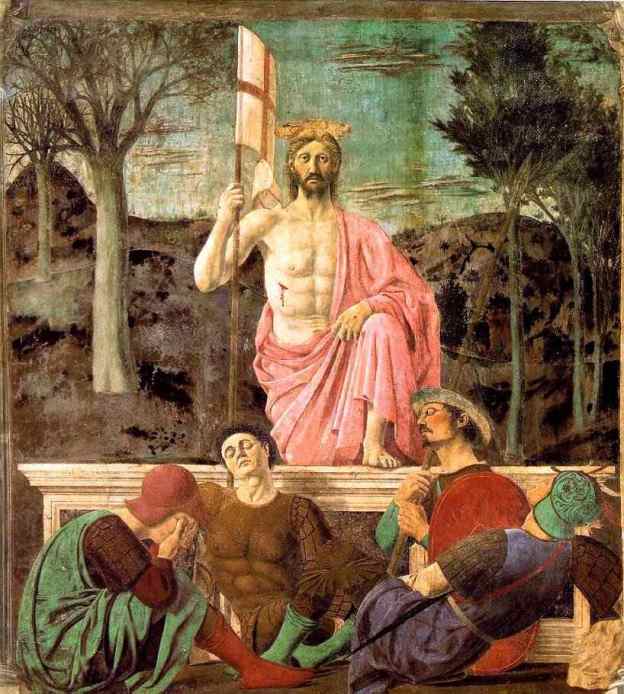
In the picture Resurrection by Pierro della Francesca, the central image my rector used in his sermon, we see Christ rising from the tomb and planting his flag of victory over death and the grave.

Perhaps our own flags of witness — “I have seen the Lord” — are what the people around us need to see in order for them to believe that victory can be theirs, too.
Signs of resurrection, seeds of hope

Signs of resurrection

Everything changes on Easter!

We reintroduce the Alleluias …

We recite or sing Christ our Passover in place of an Invitatory Psalm for the next 50 days …

We rehearse the salvation history of the Passover and the Exodus from Egypt (Exodus 12:1-14).

We remind ourselves in the stirring cadences of the Prologue to the Gospel of John of the present reality … “from his fullness we have received, grace upon grace” (John 1:16).

Alleluia! Christ is Risen! The Lord is risen indeed! Alleluia!

Seeds of hope

A student in my Education for Ministry (EfM) class gave me a lovely gift in an Easter card this year.

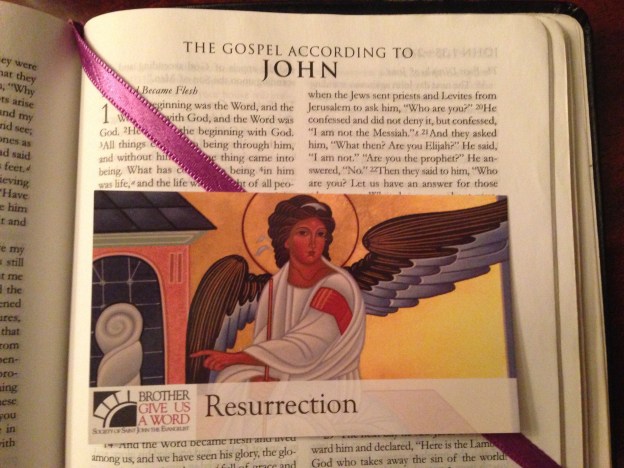
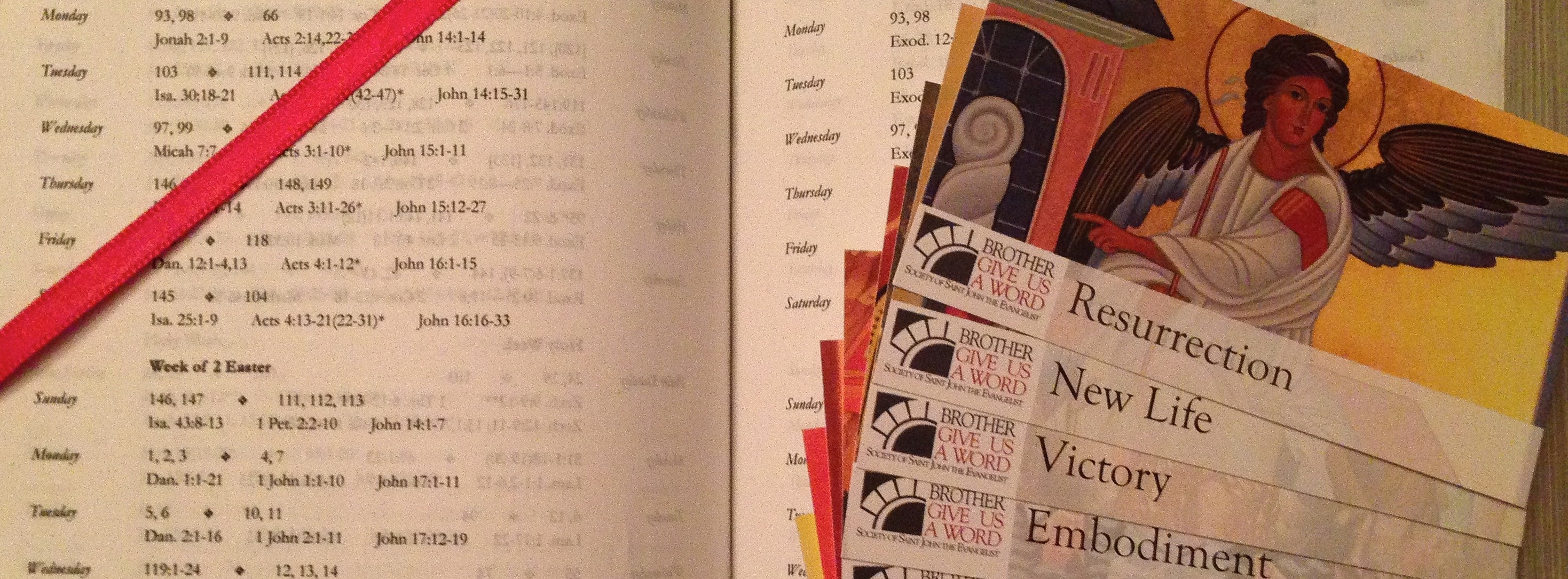
The brothers of the Society of St. John the Evangelist share a daily reflection on their website entitled “Brother, Give Us a Word.” They have also made the Easter Week reflections available as meditation cards.

IMG_0690On this morning’s card (Resurrection), Br. Geoffrey Tristram asks:

How do we allow those seeds of hope and resurrection deep within us to burst into new life? One way is to open our eyes and see the signs of resurrection all around us.

Even the simple changes to Morning Prayer are “signs of resurrection.” The birdsong and the rain I hear through the window are part of the “bursting into new life” going on outside. The steps I have been following in my recovery are “seeds of hope” deep within me.

Alleluia! Christ is Risen! The Lord is risen indeed! Alleluia!

Easter Day

O God, who for our redemption gave your only-begotten Son to the death of the cross, and by his glorious resurrection delivered us from the power of our enemy: Grant us so to die daily to sin, that we may evermore live with him in the joy of his resurrection; through Jesus Christ your Son our Lord, who lives and reigns with you and the Holy Spirit, one God, now and for ever. Amen. (BCP 222)

Out of the depths

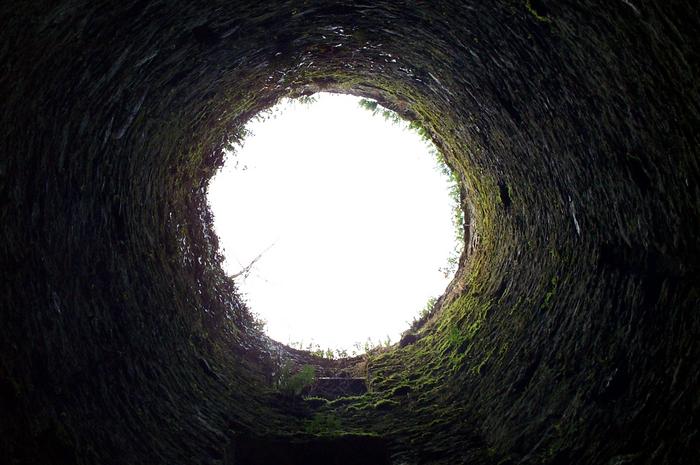
74585-From-the-bottom-of-the-well_view


Glory to you, Lord God of our fathers; *
you are worthy of praise; glory to you.
Glory to you for the radiance of your holy Name; *
we will praise you and highly exalt you for ever.

Glory to you in the splendor of your temple; *
on the throne of your majesty, glory to you.
Glory to you, seated between the Cherubim; *
we will praise you and highly exalt you for ever.

Glory to you, beholding the depths; *
in the high vault of heaven, glory to you.
Glory to you, Father, Son, and Holy Spirit; *
we will praise you and highly exalt you for ever.

I’m not sure these were the exact words Joseph said to himself as he looked up from the bottom of the pit his brothers had thrown him into (Genesis 37:12-24).

It’s kind of strange that they’re the words we say (Canticle 13) right after we read that lesson from Genesis at Morning Prayer today.

But it’s also kind of appropriate, this juxtaposition between the bottom of the pit and God’s glory, especially during the season of Lent.

Lent makes us mindful how far we are from the glory God intends for us.

Lent reminds us in Paul’s words that “not many of you were wise by human standards, not many were powerful, not many were of noble birth. But God chose what is foolish in the world to shame the wise; God chose what is weak in the world to shame the strong” (1 Cor. 1:26-27).

This particular Lent reminds me, as I work the steps in my recovery process, that I “could not manage [my] own [life]; that probably no human power could have relieved [my problem]; that God could and would if He were sought” (Big Book 60).

The collect we usually read on Tuesday mornings also feels especially appropriate when we consider God’s goodness — God’s choosing us — in the face of our own sin and the predicaments we find ourselves in.

A Collect for Peace

O God, the author of peace and lover of concord, to know you is eternal life and to serve you is perfect freedom: Defend us, your humble servants, in all assaults of our enemies; that we, surely trusting in your defense, may not fear the power of any adversaries; through the might of Jesus Christ our Lord. Amen. (BCP 99)

No longer strangers and sojourners

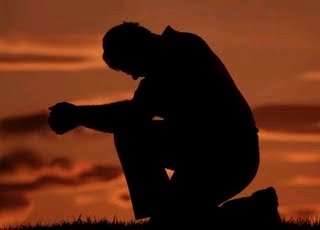
genuflect

I stretched forth my hand against myself;
I have broken my covenant.

My speech is softer than butter,
but war is in my heart.

My words are smoother than oil,
but they are drawn swords.

Cast your burden upon the Lord,
and he will sustain you;
he will never let the righteous stumble.

(Psalm 55, adapted)

The class I’m taking this fall at Bexley Seabury is called “This Dangerous Book” for a reason.

We’re together investigating how texts, images, and sounds in juxtaposition can help us experience the Bible at a heart level rather than in our heads.

Our exercise last night was to do some free association on a text appointed for All Saints’ Day. The reading from the Book of Daniel stirred up in me various “beasts” like Daniel saw “in the visions of his head as he lay in bed.”

I saw in my vision by night
the four winds of heaven
stirring up the great sea
and four great beasts
came up out of the sea
different from one another.
(Dan. 7:2-3)

Though I am struggling with several “great beasts” — various kinds of sin in my life — the experience of the saints reassures me that I am not alone. I am not unique in my struggles, and in fact I can learn how to live from those “who have come out of the great ordeal” before me (Rev. 7:14).

In many recovery programs, those who have gone before are called sponsors; in our tradition they are called saints. Thanks be to God that we are not left to deal with our “great beasts” alone, that we are not left to swim the great sea by ourselves.

We are no longer strangers and sojourners, but fellow citizens with the saints and members of the household of God (Eph. 2:19).