
Tag Archives: Peter

Who are we to hinder God?

20130629-111425.jpg

Come and listen, all you who fear God,
and I will tell you what he has done for me.
I called out to him with my mouth,
and his praise was on my tongue.
If I had found evil in my heart,
the Lord would not have heard me;
But in truth God has heard me;
he has attended to the voice of my prayer.
Blessed be God, who has not rejected my prayer,
nor withheld his love from me
.
(Psalm 66:14-18)

I think it is easy to miss how astonishing Peter’s rooftop vision in Joppa truly is, and how completely it overturns the Church’s notion of who and what is acceptable to God.

Peter sees a vision of a sheet being lowered before him. It contains all sorts of animals, especially animals that are considered unclean by the Jews according to the Torah.

Peter hears a voice from heaven saying to him, “Get up, Peter, kill and eat” (Acts 11:7). Over Peter’s protest — he is an observant Jew who follows the dietary laws — the voice says “What God has made clean, you must not call profane” (Acts 11:9).

Not only are the animals themselves clean, the act of eating them is also clean.

Peter is being commanded to act in a way that God previously called sinful. He is being commanded to break a law that identifies him as a Jew — that sets him apart from the people around him.

When he is taken to Caesarea, to the house of Cornelius the centurion, Peter sees the evidence of the Spirit in the lives of Gentiles. He begins to understand: “If God gave them the same gift that he gave us when we believed in the Lord Jesus, who was I that I could hinder God?” (Acts 11:17).

This report silenced the objections of the Church at Jerusalem, we read, “and they praised God, saying, ‘Then God has given even to the Gentiles the repentance that leads to life'” (Acts 11:18).

Those who do acts that once were forbidden to the Jews, but which now are commanded to Peter, have the repentance that leads to life. Those who were previously set apart by their observance are no longer to be set apart, but share in the same Spirit.

The acts themselves do not separate us; our racial or cultural identity does not separate us. We are all sinful, though we must be careful not to call profane what God has called clean. All who repent share life in Christ and the gift of a new Spirit.

Who are we to hinder God?

Glory to God, whose power, working in us, can do infinitely more than we can ask or imagine: Glory to him from generation to generation in the Church, and in Christ Jesus for ever and ever. Amen. (BCP 102)
I’ve got a wild story to tell you

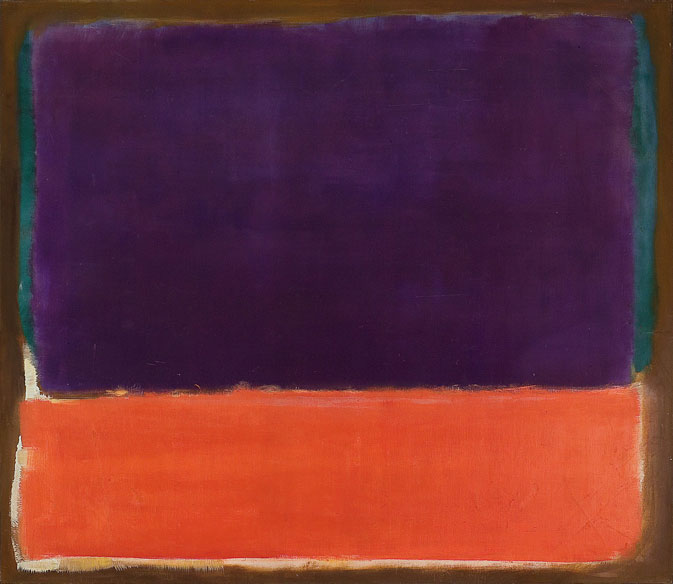
rothko_no14

All were amazed and perplexed, saying to one another, “What does this mean?” But others sneered and said, “They are filled with new wine.” But Peter, standing with the eleven, raised his voice and addressed them, “Men of Judea and all who live in Jerusalem, let this be known to you, and listen to what I say. Indeed, these are not drunk, as you suppose, for it is only nine o’clock in the morning. No, this is what was spoken through the prophet Joel: ‘In the last days it will be, God declares, that I will pour out my Spirit upon all flesh, and your sons and your daughters shall prophesy, and your young men shall see visions, and your old men shall dream dreams. (Acts 2:1-21)

I read recently that one reason the purple stone in a bishop’s ring is an amethyst is that the Greek word “amethystos” means “not drunk” — an interesting custom apparently derived from this morning’s reading. Don’t know if it’s true, but it sounds good.

“We are not drunk,” says Peter, “but have I got a wild story to tell you!”

As my own diocese continues its search for a new bishop, I wonder if we’ll consider our need for someone to tell the wild story — of the Spirit blowing in our midst and turning everything upside down — as much as we’ll consider our need for someone to maintain our little corner of the institution born on that Pentecost day so long ago.

The Rock of our salvation

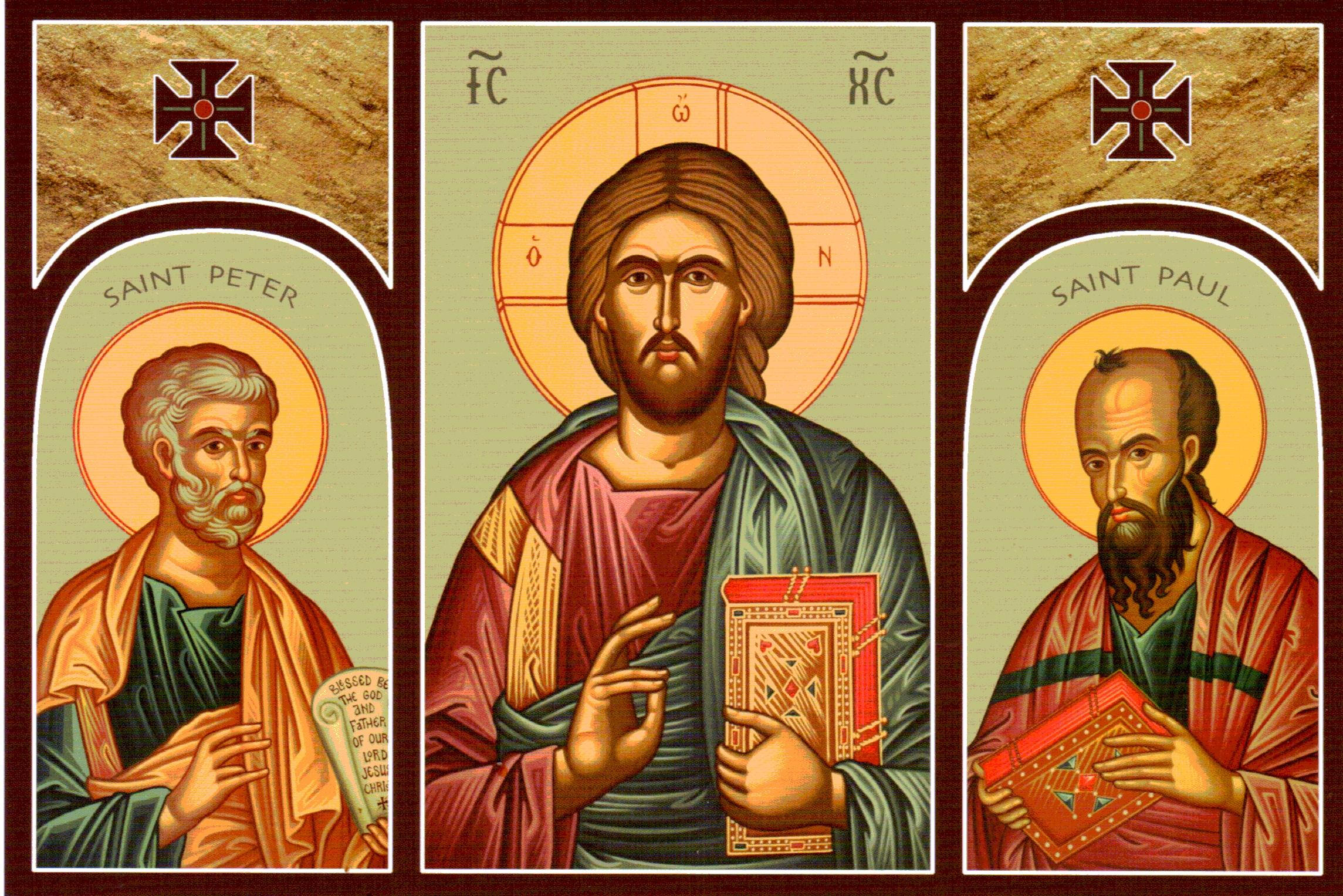
christ-with-saints-peter-and-paul

Come, let us sing to the Lord;
let us shout for joy to the Rock of our salvation.
Let us come before his presence with thanksgiving
and raise a loud shout to him with psalms. (BCP 82)

We open Morning Prayer with these words from the Venite (Psalm 95) most every day.

On this particular day, the Church commemorates the Confession of St. Peter, and a week from now we will celebrate the Conversion of St. Paul. Because these two apostles represent the preaching of the Gospel to Israel and to the Gentiles, this week is commonly observed as a “Week of Prayer for Christian Unity.”

Many people will be talking about unity in terms of the Church, and many will talk about Peter as “the rock” upon whom Christ built his Church, quoting Jesus’ pun as recorded by Matthew (16:18).

Truth is, though, Peter is not the foundation for our faith. He is not the Rock of our salvation — Jesus is.

Peter (and Paul) are examples of the firm and unshakeable faith that can be ours, however, when we build our spiritual homes on the Rock which is Jesus Christ. The Church, as the community of Christ’s followers, is meant to help us build on those strong foundations. We can learn from the Church’s 2,000 years of experience and apply it to our daily life and work.

Sometimes the Church is a rock; other times, we have to set our faces like flint against it “because they are not willing to listen to me” (Ezekiel 3:7). At all times, though, we are to “shout for joy to the Rock of our salvation and come before his presence with thanksgiving.”

Glory to God, whose power, working in us, can do infinitely more than we can ask or imagine. Glory to him from generation to generation in the Church, and in Christ Jesus for ever and ever. Amen. (BCP 100)