Tag Archives: Morning Prayer

Praying the Psalms

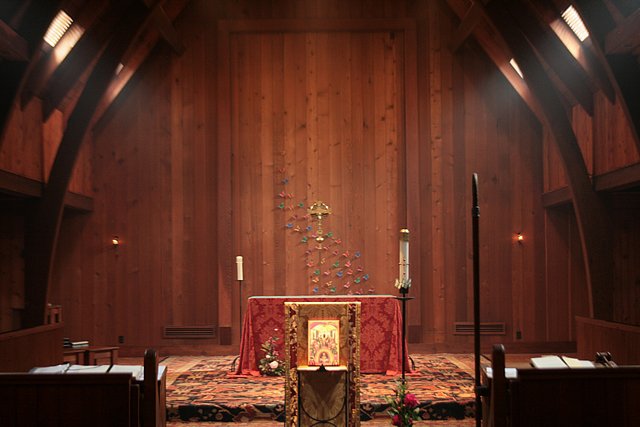
St. Gregory's Abbey Church, Three Rivers MI

St. Gregory’s Abbey Church, Three Rivers MI

From Fr. Steve Rice’s post yesterday, entitled “Who cares about the Kings of Tarshish and Saba?”:

You can’t really explain praying the psalter, you just have to do it. You have to listen to it, observe it, it needs to wash over you as the antiphonal recitation crashes again and again like waves on the beach. And you have to know it will be hard.

Whether you follow Thomas Cranmer’s 30-day outline for praying the Psalms (as Fr. Steve’s parish does), the Daily Office lectionary’s seven-week cycle, the Bible Challenge’s daily passages, or whether you use the Daily Prayer app from Forward Movement on your iPhone, the Psalms form the heart of the Church’s daily prayer.

The seeming randomness by which Psalms are assigned to any given day, no matter what method you use, can cause newcomers to the Office no little confusion.

Br. Abraham of St. Gregory’s Abbey, the Benedictine order in Three Rivers, Michigan, writes this about praying the Psalms in the Easter 2007 Abbey Letter:

This schedule causes us to recite seemingly inappropriate psalms sometimes: happy ones on solemn fasts, and sad ones on happy feasts. It also means that at any time of day, a particular monk might be reciting a psalm that does not match his mood at the time. While that can be distressing for someone not used to it, it has become a great comfort for many people throughout history. It reminds us that our situations and feelings are not permanent; the psalms sung at Friday Sext might not fit a particular monk’s concerns this week, but they might perfectly meet the needs of the monk next to him or of one of the guests in the church, and they might coincide with his own next week. It also reminds us that the prayer is not all about the individual. Corporate prayer is corporate prayer – not private prayer (there are times of day set aside for private prayer).

Psalm 102, appointed for this morning, highlights one of my favorites reasons for praying the Psalms — they give voice to our human concerns, especially our complaints. The psalms are not “pious”:

I lie awake and groan;
I am like a sparrow, lonely on a house-top.
My enemies revile me all day long,
and those who scoff at me have taken an oath against me. (Psalm 102:7-8)

So give yourself permission to plunge into the psalms and take them as they come. Let them speak to you and give voice to your concerns — or to the concerns of those around you if their mood does not match yours. And let the psalms, day by day, week by week, lift you from your concerns to contemplate God’s goodness.

In the beginning, O LORD, you laid the foundations of the earth,
and the heavens are the work of your hands;
They shall perish, but you will endure; they all shall wear out like a garment;
as clothing you will change them,  and they shall be changed;
But you are always the same,
and your years will never end.
The children of your servants shall continue,
and their offspring shall stand fast in your sight. (Psalm 102:25-28)

A sure and steadfast anchor

20130514-073140.jpg

Three times in the two-year cycle of Daily Office readings we get the chance to celebrate the “patronal feast,” so to speak, of the Daily Office Anchor Society.

“We have this hope, a sure and steadfast anchor for the soul” (Heb. 6:19).

The other readings assigned for today give us a sense of the particular flavor of the Christian hope.

Ezekiel is prophesying against Israel, speaking God’s word of wrath against the wayward people. “According to their way I will deal with them; according to their own judgments I will judge them. And they shall know that I am the Lord” (Ezek. 7:27). God is mighty and holy, and we are prone to fall away into sin and forget how we have been blessed.

Canticle 13, suggested for Tuesday mornings, is a song of praise, but it underscores God’s remoteness as we sing of God “seated between the Cherubim … in the high vault of heaven” (BCP 90).

In the reading from the Letter to the Hebrews, however, we see Jesus, our great high priest, bridging the gap between us and God. For “we have this hope, a sure and steadfast anchor of the soul, a hope that enters the inner shrine behind the curtain, where Jesus, a forerunner on our behalf, has entered, having become a high priest forever according to the order of Melchizedek” (Heb. 6:19-20).

No longer are we distant from the mighty and holy God, who in “Christ Jesus came into the world to save sinners” (1 Tim. 1:15). No longer can anything separate us from the love of God, for now God’s only Son intercedes for us. Jesus, having ascended into heaven, takes our humanity — takes us — with him into the inner shrine, into the presence of God. We now live for all time in the heart of God.

That intimate and enduring union with God is ours through Jesus, the “forerunner on our behalf,” and this particularly Christian hope is indeed a “sure and steadfast anchor” for our souls.

Aids to Prayer

20130512-060338.jpg

It’s hard not to get centered and still when you have two cats stretched out on your legs helping you say Morning Prayer.

What aids to prayer have you incorporated into your daily practice?

Do you have a favorite place to sit? A mug of coffee or tea close to hand? Music, or silence, or some of each? A favorite picture or icon to look at?

What helps “exalt you to that place where our Savior Christ has gone before,” in the words of today’s Collect (BCP 226)?

Ever present in God’s heart

20130509-052931.jpg

Fr. John Dally’s teaching about the meaning of the Ascension has stuck with me all these years, since he was assistant priest at St. Mary’s Episcopal Church in Park Ridge, Illinois and I was just entering the discernment process that led to my ordination.

Fr. Dally told us about the risen Jesus ascending into heaven, returning to take his place in the Trinity, but bearing the wounds of his humanity. The Son who is “seated at the right hand of the Father,” as we say in the Apostles’ Creed (BCP 96), bears the marks of the crown of thorns and raises a pierced hand in blessing.

God was changed by God’s encounter with us, and the Christ of the eternal Trinity still bears the scars.

A Collect for Guidance

Heavenly Father, in you we live and move and have our being: We humbly pray you so to guide and govern us by your Holy Spirit, that in all the cares and occupations of this life we may not forget you, but may remember that we are ever walking in your sight; through Jesus Christ our Lord. Amen. (BCP 100)

Just as we “live and move and have our being” here on earth in the presence and care of God and do well to remember that fact in the middle of our busy lives, we also “live and move and have our being” in God in the person of the ascended Jesus.

Not only are we “ever walking in God’s sight,” we are ever-present in God’s own heart.

Daily Office Challenge

2012-08-06 13.03.01

The one who thus serves Christ is acceptable to God and has human approval.
Let us then pursue what makes for peace and for mutual upbuilding
(Romans 14:18-19).

Two days ago I responded to a tweet by Marek Zabriskie of the Bible Challenge which seemed to me to be making a false opposition between the lectionary and “reading all the Scriptures.” I was hasty and abrupt in my reply — a failing of mine exacerbated by Twitter’s 140-character limit.

The Bible Challenge is an approach to reading the entire Bible in the course of a year rather than just hearing the selections read in worship on Sundays. In that sense, it is a very important project — one I have embarked on several times before, as have many members of the congregations I have belonged to. Reading the whole Bible gives you a sense of the sweep of salvation history and the relationship between parts of Scripture that you might not otherwise get on Sunday mornings.

For myself, I have benefited the most over the years from the Bible-reading plan outlined in The Illustrated Bible Handbook by Edward P. Blair (Abingdon 1985). Blair’s book is long out of print, unfortunately, though you can still find a few copies around.

My initial point, however, is that there’s more than one lectionary in the Book of Common Prayer.

The lectionary for the Daily Office — for Morning and Evening Prayer — provides for the praying of the Psalms and the course reading of Scripture. The Psalms are prayed over a seven-week cycle, the bulk of the New Testament each year, and the bulk of the Old Testament over the course of two years (see BCP 934 and following).

Because Morning and Evening Prayer are part of the public worship of the Church (with the Holy Eucharist on Sundays), the readings in the Daily Office lectionary are organized to reflect the seasons of the Church Year, unlike the Bible Challenge’s approach of reading through the Old Testament in order, supplemented by New Testament passages and Psalms each day.

Marek observes in a subsequent tweet that “Episcopalians excel on Sunday. Our weakness is Monday to Saturday. Helping folks engage Scripture and pray each day is critical.” I couldn’t agree more.

The practice of the Daily Office puts the reading of Scripture in the context of prayer, and the canticles and collects appointed for the Sundays and weekdays of the Church Year help us to understand and interpret Scripture in the way that Christians throughout the centuries have done.

The Bible Challenge and the practice of the Daily Office complement each other, though they are designed with different purposes in mind.

“Let us then pursue what makes for peace and for mutual upbuilding.”

The more we soak ourselves in Scripture, the more we begin and end each day in prayer and Scripture reading (no matter which method we prefer to use), the more readily we will recognize Jesus’ voice and his call for our lives.

On that we can all agree.

His glory will appear upon y’all

20130430-201949.jpg

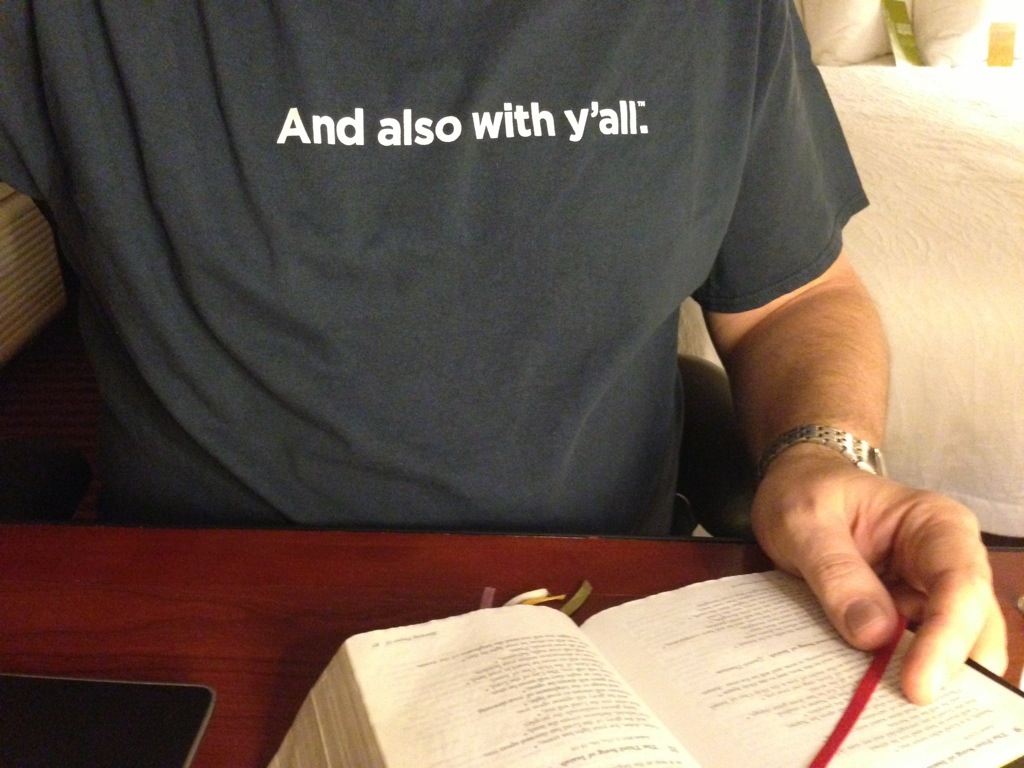
Since I’m in Tupelo, MS this morning it seems only right that I should wear my Altar Press t-shirt for Morning Prayer.

But over you the Lord will rise,
and his glory will appear upon y’all.
Nations will stream to your light,
and kings to the brightness of your dawning. (BCP 87)

Whatever language you speak in, whatever nation you belong to, wherever your life has led you to, the Lord will rise over you.

If we’re true to our calling as members of Christ’s body, if we love one another as Christ has loved us and love our neighbors as ourselves, then we will reflect the “light to enlighten the nations” himself.


You serve the Lord Christ

Communion-of-Saints-Elise-Ritter

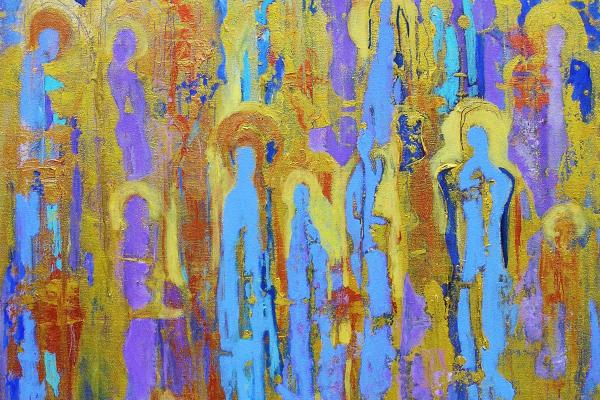
Communion of Saints by Elise Ritter

Whatever your task, put yourselves into it, as done for the Lord and not for your masters, since you know that from the Lord you will receive the inheritance as your reward; you serve the Lord Christ (Colossians 3:23-24).

In a blog post from about a year ago, Rachel Held Evans, author of A Year of Biblical Womanhood, began a conversation on the Greco-Roman “household codes” reflected (and redirected) in several New Testament letters as well as in the passage from Colossians we read this morning.

One of the very interesting tensions in the Christian life is trying to decide what kind of a household we actually belong to. We are “a chosen people, a royal priesthood” (1 Peter 2:9), and we are “no longer Jew or Greek … slave or free … male and female” (Galatians 3:28), and we are married (or not), and we are a church family, and we are a historical preservation society, and we are a company of friends, and we are a food pantry, and we are a monastic community, and we are a 501 (c) (3) corporation, and we are summer camp.

Whatever we are, though, there’s a fairly constant thread in the Christian tradition. Our apparently ordinary lives are shot through with new meaning.

My parents had a plaque in our home that read like this:

Christ is the head of this house;
the unseen guest at every meal;
the silent listener to every conversation.

We may seem like an ordinary family, or we may seem like a bunch of crackpots, or somewhere in between, but we are really living as members of Christ’s household.

It starts at baptism: “We receive you into the household of God. Confess the faith of Christ crucified, proclaim his resurrection, and share with us in his eternal priesthood” (BCP 308).

In the letter to the Colossians, Paul is urging his readers to live in the light of that belonging. Whatever your task — the same work you had yesterday, and perhaps the same work you will have tomorrow — put yourself into it as done for the Lord and not for your masters, wives, brothers, volunteers, board, counselors, managers, sisters, bosses.

You serve the Lord Christ.

Cherish Christ above all

20130414-060216.jpg

We are staying the weekend with friends in Lake Geneva, WI.

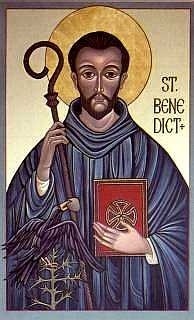
As is our custom, John and I will get up early for the first Mass at his parish, St. Benedict Catholic Church in Fontana.

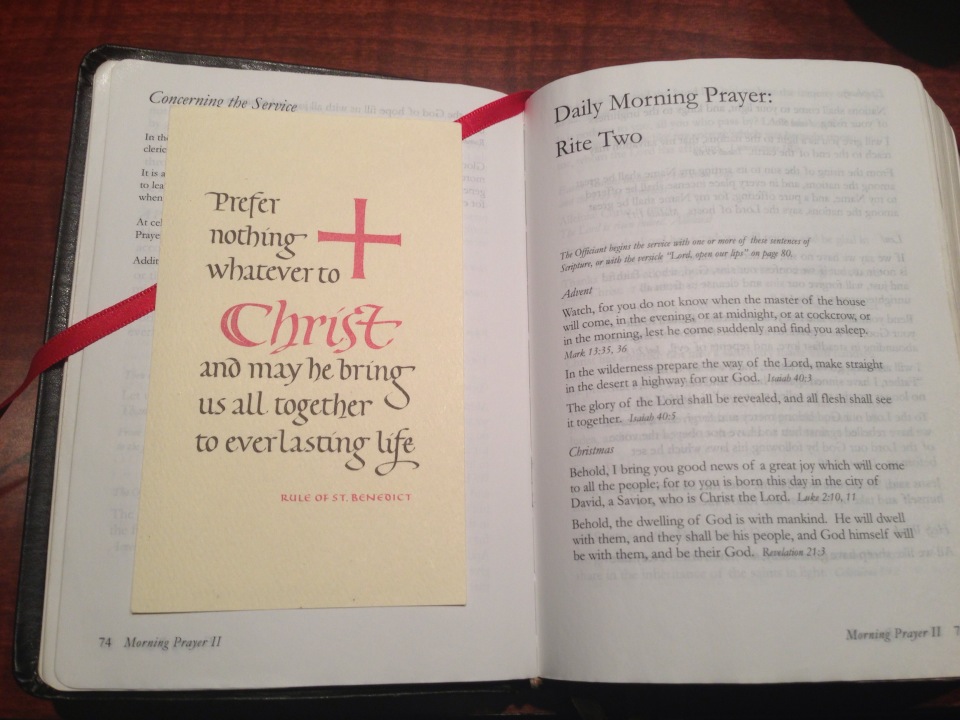
I wrote about Benedict and his influence on our Anglican pattern of prayer a few days ago. Obviously, we’re hardly the only ones so influenced by his vision of a simple Rule of life — “nothing harsh, nothing burdensome” — which will help us, by ordering and organizing our prayer, study, and work, to cherish Christ above all and to cherish those around us, for whom Christ came into the world.

Prefer nothing whatever to Christ

Prefer Nothing to Christ

A member of my parish offers reflections on his Healing Journey Daily Blog on Facebook, and I appreciate his post yesterday from Oswald Chambers reflecting on Paul’s insight into Christ and his determination to “know nothing among you except Christ, and him crucified” (1 Cor 2:2).

Chambers says, “The lasting characteristic of a spiritual man is the ability to understand correctly the meaning of the Lord Jesus Christ in his life, and the ability to explain the purposes of God to others. The overruling passion of his life is Jesus Christ. Whenever you see this quality in a person, you get the feeling that he is truly a man after God’s own heart” (My Utmost for His Highest).

One of the lenses that helps me find insight into Christ is the Prayer Book pattern of orderly prayer — especially the Daily Offices — which was inspired in large part by the monastic pattern established by Benedict in the sixth century.

“Prefer nothing whatever to Christ,” says Benedict, “and may he lead us all together into everlasting life” (Rule 72). The Rule, the pattern of prayer, study, and work that Benedict established for his monks, was intended to free them from distractions and enable them to focus on worshiping God.

In a similar way, the Prayer Book pattern of Daily Offices and weekly Eucharist is intended to shape our lives and help us maintain our focus on the face of Christ in the face of a very distracting world. It doesn’t matter whether you use the Prayer Book itself or the online offices from Forward Movement or Mission St. Clare or some other daily devotional; all of them promote the same rhythmic, steady, daily approach to prayer.

If our guides are doing their work — Chambers or Benedict or the Prayer Book or any other guide — they help us understand how Christ is present in our lives right now, and they encourage us to share that insight with others.

May we prefer nothing whatever to Christ, and may he lead us all into everlasting life. Amen.

Cast your fate to the wind

After an early alarm and the drive to Norfolk International Airport, I was able to catch a breath in the Starbuck’s before going through security. This was part of the background music to Morning Prayer today.

Vince Guaraldi is a favorite of mine, and this song, “Cast Your Fate to the Wind,” dovetailed nicely with the reading from Acts.

“Now when they saw the boldness of Peter and John and realized they were uneducated and ordinary men, they were amazed and recognized them as companions of Jesus” (Acts 4:13). It’s the boldness of their act, healing a man in the name of Jesus, that makes them recognizable.

They recount to their friends what has happened, not just the healing but their testimony before the chief priests and the elders, and “when they had prayed, the place in which they gathered together was shaken; and they were all filled with the Holy Spirit and spoke the word of God with boldness” (Acts 4:31).

The apostles and their friends cast their fate to the wind — that is, to the mighty Spirit of God that hovered over the waters of creation and was now blowing through their lives — and that Holy Spirit not only inspired them to boldness but also made them recognizable friends of Jesus.

Why not cast your fate to the wind, to the Spirit of God, today? What bold act will make you a recognizable friend of Jesus?