
Tag Archives: Jesus

Come to a sober and right mind

A friend spoke to me earlier this week about sobriety. He said, “What we really have is a daily reprieve contingent on the maintenance of our spiritual condition.”

I now know that he was quoting from the Big Blue Book of Alcoholics Anonymous, but those words spoke volumes to me about the difference between duty and grace.

The duty of “maintaining our spiritual condition” is at the heart of programs like AA — and I’m beginning to understand how hard and serious that work is in every life.

The gift, the grace of a daily reprieve, is what sobriety represents.

I have often thought of my struggles to maintain a regular discipline of prayer — or any discipline of any kind, for that matter.  Like Paul, “I do not understand my own actions. I do not do what I want, but the very thing I hate” (1 Cor. 7:15).

My friend has me thinking differently today.

What if the daily prayer, the day without drinking, the day without shopping (or whatever else it may be), is not a burdensome duty to fail at yet again — but is actually the gift of rest for a moment?

The work is hard enough without making grace and rest a duty, too.

“Come unto me, all who travail and are heavy laden, and I will refresh you,” says our Lord (Matt. 11:28).

Come to a sober and right mind as you maintain your spiritual condition.

Come to a daily reprieve.
Having our share in Jesus

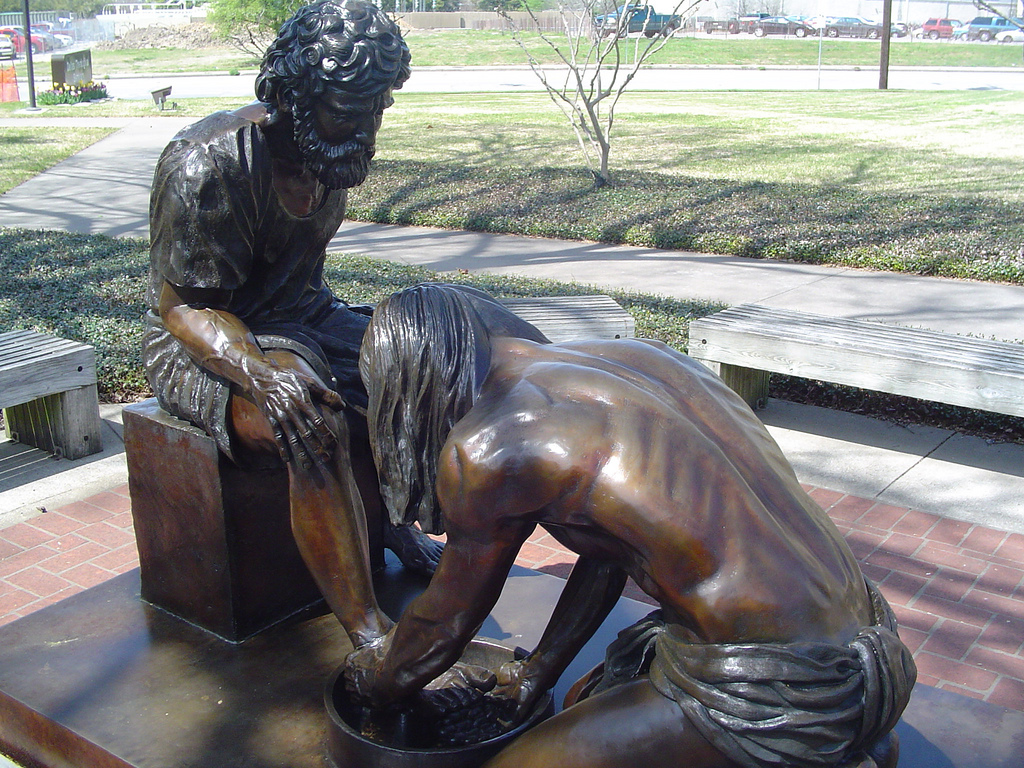
Jesus washing disciples' feet

Jesus washing disciples’ feet

“Then all the people of Israel came to the king, and said to him, ‘Why have our kindred the people of Judah stolen you away, and brought the king and his household over the Jordan, and all David’s men with him?’ All the people of Judah answered the people of Israel, ‘Because the king is near of kin to us. Why then are you angry over this matter? Have we eaten at all at the king’s expense? Or has he given us any gift?’ But the people of Israel answered the people of Judah, ‘We have ten shares in the king, and in David also we have more than you. Why then did you despise us? Were we not the first to speak of bringing back our king?’ But the words of the people of Judah were fiercer than the words of the people of Israel.” (2 Samuel 19:42-43)

Who can lay claim to more of the king’s favor?

That’s what the people of Judah and the people of Israel are arguing about.

It sure seems like David is favoring the people of Judah, even though they represent just two tribes. The people of Israel, comprising 10 of the 12 tribes, are put out and demand their majority share.

Seems perfectly sensible.

However, my mind flashed on the word “share” and its place in a pivotal story about another king, the Son of David.

“And during supper Jesus, knowing that the Father had given all things into his hands, and that he had come from God and was going to God, got up from the table, took off his outer robe, and tied a towel around himself. Then he poured water into a basin and began to wash the disciples’ feet and to wipe them with the towel that was tied around him. He came to Simon Peter, who said to him, ‘Lord, are you going to wash my feet?’ Jesus answered, ‘You do not know now what I am doing, but later you will understand.’ Peter said to him, ‘You will never wash my feet.’ Jesus answered, ‘Unless I wash you, you have no share with me.’” (John 13:2-8)

Having our share in Jesus means receiving from him the lesson he wants us to learn, following him in the way he shows us — serving others and laying down our lives.

Having our share does not mean getting more, but giving more.

A Prayer for Mission

Lord Jesus Christ, you stretched out your arms of love on the hard wood of the cross that everyone might come within the reach of your saving embrace: So clothe us in your Spirit that we, reaching forth our hands in love, may bring those who do not know you to the knowledge and love of you; for the honor of your Name. Amen. (BCP 101)

Them I know … but who are you?

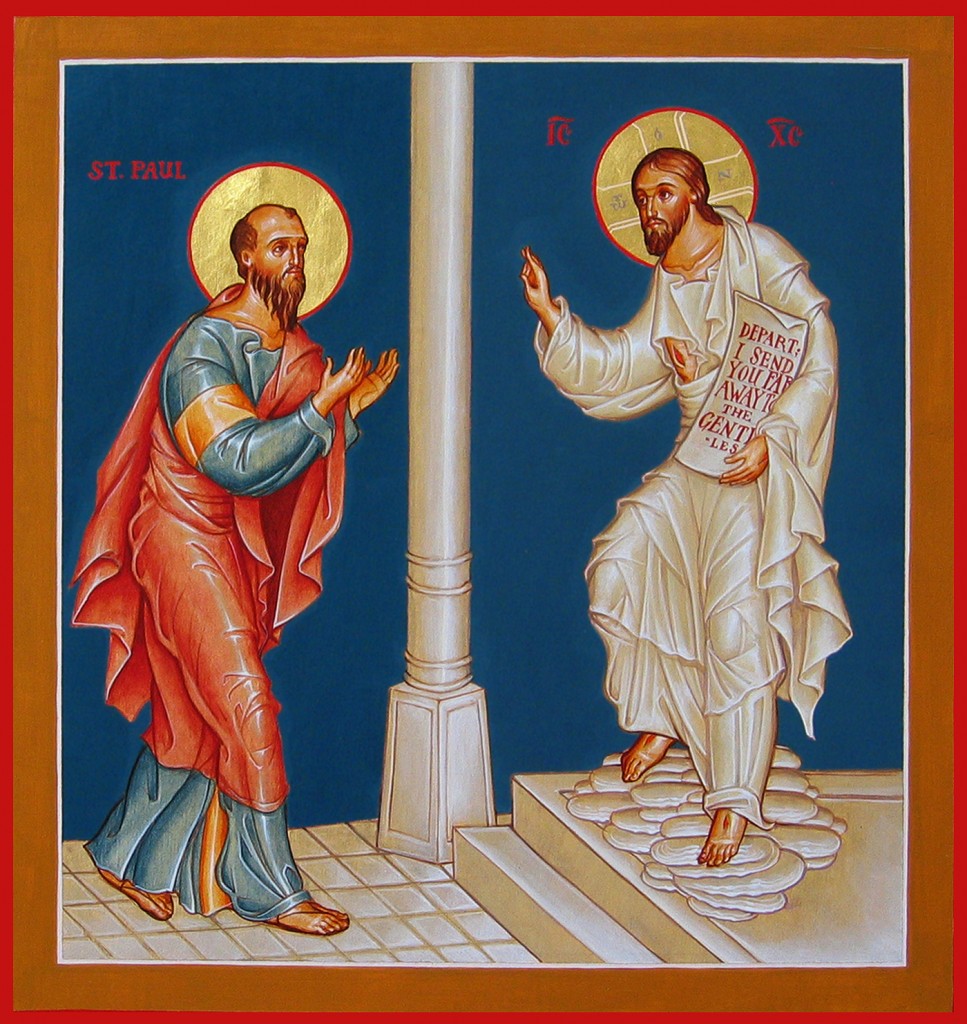
St. Paul and Jesus

St. Paul and Jesus

Then some itinerant Jewish exorcists tried to use the name of the Lord Jesus over those who had evil spirits, saying, “I adjure you by the Jesus whom Paul proclaims.” Seven sons of a Jewish high priest named Sceva were doing this. But the evil spirit said to them in reply, “Jesus I know, and Paul I know; but who are you?” (Acts 19:13-15)

Who are you?

Would you be recognized as a follower of Jesus (not just by evil spirits, but by anybody you meet)?

When you talk about your faith, are you talking about an abstraction or are you talking about someone you know?

You don’t have to be perfect, that’s for sure — just look at David, featured in our Old Testament reading this morning in the act of committing adultery with Bathsheba and having her husband Uriah killed.

However, you do have to be known by God, and you have to do what God’s followers do — repent.

Knowing God and being known, just like any friendship, means putting in the time. That’s largely what we are doing when we pray the Daily Offices — spending face time with God.

Coming face to face with the living God, especially as we meet him in Jesus, highlights our sinfulness and leads us to want to change.

David will be confronted by Nathan, the prophet of God, in tomorrow morning’s reading, and he will repent of his sin.

Saul, whose early ministry was to persecute Christians, repented after he began to know the risen Jesus. In a complete turnaround (which is basically what repenting means), his new ministry under the new name of Paul was to help establish new churches.

Who are you?

Are you a friend of God?

Are you putting in the time and making the changes that your friendship requires?

Beloved

20130523-060723.jpg


The beginning of the good news of Jesus Christ, the Son of God. (Mark 1:1)

I received an email a couple weeks ago from a young woman asking to be baptized at St. Thomas, the parish I serve in the Diocese of Fond du Lac.

She did not grow up in a religious household, but she has pursued deeper and deeper spiritual engagement and is now led to make a mature commitment to Christianity.

In the Daily Office readings this morning, I couldn’t help reflecting on her request as I read about Peter’s vision regarding the Gentiles. When he arrived at Cornelius’ house, he saw that the Holy Spirit had come into their lives, too. He asks, “Can anyone withhold the water for baptizing from those who have received the Holy Spirit just as we have?” (Acts 10:47).

This young woman knows that the Spirit is in her life, and that Spirit is moving her to make a public act of faith.

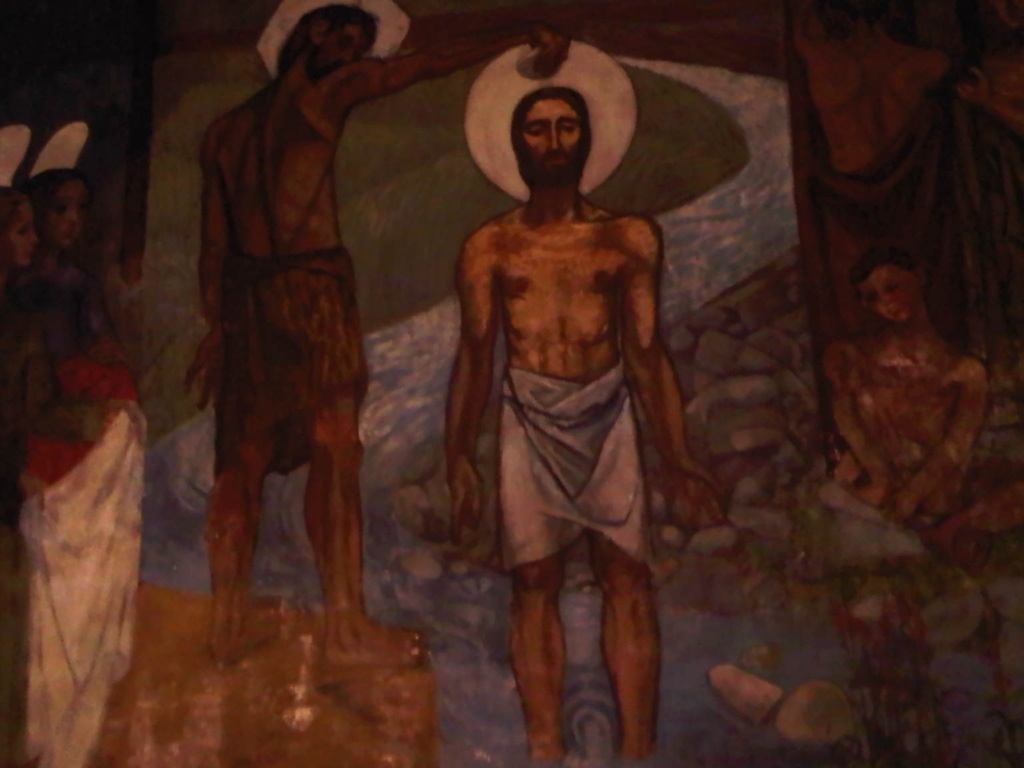
Jesus himself makes the same public act in this evening’s reading from “the beginning of the good news” according to Mark.

The Spirit is surely already present in the life of the Son of God, just as the Spirit “proceeds from the Father” — Jesus does not need baptism in order to receive the Spirit, but the Spirit moves him to reveal his identity in a public way.

And what is that identity? “You are my Son, the Beloved,” says the voice from heaven; “with you I am well pleased” (Mark 1:11).

All of us who are baptized into the Body of Christ share in his identity as Beloved.

I look forward to the day — soon, I expect — when we will welcome another Beloved daughter into the fellowship of Christ’s Body.