Tag Archives: Evening Prayer

Beloved

20130523-060723.jpg


The beginning of the good news of Jesus Christ, the Son of God. (Mark 1:1)

I received an email a couple weeks ago from a young woman asking to be baptized at St. Thomas, the parish I serve in the Diocese of Fond du Lac.

She did not grow up in a religious household, but she has pursued deeper and deeper spiritual engagement and is now led to make a mature commitment to Christianity.

In the Daily Office readings this morning, I couldn’t help reflecting on her request as I read about Peter’s vision regarding the Gentiles. When he arrived at Cornelius’ house, he saw that the Holy Spirit had come into their lives, too. He asks, “Can anyone withhold the water for baptizing from those who have received the Holy Spirit just as we have?” (Acts 10:47).

This young woman knows that the Spirit is in her life, and that Spirit is moving her to make a public act of faith.

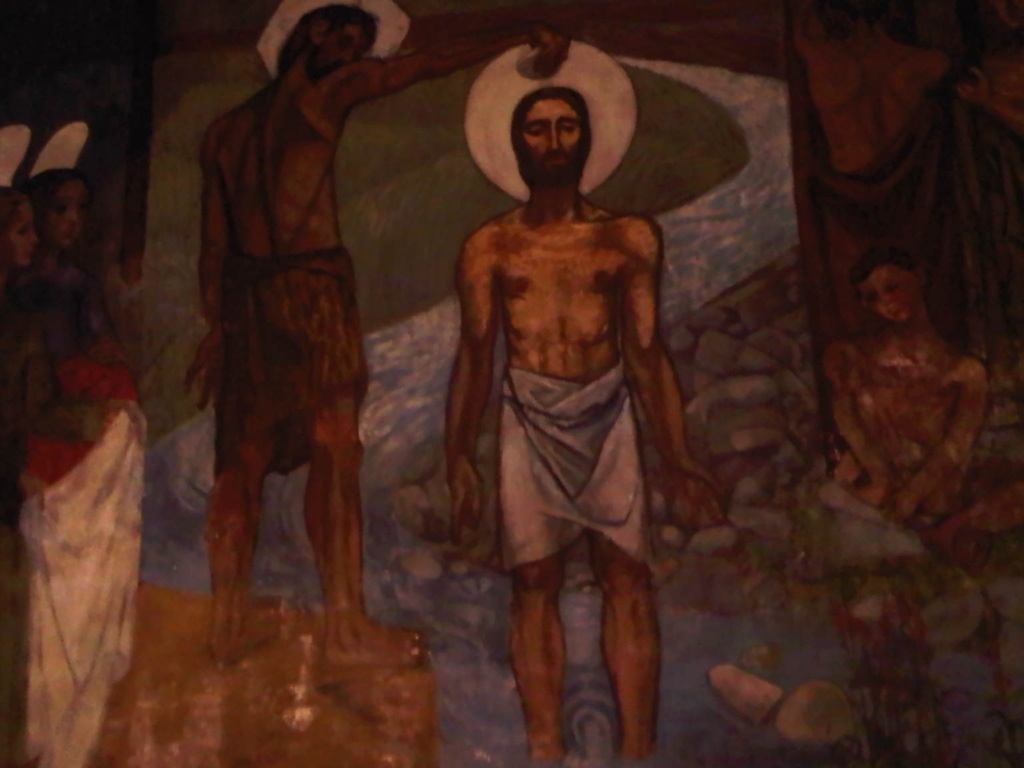
Jesus himself makes the same public act in this evening’s reading from “the beginning of the good news” according to Mark.

The Spirit is surely already present in the life of the Son of God, just as the Spirit “proceeds from the Father” — Jesus does not need baptism in order to receive the Spirit, but the Spirit moves him to reveal his identity in a public way.

And what is that identity? “You are my Son, the Beloved,” says the voice from heaven; “with you I am well pleased” (Mark 1:11).

All of us who are baptized into the Body of Christ share in his identity as Beloved.

I look forward to the day — soon, I expect — when we will welcome another Beloved daughter into the fellowship of Christ’s Body.

The pilgrims’ way

11 - Mark Rothko, Sin titulo 1969 2

I’ve done a lot of driving this week in Indiana, where the landscape on an overcast day like today looks an awful lot like this painting.

One of the Psalms appointed for this evening struck me particularly:

Happy are the people whose strength is in you!
whose hearts are set on the pilgrims’ way. (Ps. 84:4)

And the Collect for the Presence of Christ, customarily prayed on Thursday evenings, asks:

Lord Jesus, stay with us, for evening is at hand and the day is past; be our companion in the way, kindle our hearts, and awaken hope, that we may know you as you are revealed in Scripture and the breaking of bread. Grant this for the sake of your love. Amen. (BCP 124)

How does Scripture nourish your heart along the pilgrims’ way?

How might you break bread with fellow pilgrims and share in Jesus’ companionship?

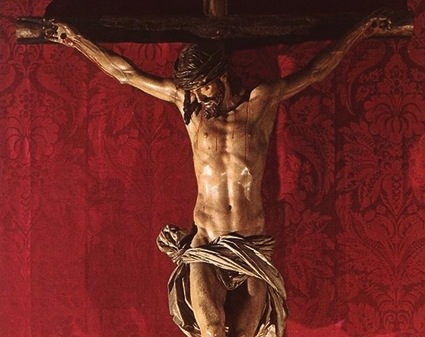
Golden with fruit of a man’s body

20130530-172526.jpg

On that day the root of Jesse shall stand as a signal to the peoples; the nations shall inquire of him, and his dwelling shall be glorious. (Isaiah 11:10)

In a Country Church

To one kneeling down no word came,
Only the wind’s song, saddening the lips
Of the grave saints, rigid in glass;
Or the dry whisper of unseen wings,
Bats not angels, in the high roof.

Was he balked by silence? He kneeled long,
And saw love in a dark crown
Of thorns blazing, and a winter tree
Golden with fruit of a man’s body.

R S Thomas

Commentary by Bede, the Venerable

20130525-184141.jpg

Matthew 7:7 (Commentary)

Asking is not enough,
says Bede
the venerable

We must diligently seek

Read the blueprint
heart’s desire

Lay the first stone

On stone and stone
the house
reveals itself

Plan becomes a home

I must lay my heart
(rejected stone)
firmly in place

Daily build the home I seek

Rodger Patience
Mepkin Abbey + July 1998

Meant for a sign

20130513-192835.jpg

“Ford was humming something. It was just one note repeated at intervals. He was hoping that someone would ask him what he was humming, but nobody did. If anybody had asked him he would have said he was humming the first line of a Nöel Coward song called ‘Mad About the Boy’ over and over again. It would then have been pointed out to him that he was only singing one note, to which he would have replied that for reasons that he hoped would be apparent, he was omitting the ‘about the boy’ bit. He was annoyed that nobody asked.” ~Douglas Adams, Life, The Universe and Everything

Reading today’s passage from the Book of Ezekiel reminds me of this bit from the third of five books in the Hitchhiker’s Guide to the Galaxy trilogy.

Ezekiel is doing something with Legos, and then he’s putting up a wall and very pointedly staring at it, and then he is lying on one side, and then on the other, and then he is making some really disgusting bread and burning it over a fire made of — what is that! — oh, it’s just cow’s dung.

… oh, whatever!

I’ll bet Ezekiel’s annoyed that no one has asked him what he’s doing. If he tried to explain it, though, he’d have about as much luck as Douglas Adams’ Ford Prefect making anyone understand.

The weird things we do — like going to church on Sundays, praying out of a book twice a day, or reading (on purpose, yet!) about crazy old Ezekiel — are meant for a sign. It’s not the actions themselves that are the sign, though.

We’re the ones who are meant to be transformed by our discipline of prayer and Scripture study, transformed more and more by our obedience into the likeness of Christ, living into our calling to be a light to the nations. I think people will ask us what we’re doing when what we’re doing has made us more peaceful and made a visible difference in the lives of those around us.

So don’t be annoyed and don’t be a one-note Johnny — and don’t, for goodness’ sake, cut off half your beard like Ezekiel will do tomorrow! Instead, be faithful, be disciplined, be “Mad About the Boy” who is our living Lord Jesus.

Rejoice now!

Exsultet at Holy Communion

This is the night, when you brought our fathers, the children of Israel,
out of bondage in Egypt, and led them through the Red Sea on dry land.

This is the night, when all who believe in Christ
are delivered from the gloom of sin,

and are restored to grace and holiness of life.

This is the night, when Christ broke the bonds of death and hell,
and rose victorious from the grave.

+ + + + +

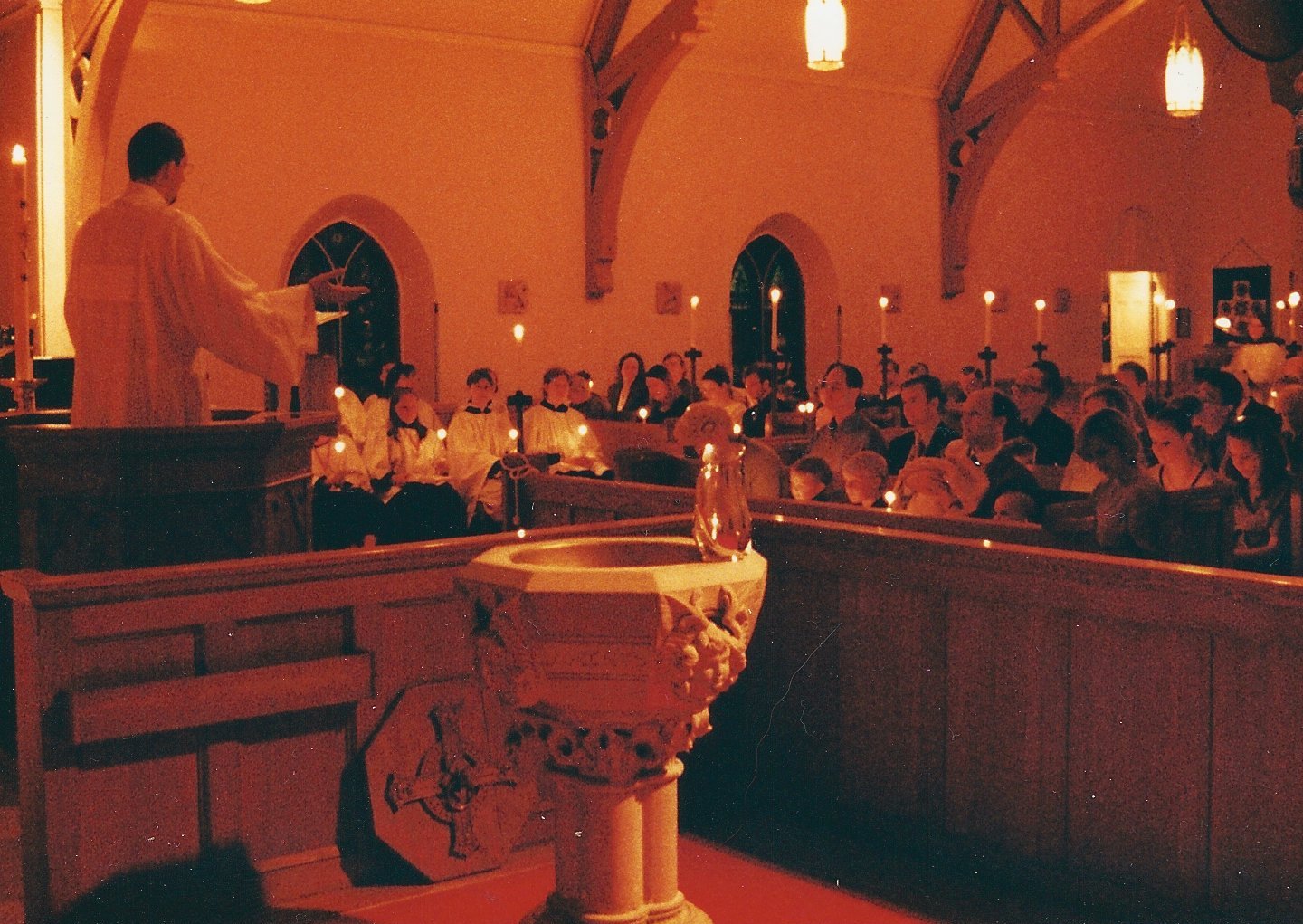
At the Great Vigil of Easter tonight, we will renew our Baptismal Vows (BCP 292) in much the same fashion as early catechumens “handed back the creed” before their baptism in a series of questions and answers with the bishop, who had taught them in a series of sermons in the weeks leading up to Easter.

After the vigil readings and their questioning, the catechumens were led to the baptismal pool and immersed three times “in the Name of the Father, and of the Son, and of the Holy Spirit.” They were then anointed with oil, clothed in a garment of white linen, and brought back into the church to receive communion for the first time. According to Robert Louis Wilken, “At their first Eucharist they received a cup of milk and honey, and during Easter Week they attended services in their white garments” (Spirit of Early Christian Thought 39).

That same spirit of joy permeates both the Eucharist and the Daily Office not just tonight and tomorrow, but throughout the Great 50 Days of Easter.

Not only do we adorn the Eucharist with white vestments and altar hangings, we also sing Alleluias throughout the service.

Not only do we begin and end the Office with Alleluias, we also say the Invitatory canticle “Christ our Passover” (BCP 83) every morning, and we “hand back the creed” — the Apostles’ Creed — as a daily reminder of our dying and rising with Christ and our baptismal unity with the apostles.

+ + + + +

How holy is this night, when wickedness is put to flight,
and sin is washed away.

It restores innocence to the fallen, and joy to those who mourn.
It casts out pride and hatred, and brings peace and concord.

How blessed is this night, when earth and heaven are joined,
and we are reconciled to God.

Be still and know that I am God

My God It's Full of Stars

The heavens declare the glory of God,
and the firmament shows his handiwork.

One day tells its tale to another,
and one night imparts knowledge to another.

Although they have no words or language,
and their voices are not heard,

Their sound has gone out into all lands,
and their message to the ends of the world.

(Psalm 19:1-4)

Another travel week begins on a Sunday evening, and this layover in the Detroit airport is just about the first chance I have had to catch my breath since last Sunday.

But for now, it’s good to be still, even for a few minutes.

It’s good to pause and reflect on a solid Sunday today: two Eucharists with healing services, another lively session of “Episcopal 101” after which a young man gave me a long, handwritten list of his questions for upcoming sessions, and a thoughtful Education for Ministry (EfM) session.

It’s good to remember the warm glow of conversation over a packed dinner table with friends last night.

It’s good to have finished some work yesterday morning and to have had a Saturday afternoon to read for a bit.

It’s good to be headed out to work again, headed to work with colleagues who are good at what they do and generous with their time.

The dark outside the airport window is full of stars, though I can’t see them right now. “The heavens declare the glory of God,” as do the myriad human encounters that fill our days.

For now, it’s good to be still, even for a few minutes.

Kindle our hearts and awaken hope

theideasmithy.com


Collect for the Presence of Christ

Lord Jesus, stay with us, for evening is at hand and the day is past; be our companion in the way, kindle our hearts, and awaken hope, that we may know you as you are revealed in Scripture and the breaking of bread. Grant this for the sake of your love. Amen. (BCP 124)

+ + + + +

When I travel, I am fortunate to travel with colleagues most of the time. We enjoy eating dinner together as we discuss the coming day’s meetings and demos.

Last night, however, the meal I shared with a sales executive and our vice president took on a holier tone.

One of the other sales executives in our region lost his 24-year old daughter in a car accident just over a week ago. As he and his family struggle with their grief, our VP has been close by to comfort his longtime friend. The company’s CEO and our President also visited him this week to demonstrate our concern and support for him.

Over dinner last night, our VP spoke about how God has been visibly present in our colleague’s life these past several days. His grief is forging in him a new resolve to make a difference, and his sense of God’s presence gives him hope that he can endure and honor his daughter’s memory.

The circle of light over our dinner table, the low murmur of our voices as we talked, might just as well have been a candlelit church filled with the sound of praying.

+ + + + +

Keep watch, dear Lord, with those who work, or watch, or weep this night, and give your angels charge over those who sleep. Tend the sick, Lord Christ; give rest to the weary, bless the dying, soothe the suffering, pity the afflicted, shield the joyous; and all for your love’s sake. Amen. (BCP 124)

The Word who is trustworthy

[A bishop] must have a firm grasp of the word that is trustworthy in accordance with the teaching, so that he may be able both to preach with sound doctrine and to refute those who contradict it. (Titus 1:9)

The Episcopal Diocese of Fond du Lac, where I serve as a deacon, is preparing to elect a new bishop. Our bishop, Russ Jacobus, has announced his retirement, and the Standing Committee is working on a diocesan profile so share with those who are eventually nominated. The election will take place in October.

Already this year, we have had several survey days for members of the diocese to discuss what is required (and desired) in a bishop, and what is required of each of us as members of Christ’s Body, the Church.

“Having a firm grasp of the word that is trustworthy …” is an awfully good place to start.

One of the particular treasures of the Daily Office is that it soaks you in Scripture. You can’t help it — as you follow the Daily Office lectionary, you read all 150 Psalms every seven weeks, the New Testament in the course of a year, and the Old Testament over the course of two years.

But even more than that, in the Daily Office you read Scripture in the context of worship, in the context of prayer, in the context of a living relationship with Jesus, the Word who himself is trustworthy.

“I myself have seen and have testified that this is the Son of God,” says John the Baptist in tonight’s Gospel reading (John 1:34).

It’s not just bishops who need to be able to “preach with sound doctrine.” All of us bear witness to the love we have known in Jesus, the love revealed on every page of the Scriptures and in every canticle and collect of the Daily Office.

I have seen and have testified to the Word who is trustworthy. You can trust him, too.

Do not fear

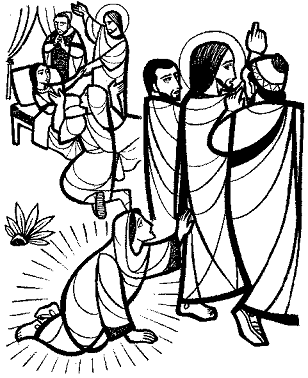
But the woman, knowing what had happened to her, came in fear and trembling, fell down before him, and told him the whole truth. He said to her, “Daughter, your faith has made you well; go in peace, and be healed of your disease.” While he was still speaking, some people came from the leader’s house to say, “Your daughter is dead. Why trouble the teacher any further?” But overhearing what they said, Jesus said to the leader of the synagogue, “Do not fear, only believe.” (Mark 5)

Mark is an exceptionally skilled storyteller, weaving two stories together here in a cinematic way.

In the press of the crowds, in front of everyone, a proud religious leader suddenly throws himself onto the dusty ground, begging Jesus to help him, heedless of the stares. His daughter is near death, and he will do anything for her sake.

Jesus helps him to stand, and with a gesture says, “Lead the way.”

Unnoticed in the crowd, just as she is paid no mind by anyone, a woman furtively follows Jesus, taking advantage of the distraction. “If I can just touch his robe,” she says, “I will finally get better.”

And then everything stops. Freeze frame. The religious leader’s hands cover his face; the woman’s fingers reach toward Jesus.

JairusHe feels her. “Who touched me?” She panics and falls to the ground. He lifts her up and reassures her, “Your faith has made you well.”

In the same moment, word comes to the religious leader. “Your daughter is dead. Stop crying now, don’t trouble the teacher.”

Jesus stands with him, meeting his slack, tear-stained gaze. “Do not fear.”

Do not fear.

Do not worry what other people think.

Do not hesitate to reach out to Jesus.

He will reassure you.

He will stand with you.

Do not fear.

Coda: In all of the images I looked through I could not find a single one where Jairus was actually kneeling before Jesus, with the exception of one cartoon. Apparently, pictures (by their silence) tell a thousand words. Men’s shame at appearing weak or in need persists.

Do not fear.