Continual prayer and reconciliation

Today’s a busy day — heading out later for the wedding of my godson this weekend — so here’s a post about James of Jerusalem from two years ago.

I still find James to be a fascinating figure, and I think you will, too.

Rodger Patience's avatarDaily Office Anchor Society

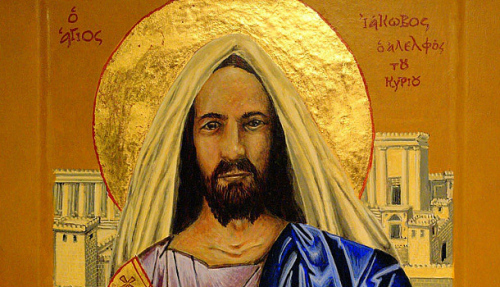
Icon of James of Jerusalem, found at http://sothl.com/2011/10/17/october-23-james-of-jerusalem/ Icon of James of Jerusalem, found at http://sothl.com/2011/10/17/october-23-james-of-jerusalem/

Seven times a day do I praise you, *
because of your righteous judgments. 
Great peace have they who love your law; *
for them there is no stumbling block. 
I have hoped for your salvation, O LORD, *
and have fulfilled your commandments. 
I have kept your decrees *
and I have loved them deeply. 
I have kept your commandments and decrees, *
for all my ways are before you.
(Psalm 119:164-168)

James of Jerusalem, the brother of Jesus, is called the Just because of his decision not to place restrictions on Gentile converts (Acts 15:19).

He was an early leader of the movement Jesus started, even though he wasn’t a believer until after his brother died. After the resurrection, Jesus appeared to Peter and the 12 apostles, then to about 500 followers, then to James, and then to all of…

View original post 181 more words

Through the Red Door | Clothed with joy

My post entitled “Clothed with joy” was featured yesterday on Through the Red Door, the blog of Recovery Ministries of the Episcopal Church.

Some of the material comes from reflections on this blog, but I appreciated the opportunity once again to draw a connection between common recovery practices like Steps 10 and 11 and the ancient wisdom of the Church in those areas.

“One day at a time,” says Alcoholics Anonymous. “Daily we begin again,” say the Benedictines.

I am grateful for the Daily Office as a framework for living each day, and for the recovery community which has revitalized my spiritual life.

Make every word count

Otherwise, if you say a blessing with the spirit, how can anyone in the position of an outsider say the “Amen” to your thanksgiving, since the outsider does not know what you are saying? For you may give thanks well enough, but the other person is not built up. (1 Cor. 14:16-17)

In the Episcopal Church, today is the feast day of Samuel Isaac Joseph Scherechewsky, Bible translator and Bishop of Shanghai, who spent the last 25 years of his life, largely unable to speak, paralyzed and in a wheelchair, translating the Old Testament into Mandarin and the entire Bible into Easy Wen-Li.

He accomplished this monumental feat by typing with only two fingers.

These days, most of us type a lot, using our fingers (or thumbs) to send out a blizzard of emails, text messages, tweets, Facebook status updates, Instagram tags, Snapchat pics, and so on.

There is nothing wrong with staying connected by social media — I love it myself — but I can’t help wondering how much we are building one another up, how solid a contribution we’re making, how much we are writing or saying anything that will last beyond the moment.

There’s an astonishing (appalling) humility to the end of Bishop Scherechewsky’s life: one wheelchair, two fingers, one project that would endure.

What message might God be inviting you to deliver in order to build people up?

What else might need to fall away in your daily life and activities so you can focus on making every word count?

Collect of the Day

O God, in your providence you called Joseph Schereschewsky from his home in Eastern Europe to the ministry of this Church, and sent him as a missionary to China, upholding him in his infirmity, that he might translate the Holy Scriptures into languages of that land. Lead us, we pray, to commit our lives and talents to you, in the confidence that when you give your servants any work to do, you also supply the strength to do it; through Jesus Christ, our Lord, who lives and reigns with you and the Holy Spirit, one God, for ever and ever. Amen.

Give it away entirely and come into the oasis

Many of you know that two years ago this week I acknowledged my addiction to alcohol and began living in recovery.

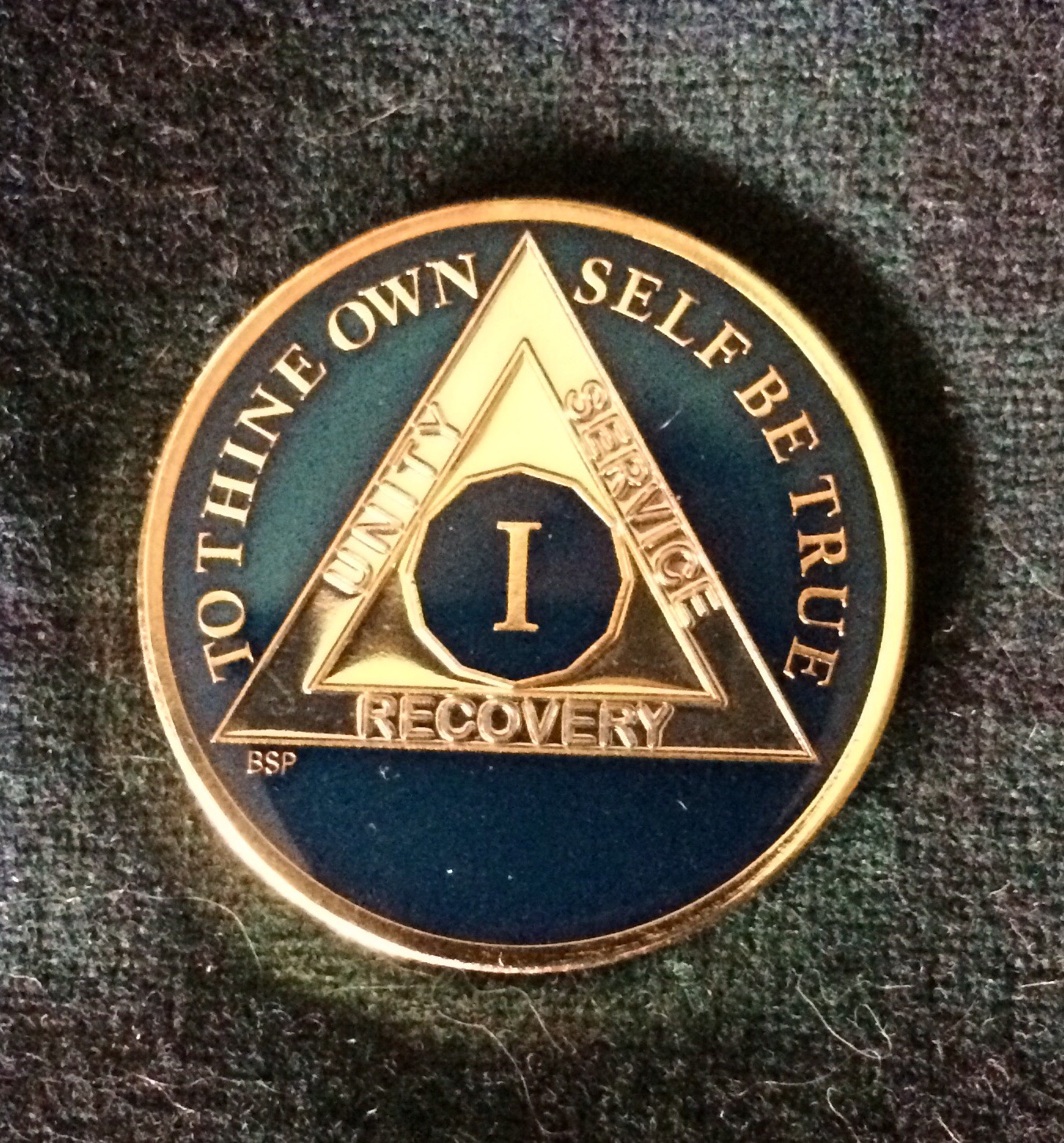
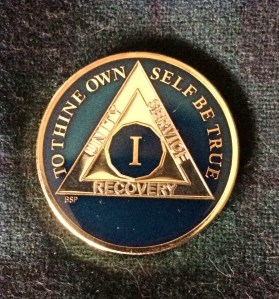
I carry a pocket medallion as a reminder of the grace I have received in recovery – grace far beyond my imagining. Most days, I have a sense of living in what a friend calls “the oasis” and AA refers to as “a daily reprieve … contingent on the maintenance of our spiritual condition” (Big Book 85).
IMG_1299.JPG

My prayer life, my practice of the Daily Office, the teaching I do and the conversations I have with colleagues and friends – all of it has been reinvigorated by what the Franciscan priest and teacher Richard Rohr calls in Breathing Under Water the “coded Gospel” of the 12 Steps.

You may not realize, though, that stopping drinking was only a small part of the work that I have had to do in recovery. In addition to the medallion in my pocket, I also wear a bracelet around my wrist, one of the last things I bought without my wife’s knowledge before losing my job.
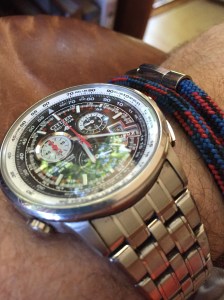
2015-07-24 18.21.20

My addiction to spending and to indulging myself has been much, much harder to deal with – it’s the same struggle alcoholics face when they can’t stop thinking about their next drink.

You lack one thing

I think I know a little bit about how the “rich young man” felt after he found Jesus.

A man ran up and knelt before him, and asked him, “Good Teacher, what must I do to inherit eternal life?” Jesus said to him, “Why do you call me good? No one is good but God alone. You know the commandments …. “ He said to him, “Teacher, I have kept all these since my youth.” Jesus, looking at him, loved him and said, “You lack one thing; go, sell what you own, and give the money to the poor, and you will have treasure in heaven; then come, follow me.” When he heard this, he was shocked and went away grieving, for he had many possessions. (Mark 10:17-22)

You lack one thing …. you have many possessions.

Here’s where I think the rich young man realizes what the living God asks of each one of us. The living God asks for all of us.

The young man is looking for inspiration, but Jesus, who loves him, points to the one thing that really keeps him from God – the wealth he cannot imagine doing without.

“When he heard this, he was shocked and went away grieving.”

What a state he must have found himself in:

If I go forward, he is not there;
or backward, I cannot perceive him;
on the left he hides, and I cannot behold him;
I turn to the right, but I cannot see him.
God has made my heart faint;
the Almighty has terrified me;
If only I could vanish in darkness,
and thick darkness would cover my face! (Job 23:8-9,16-17)

The Almighty has terrified me

In our Old Testament lesson, Job has lost everything, and he does not yet have the answer that will help him remain faithful to God. The Almighty has terrifed him, and Job doesn’t yet understand that God loves him.

In the meantime, his friends and his wife, as Fr. Ralph reminded us last week, are giving him conflicting (and bad) advice. They can’t help him discover either God’s love or the one thing he lacks.

Unlike Job’s companions, however, my wife and my friends have given me good advice and steady support.

Their willingness to share love and to confront me about the things I lack has helped me do the hard work of staying steady in recovery.

  • A dear friend made sure I was “fearless and thorough from the very start” in admitting my failings.
  • A fellow deacon in another diocese helped me admit I needed to go to AA meetings and – laughing at how upside-down I had it – helped me understand that sobriety was an oasis, not a burden.
  • The first boss I had after losing my job, who has been sober for several years, gave me his 3-month sobriety medallion when I reached that milestone myself.
  • The guys in the Thursday morning breakfast and Bible study group here at St. Thomas drew me into their circle of support.
  • And my wife has cheerfully accommodated my being home and underfoot after nearly 10 years on the road, encouraging my new habits and being patient with my stumbling.

church-circle-graphicMy recovery – my new faith in this “coded Gospel” – really is something I have to work at every day. But what I have to work at most is not to do with drinking, but with spending money.

It’s a Pendleton, you idiot!

Sitting on the sofa watching TV one night a few months ago, I was in jeans and my favorite flannel shirt, and I thought “I really like this shirt; I should buy another one.”

A couple beats later, after that thought went away, a new one came in. “You’re an idiot; that’s a Pendleton shirt. It’ll last for 100 years. You’ll be dead before it wears out. You don’t need another one.”

“Oh, cool.”

Contentment is weird.

People in recovery are more used to being “restless, irritable, and discontented” (Big Book xxviii).

But when you’re content, it’s like you can just be, and everything is all right. Perhaps eternal life is like that – just being with God, living in an oasis.

What must I do?

“Teacher, what must I do to inherit eternal life?” asks the rich young man, who probably had several shirts.

Jesus loves him, and says, “You lack one thing … get rid of the thing that’s keeping you from God, whatever it is. Give it away entirely, and you’ll have treasure in heaven.”

For me, giving away my desire for a drink and giving away my desire to buy more things have together led me back to Jesus and to “a faith that really works in daily living” (12and12, 43).

What is the one thing you lack?

What might Jesus, who loves you, point to in your life? What’s the one thing that keeps you from God?

Is it money?

Food? Anger? Gossip?

Is it drinking or drugs or politics or something equally addictive?

Is it approval or being right or getting your way?

What are you holding onto so tightly that you can’t receive the treasure of heaven?

Give it away entirely, and enter the oasis!

Speaking of oases

The story of the rich young man reminds me of another favorite story, this one not from an oasis but from the Desert Fathers of 3rd century Egypt:

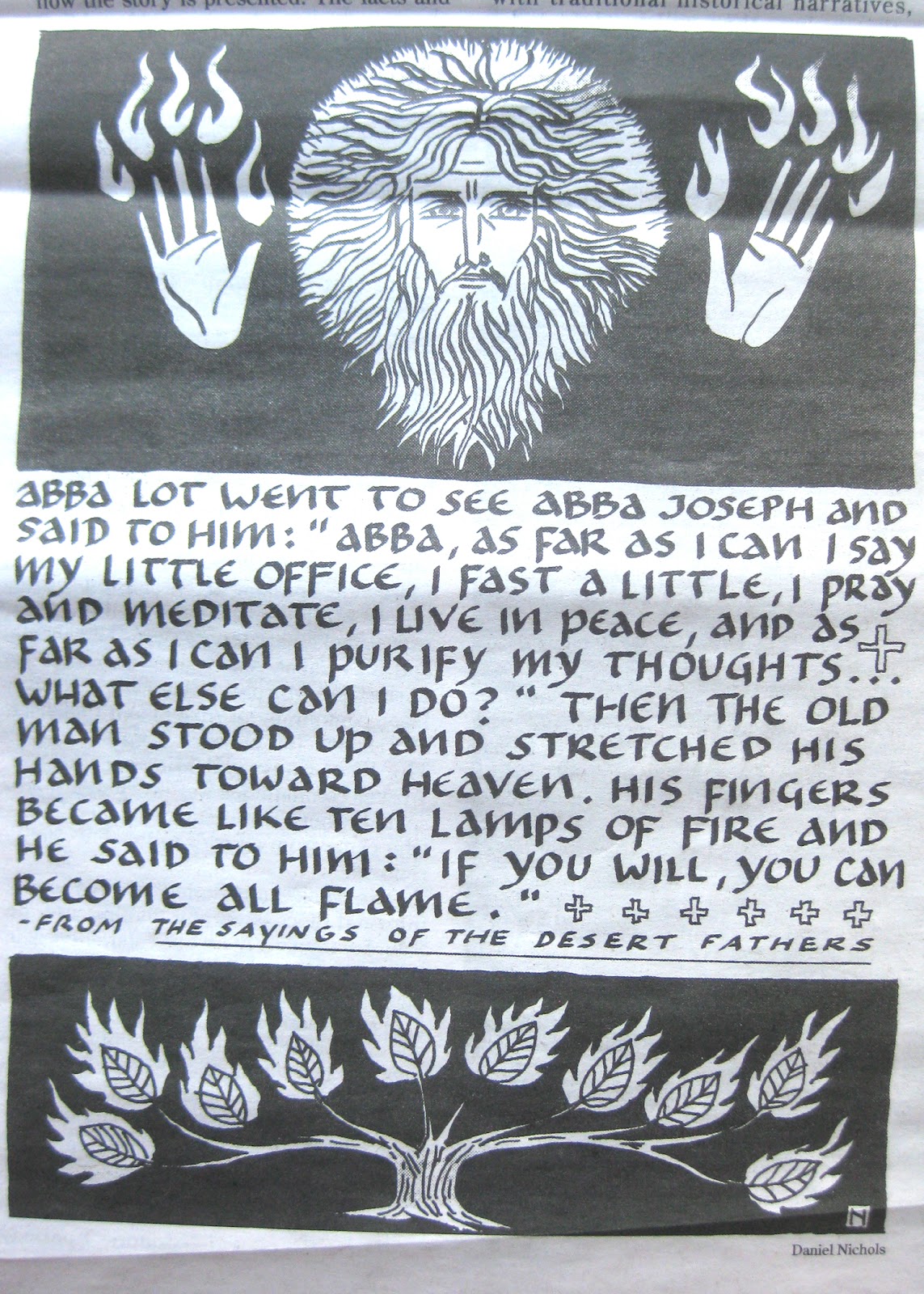
Abba Lot went to see Abba Joseph and said to him, “Abba as far as I can I say my little office, I fast a little, I pray and meditate, I live in peace and as far as I can, I purify my thoughts. What else can I do?”

 Then the old man stood up and stretched his hands towards heaven. His fingers became like ten lamps of fire and he said to him, “Why not become totally flame?”
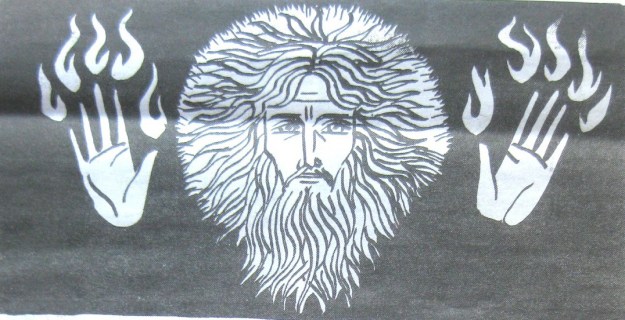
abbas lot and joseph - all flameWhat’s the one thing you lack? What’s holding you back from God?

Why not give it away in order to find a faith that works, in order to find contentment?

Why not become totally flame?

Why not give it away entirely, and live now in the oasis with God?

Tools of the trade

“Is that a Bible or a machinists’ manual?”

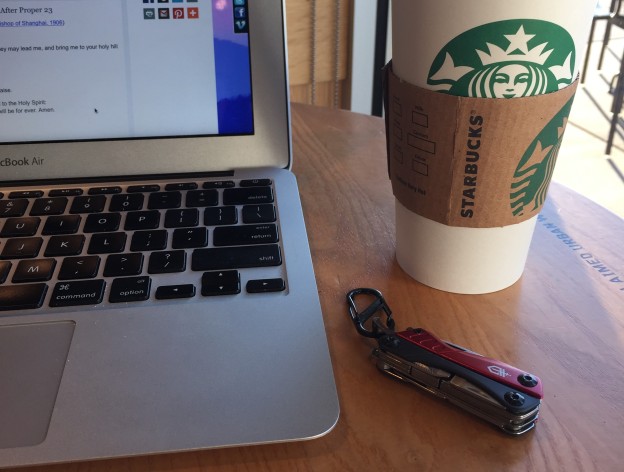
The man with a cast sitting near me at Starbucks pointed to the leather-bound book with ribbons next to my laptop. 

“Well, it’s a prayer book and a Bible, so I guess you could say it’s both.”

“What do you mean?”

“It’s a tool of the trade, so to speak. The prayer book is all about how to practice the Christian life.”

“Hm. Cool.”

And with that the conversation turned to other things: My father-in-law was a tool and die maker. Had we lived here long? What happened to his foot? I had foot surgery myself a few years ago. He was starting physical therapy this week. 

Seeds planted. Connections made. 

He gathered up his cane, but before he left he made a point of coming over and saying good-bye. 

“See you around.”

I hope so. 

Rich phrases, poignant and powerful

When you are praying, do not heap up empty phrases as the Gentiles do; for they think that they will be heard because of their many words. Do not be like them, for your Father knows what you need before you ask him. (Matthew 6:7-8)

Yesterday evening’s portion of the Beatitudes has Jesus instructing his listeners how to pray — and how not to.

“Hey, God.”

I’m serving this weekend as spiritual director of a New Beginnings retreat for middle school youth in the Diocese of Fond du Lac.

At events like these, we’re careful to model a very personal, comfortable prayer style. Youth leaders often begin their prayers with “Hey, God.”

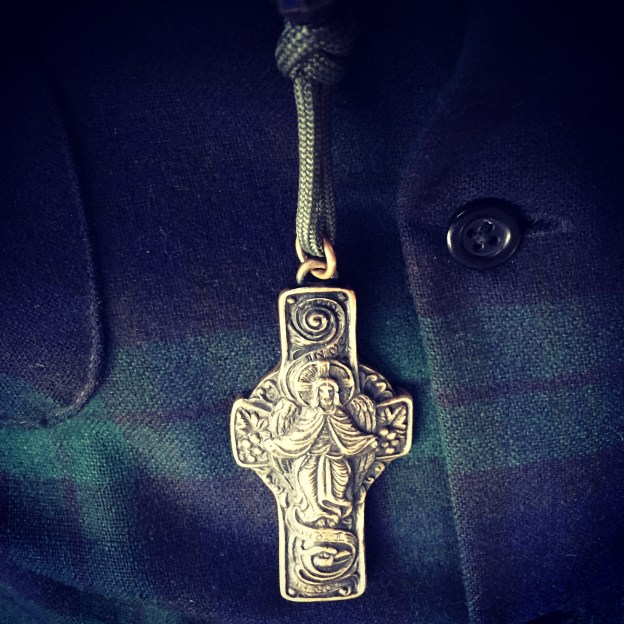
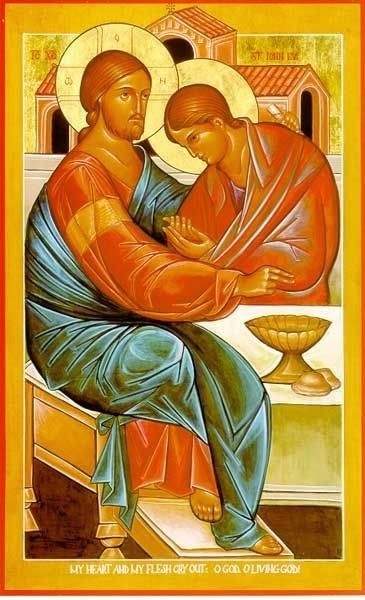
That affectionate style of prayer models the intimacy Jesus desires with each of us. It’s no accident that I’ll be using the icon of the Beloved Disciple in reflections and the Eucharist throughout the day today.

20130116-063434.jpg

No empty phrases

The prayer Jesus teaches his listeners — what we now call “the Lord’s Prayer” — is not just a lovely model of affectionate prayer, in which we address God as Abba (“daddy”), but it’s also a prayer in which every word counts.

Our Father in heaven,
hallowed be your Name,
your kingdom come,
your will be done,
on earth as in heaven.
Give us today our daily bread.
Forgive us our sins
as we forgive those
who sin against us.
Save us from the time of trial,
and deliver us from evil.
For the kingdom, the power,
and the glory are yours,
now and for ever. Amen.

“Your Father knows what you need before you ask him,” so you don’t need to wrap your prayer up in “empty phrases.”

Just cut to the chase: God, we praise you, you know what we need, we’re sorry, help us.

Never have to do it alone

I’ve written before about the powerful way my recovery group prays the Lord’s Prayer.

Church-Circle-Graphic

We stand and gather in a circle, and one of the long timers begins, “We stand here holding hands, knowing that we never have to do this alone. Whose Father?”

“Our Father …”

Far from “empty phrases,” these words speak of grace and power to heal.

The touch of another person’s hand connects me not just to them, but to the Lord himself, who desires to be in relationship with me.

We pray in union with each other, and we pray in words made familiar through long repetition, one day at a time.

Rich phrases, poignant and powerful

In the same way, the Daily Office offers us a chance to pray in union with Christians around the world, and to pray in words made familiar through long repetition.

The Confession, the psalms, the Scripture lessons and canticles, the Apostles’ Creed and the suffrages, the General Thanksgiving and St. Chrysostom’s “golden-tongued” prayer — far from heaped-up words, these are “rich phrases,” poignant and powerful.

There’s not a wasted word in the Daily Office, no needless repetition, no hedging, no hemming or hawing.

We simply pray in the way that our Lord taught us, and his early followers practiced, and the women and men of the desert whetted into sharpness, and the Benedictines rounded and smoothed seven times a day, and the choirs adorned with ravishing melodies, and Archbishop Cranmer organized, and the publishers bound with ribbons between leather covers, and the developers turned into a clean app and website so there’s no barrier to our praying.

So, when you pray … pray like this.

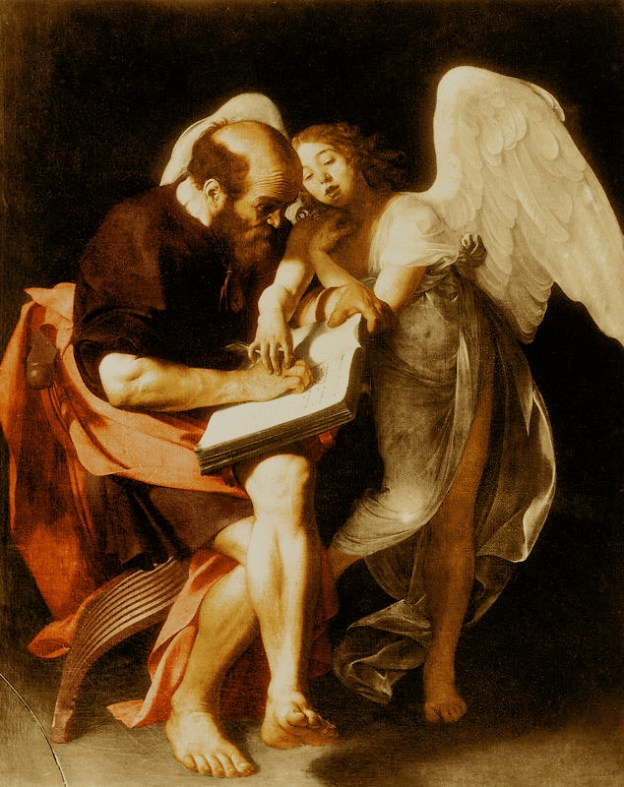
Feet don’t fail me now | St. Matthew, Apostle and Evangelist

The scripture says, “No one who believes in him will be put to shame.” For there is no distinction between Jew and Greek; the same Lord is Lord of all and is generous to all who call on him. For, “Everyone who calls on the name of the Lord shall be saved.” But how are they to call on one in whom they have not believed? And how are they to believe in one of whom they have never heard? And how are they to hear without someone to proclaim him? And how are they to proclaim him unless they are sent? As it is written, “How beautiful are the feet of those who bring good news!” (Romans 10:11-15)

Gospel means good news

How often do you hear from Christians about God’s generosity?

How often do you hear from Christians that no one will be put to shame?

How often do you hear from Christians that there is no distinction between people of different cultures and races?

Within the church, I hear about these things a lot. I am fortunate to serve with many generous, empathetic, and open-minded people.

But outside, especially in the world of social media and TV news, not so much. In the popular culture especially, the Christian message too often sounds exclusive, judgmental, and fearful.

Who are you afraid of?

For the LORD spoke thus to me while his hand was strong upon me, and warned me not to walk in the way of this people, saying: Do not call conspiracy all that this people calls conspiracy, and do not fear what it fears, or be in dread. But the LORD of hosts, him you shall regard as holy; let him be your fear, and let him be your dread. (Isaiah 8:11-13)

Who do we fear?

Refugees … prisoners … all who are in danger …

The poor and the oppressed, the unemployed and the destitute, prisoners and captives …

Those who suffer in body, mind, or spirit …

Those who do not yet believe, and those who have lost their faith …

Our enemies and those who wish us harm … all whom we have injured or offended …

Who are you afraid of? Why are you afraid of them?

Perhaps more importantly, who tells you to fear them, and why do they do that? Who paints a picture of the world that causes you dread instead of joy?

How beautiful the feet!

Teresa of Ávila said,

Christ has no body now but yours. No hands, no feet on earth but yours. Yours are the eyes through which he looks compassion on this world. Yours are the feet with which he walks to do good. Yours are the hands through which he blesses all the world. Yours are the hands, yours are the feet, yours are the eyes, you are his body. Christ has no body now on earth but yours.

We are surrounded by stories and images designed to cause us to fear the stranger, the poor, the unbeliever, the other.

But hear the word of God that came to Isaiah: “Do not call conspiracy what this people calls conspiracy, and do not fear what it fears.”

And hear the word that Paul preached: “The same Lord is Lord of all and is generous to all who call upon him.”

And hear the collect that we pray every Monday, even on Mondays like today when we remember one like Matthew who preached the good news — the gospel — about Jesus.

Let these words remind you of the good news of God’s generosity and let them guide your feet into the way of peace.

Let them make you a beautiful messenger of the gospel like Matthew.

A Collect for the Renewal of Life

O God, the King eternal, whose light divides the day from the night and turns the shadow of death into the morning: Drive far from us all wrong desires, incline our hearts to keep your law, and guide our feet into the way of peace; that, having done your will with cheerfulness while it was day, we may, when night comes, rejoice to give you thanks; through Jesus Christ our Lord. Amen.

Saving health among all nations | Holy Cross Day

The people came to Moses and said, “We have sinned by speaking against the LORD and against you; pray to the LORD to take away the serpents from us.” So Moses prayed for the people. And the LORD said to Moses, “Make a poisonous serpent, and set it on a pole; and everyone who is bitten shall look at it and live.” So Moses made a serpent of bronze, and put it upon a pole; and whenever a serpent bit someone, that person would look at the serpent of bronze and live. (Numbers 21:7-9)

Keep this nation under your care

When Jesus says, “For God so loved the world that he gave his only Son, so that everyone who believes in him may not perish but may have eternal life” (John 3:16), it’s easy for us to forget that he isn’t wearing a rainbow wig and holding up a poster in a football stadium.

Jesus Saves 39014501

Jesus is not addressing American Christians and football fans. He is not suggesting we wear black “John 3:16” eye paint to Lambeau Field.

Instead, Jesus is deep in a private, nighttime conversation with Nicodemus, a “leader of the Jews” who is trying to understand what Jesus is doing and teaching in Jerusalem at the Passover.

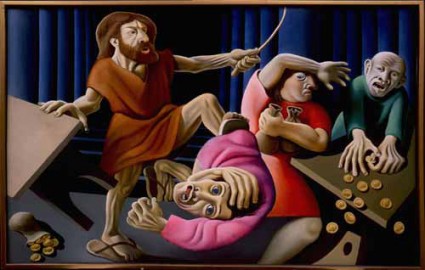
Nicodemus recognizes that Jesus is from God, though the “cleansing of the Temple” — knocking over the tables of the moneychangers and driving them and the sacrificial animals out with a whip of cords — probably upset Nicodemus’ sense of order and respect.

In their quiet, late night conversation, he struggles with Jesus’ words about seeing and entering the kingdom of God — he is confused by the idea of being “born again” and “born from above” and “born of water and the Spirit.”

Jesus asks, “Are you a teacher of Israel, and you do not understand these things?”

Then he continues to teach Nicodemus about the kingdom of God and about salvation.

Let your way be known upon earth

Jesus builds on what he has just said about who can see and who can enter the kingdom of God.

No one has ascended into heaven except the one who descended from heaven, the Son of Man. And just as Moses lifted up the serpent in the wilderness, so must the Son of Man be lifted up, that whoever believes in him may have eternal life. “For God so loved the world that he gave his only Son, so that everyone who believes in him may not perish but may have eternal life. “Indeed, God did not send the Son into the world to condemn the world, but in order that the world might be saved through him (John 3:13-17).

He uses a strange image for the kingdom, reminding scholarly Nicodemus of a passage from the Book of Numbers about a mysterious cure. The people of Israel in the wilderness were sick, dying from venomous snake bites, but they were cured when they looked at a bronze serpent held up on a pole.

It would have been a particularly odd image, since the bronze serpent had later been destroyed by King Hezekiah (reigned 715-687 BC) during his reforms of the nation and its worship (2 Kings 18:4).

According to the Wikipedia article on him,

Hezekiah purified and repaired the Temple, purged its idols, and reformed the priesthood. In an effort to abolish what he considered idolatry from his kingdom, he destroyed the high places (or bamot) and “bronze serpent” (or “Nehushtan“), recorded as being made by Moses, which became an objects of idolatrous worship. In place of this, he centralized the worship of God at the Jerusalem Temple.

Several hundred years later, having just upset the business of the Jerusalem Temple, Jesus tells Nicodemus that the kingdom of heaven is like the bronze serpent people used to look to instead of going to the Temple as their leaders said they should.

Your saving health among all nations

In John’s Gospel, Jesus does signs — like the miracle at Cana and the cleansing of the Temple — and teaches about the kingdom of God. “We speak of what we know and testify to what we have seen,” he says.

When he refers to the bronze serpent, he makes a point to describe it being lifted up, just as the Son of Man will be lifted up.

Jesus is describing another sign — the ultimate sign — that will testify to his identity and open the kingdom of God to those who believe.

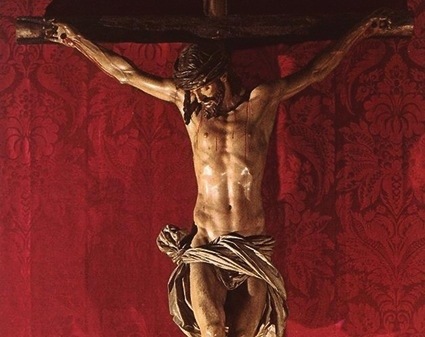
Like the bronze serpent brought healing (salvation) to those poisoned by snakebites, the sign of the Cross will bring eternal life and saving health to all who suffer.

No longer is the healing work of God limited to the people of Israel, no longer is salvation contained in the Temple at Jerusalem, but rather saving health is available to all who look on the Son of Man lifted up.

Collect of the Day

Almighty God, whose Son our Savior Jesus Christ was lifted high upon the cross that he might draw the whole world to himself: Mercifully grant that we, who glory in the mystery of our redemption, may have grace to take up our cross and follow him; who lives and reigns with you and the Holy Spirit, one God, in glory everlasting. Amen.

Jesus is a hot mess | Have faith in God

In today’s Gospel reading, Jesus is a hot mess.

After he curses a fig tree that has no fruit (because it’s not the season for figs), and after he drives out of the temple the sellers and buyers and moneychangers (who are going about their normal business), this is how the story winds down:

And when evening came, Jesus and his disciples went out of the city. In the morning as they passed by, they saw the fig tree withered away to its roots. Then Peter remembered and said to him, “Rabbi, look! The fig tree that you cursed has withered.” Jesus answered them, “Have faith in God.” (Mark 11:19-22)

Cursing, driving out, having faith. What are we supposed to make of this?

The Collect for the Renewal of Life, which we read on Mondays at Morning Prayer, seems to provide an interpretive key.

O God, the King eternal, whose light divides the day from the night and turns the shadow of death into the morning: Drive far from us all wrong desires, incline our hearts to keep your law, and guide our feet into the way of peace; that, having done your will with cheerfulness while it was day, we may, when night comes, rejoice to give you thanks; through Jesus Christ our Lord. Amen. (BCP 99)

Drive far from us all wrong desires

Jesus, the “pioneer and perfecter of our faith,” is hungry and wants some figs. The fig tree is not in season, so he can’t have any figs. “Dammit,” he says, “I want some figs. Screw you, fig tree!”

Unreasonable expectations, right? Why would Jesus expect figs when they’re out of season?

He doesn’t live in the United States in the 21st century, after all — he doesn’t have Whole Foods or Piggly Wiggly. He can’t just have anything he wants anytime he wants.

But we can. So why are we so pissed off all the time?

Why are we so put out at the slightest inconvenience, so quick-tempered when things don’t go exactly as we want them to?

“But I want Fig Newtons!”

Incline our hearts to keep your law

Jesus brings that angry energy with him into the temple precinct. “I just want some peace and quiet, guys … is that too much to ask?”

“Doves! Get your doves here! Two birds for one gold zuz!”

“Gold changed here! One gold zuz, only $250! Today only!”

And he entered the temple and began to drive out those who were selling and those who were buying in the temple, and he overturned the tables of the money changers and the seats of those who sold doves; and he would not allow anyone to carry anything through the temple. He was teaching and saying, “Is it not written, ‘My house shall be called a house of prayer for all the nations’? But you have made it a den of robbers.” And when the chief priests and the scribes heard it, they kept looking for a way to kill him; for they were afraid of him, because the whole crowd was spellbound by his teaching. (Mark 11:15-18)

I’ll bet he really enjoyed a nice, quiet prayer time in the temple after that. What do you think?

Can’t you just picture him, rocking back and forth in his pew, muttering to himself?

“Now my foot hurts from where I kicked that guy’s table. And I think I have a splinter from that other guy’s stool.”

So serene, being in the “house of prayer for all the nations.” So soothing and spiritual.

Guide our feet into the way of peace

So yeah, now Jesus and the disciples are leaving Jerusalem and the next morning Peter can’t let the fig tree thing drop.

“Look,” he says, “here’s that withered old fig tree!”

“Dammit, Peter!” Jesus stops.

christ-in-gethsemane-p

And with that, the anger dissipates. The restless, irritable, discontented rabbi breathes in and out, exhaling a prayer:

“Have faith in God.”

“Have faith in God.”

The disciples look at each other.

The rabbi smacks his forehead. “Whenever you stand praying, forgive, if you have anything against anyone; so that your Father in heaven may also forgive you your trespasses.” (Mark 11:26)

Have faith in God

What is forgiving, anyway, but acknowledging that you didn’t get what you wanted?

“That company didn’t hire me.”

“My parents won’t let me do anything.”

“All I wanted was some peace and quiet.”

They frustrated me … they upset me … they paid no attention to my needs.

“Whenever you stand praying, forgive.”

Letting go of your frustration and disappointment and anger may seem as impossible as making a mountain go soak its head, but if there’s anything that Jesus can teach us this morning, it’s that letting go is both necessary and within our reach.

If the Son of God himself was a hot mess sometimes, who are we to think we’re any better?

If the Word of God incarnate, the wisdom from on high let slip a curse or two in his frustration — “but I want figs!” — who are we to expect smooth sailing?

Whenever you stand praying, forgive — let go of what you want, admit that you are angry and out of sorts, and find instead cheerfulness and rejoicing.

Let go of your frustrations, and find instead the peace that passes understanding.

It makes about as much sense, seems about as ineffective, as telling a mountain it’s all wet.

But it turns the harsh light of morning back into a moment when we can hear the still, small voice of God as we breathe in and out, just like Jesus.

“Have faith in God.”

“Have faith in God.”

These trees are prayers

In this morning’s email, Richard Rohr shares a poem by Rabindranath Tagore:

Silence my soul, these trees are prayers.
I asked the tree, “Tell me about God”;
then it blossomed.

Rohr continues: “Now look around you, wherever you are, and find something of beauty. Sit in spacious silence, observing without words or judgment. Let this beauty teach you the mystery of Incarnation, of God’s indwelling presence in all creation.”

St. Mary the Virgin

Today is one of the feasts on the church calendar centering on the “mystery of Incarnation,” on God becoming human and sharing our lives in the person of Jesus.

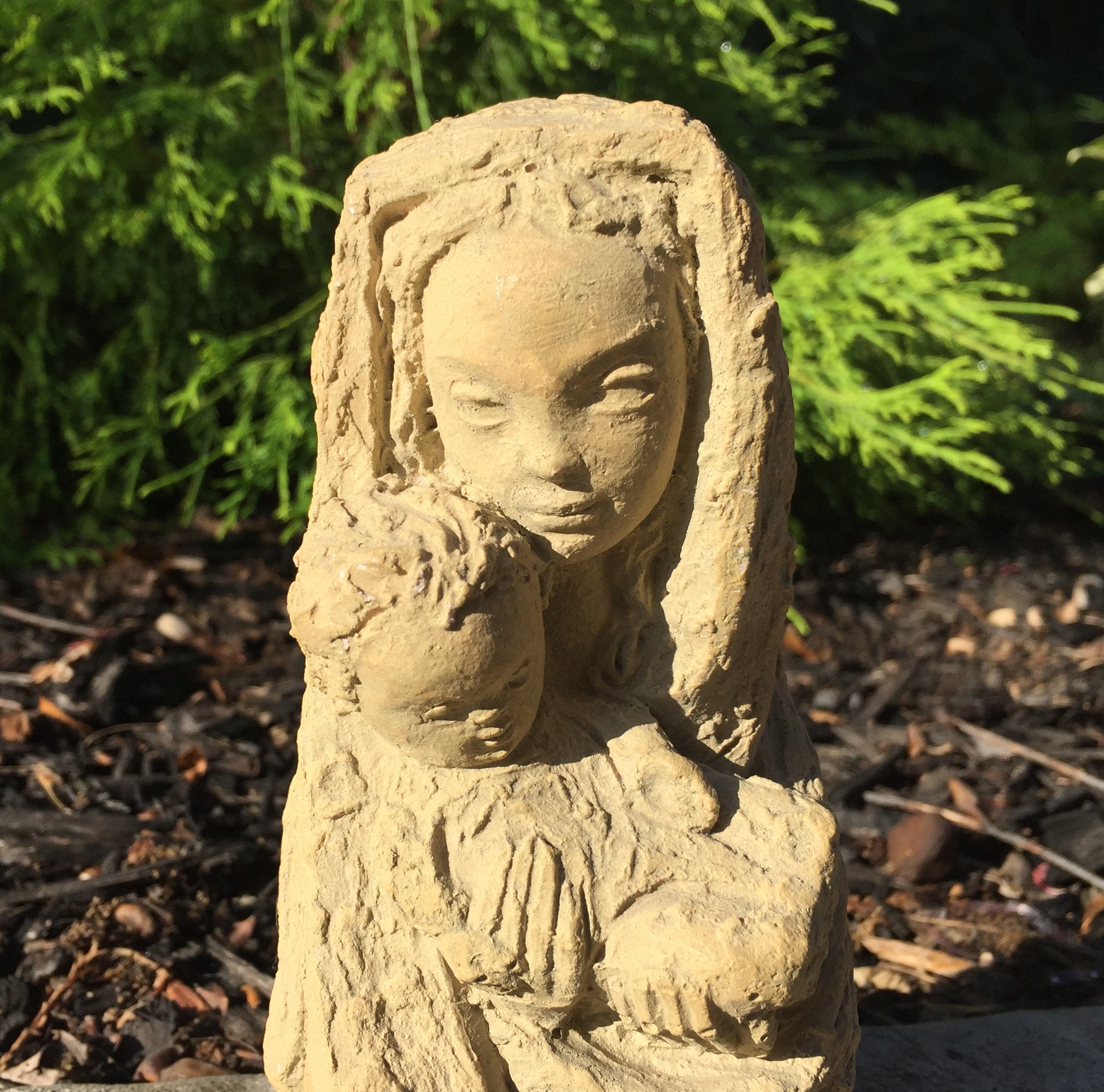
His mother, Mary, plays a central role in this mystery. Her “yes” to God makes room for all sorts of blossoming.
2015-08-15 08.17.13Like Hannah, who sings that “the barren has borne seven” and the needy are raised up from the ash heap (1 Samuel 2:5-8), Mary sings of God lifting up the lowly and filling the hungry with good things (Luke 1:52-53).

Something new is bearing fruit in the world just as it is in her womb.

And in Jesus’ first sign, the miracle at the wedding in Cana, it’s Mary who puts the fruit of her womb on the spot and urges him to provide the fruit of the vine, overflowing amounts of wine for the feast, good wine that gladdens the heart.

Blossoming in place

Like many who pray the Daily Office, I have a favorite place to pray, a place that gladdens my heart.

From my chair on our porch I look out on our backyard, a Japanese garden with a screen of trees in the ravine behind it.

2015-08-15 06.37.59Looking at the trees in my garden, I “ponder these things in my heart” like Mary.

What trees bear witness to your prayers?

What place helps your heart to blossom? How does the place where you pray help bring Jesus to life again in you?