Category Archives: Daily Office

Reaching forth our hands in love

LM_Widget_H

Today’s matchup in Lent Madness — you are participating in Lent Madness, right? — features Charles Henry Brent, first missionary bishop to the Phillipines and first bishop of Western New York.

Celebrity blogger Laura Darling writes: “After serving as the senior chaplain of the American Expeditionary Forces during World War I, he became bishop of Western New York. Prior to this, he established himself as a leader in the ecumenical movement, having attended the World Missionary Conference in Edinburgh in 1910. He continued to work for the cause of Christian unity, presiding at the World Conference of Faith and Order in Lausanne, Switzerland in 1927.”

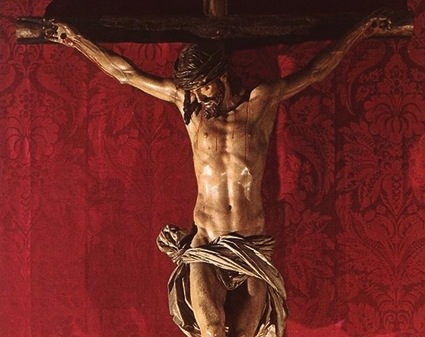
However, Brent is also the author of one of the loveliest prayers for mission in Morning Prayer:

Lord Jesus Christ, you stretched out your arms of love on the hard wood of the cross that everyone might come within the reach of your saving embrace: So clothe us in your Spirit that we, reaching forth our hands in love, may bring those who do not know you to the knowledge and love of you, for the honor of your Name. Amen. (BCP 101)

On this Friday, as on so many others, may Jesus clothe us in his own Spirit as we make this our prayer.

20130530-172526.jpg

Step Four on Ash Wednesday

genuflect

Then I acknowledged my sin to you,
and did not conceal my guilt.
I said, “I will confess my transgressions to the LORD.”
Then you forgave me the guilt of my sin.

(Psalm 32:5-6)

A couple of weeks ago my AA sponsor and I knelt together as I prayed that God would “relieve me of the bondage of self, that I may better do his will … and take away my difficulties, that my victory over them may bear witness to those I would help of Thy power, Thy love, and Thy way of life” (Big Book 63).

This prayer of abandonment to God’s will is what AA calls Step Three and what the Book of Common Prayer calls in the Ash Wednesday liturgy “a right beginning of our repentance, and a mark of our mortal nature” (BCP 265).

Today Lent begins, and for me a very particular process of self-examination and repentance.

I have reached the point in my recovery where it’s time to begin Step Four — to conduct a “searching and fearless moral inventory” of myself — and then to take Step Five, to admit to God, to myself, and to another human being the exact nature of my wrongs.

Though I have been in the Church all my life, I am beginning to understand for myself the wisdom of traditional practices like Confession, what the Book of Common Prayer calls Reconciliation of a Penitent (BCP 447). We need at times to write down what we’ve done wrong, to say it out loud to another person, and to hear from them our Lord’s assurance of forgiveness.

Lent is a particularly appropriate time for this hard and holy work, and I am embracing it gladly as my main observance this year.

And now, O Lord, I bend the knee of my heart,
and make my appeal, sure of your gracious goodness.
(Canticle 14, BCP 91)

Whatever you may decide to do to mark this Lent, I invite you to take it seriously but joyfully.

I invite you, therefore, in the name of the Church, to the observance of a holy Lent, by self-examination and repentance; by prayer, fasting, and self-denial; and by reading and meditating on God’s holy Word. And, to make a right beginning of repentance, and as a mark of our mortal nature, let us now kneel before the Lord, our maker and redeemer (BCP 265).

A baaad soap opera

MidnightDGCinnamon

Picture this: Jacob and his two wives Leah and Rachel are going to flee from his mean old father-in-law Laban. Because he’s mean, they’re going to steal all his stuff, too. Cue the swelling dramatic music as they meet in the field to make the crucial decision. The camera pans onto the worried faces of the wives.

Then Jacob keeps talking:

You know that I have served your father with all my strength; yet your father has cheated me and changed my wages ten times, but God did not permit him to harm me. If he said, ‘The speckled shall be your wages,’ then all the flock bore speckled; and if he said, ‘The striped shall be your wages,’ then all the flock bore striped. Thus God has taken away the livestock of your father, and given them to me. During the mating of the flock I once had a dream in which I looked up and saw that the male goats that leaped upon the flock were striped, speckled, and mottled. Then the angel of God said to me in the dream, ‘Jacob,’ and I said, ‘Here I am!’ And he said, ‘Look up and see that all the goats that leap on the flock are striped, speckled, and mottled; for I have seen all that Laban is doing to you. (Genesis 31:6-12)

Seriously? In the middle of a soap opera story, in the heightened drama of a theft and escape, Jacob starts droning on about sheep genetics? Boring!

And then, as we finish the lesson from Genesis — “thou shalt steal thy father-in-law’s stuff, and flee with thy two wives, and oh by the way, don’t forget to take the household gods, too” — we sing a song of praise, Canticle 13.

Glory to you, Lord God of our fathers; *
you are worthy of praise; glory to you.
Glory to you for the radiance of your holy Name; *
we will praise you and highly exalt you for ever.

Glory to you in the splendor of your temple; *
on the throne of your majesty, glory to you.
Glory to you, seated between the Cherubim; *
we will praise you and highly exalt you for ever.

Glory to you, beholding the depths; *
in the high vault of heaven, glory to you.
Glory to you, Father, Son, and Holy Spirit; *
we will praise you and highly exalt you for ever.
(BCP 90)

Wait, what?

In one breath we go from polygamous, plotting, sheep-stealing (but capably breeding) escapees … to glorifying God, seated between the cherubim.

Anyone who tells you the Bible is clear and easy to understand is pulling the wool over your eyes.

Get it? Wool? Oh, I kid. Get it? Kid?

On the face of it, this is one of those crazy stories, told and retold time and again, that makes your eyes glaze over every time you hear it.

“Oh God, uncle Jacob is telling the story about the sheep again!”

The lesson, and I promise there is one, is that it’s in the distance between our petty, thieving, sheep-stealing ways and God’s glory that we start to get the point of the larger story of Scripture. The Daily Office serves us well when it provides such sharp contrast between two pieces of Scripture.

The God of all creation, from the splendor of his temple, looks down on us and loves us. Even though we are manipulative tricksters, he loves us. Even though we defraud each other, and marry in weird configurations, and dream about sheep genetics, and run away from our lying, cheating families, God loves us.

In fact, he loves us so much that he works out his plan of salvation using us and our efforts.

If it weren’t right there in Scripture, plain as can be, we’d say that was a baaad soap opera.

With sober judgment

20140212-063729.jpg

For by the grace given to me I say to everyone among you not to think of yourself more highly than you ought to think, but to think with sober judgment, each according to the measure of faith that God has assigned. (Rom. 12:3)

The Psalms are the heart of the Office because they have for centuries expressed the “needs, hopes, and concerns” of God’s people. They are very human songs, and more often than not I am caught short by the emotion of the psalmist.

Today, for example, the psalmist’s simple love for the law rings false in my ears, perhaps because my own path has been too twisted lately. The version running through my head as I pray sounds more like this:

Oh, how I love your law!
Even though all day long it’s out of my mind.

Your commandment has made me no wiser than my enemies,
Because it is too little with me.

I have less understanding than any of my teachers,
Though your decrees have been my study.
(Psalm 119:97-99, para.)

Some days the Office is inspiring, giving us a glimpse of the ideal we long for. Other days it reminds us how far we still have to go.

But it always points us to Christ and to the Church, reminding us that we are not alone on our twisted path, that we are not truly separated from the love of God.

The “sober judgment” that Paul urges us to have places our real failings in the proper context of God’s even more real love for us shown in Christ Jesus.

By the oaks of Mamre

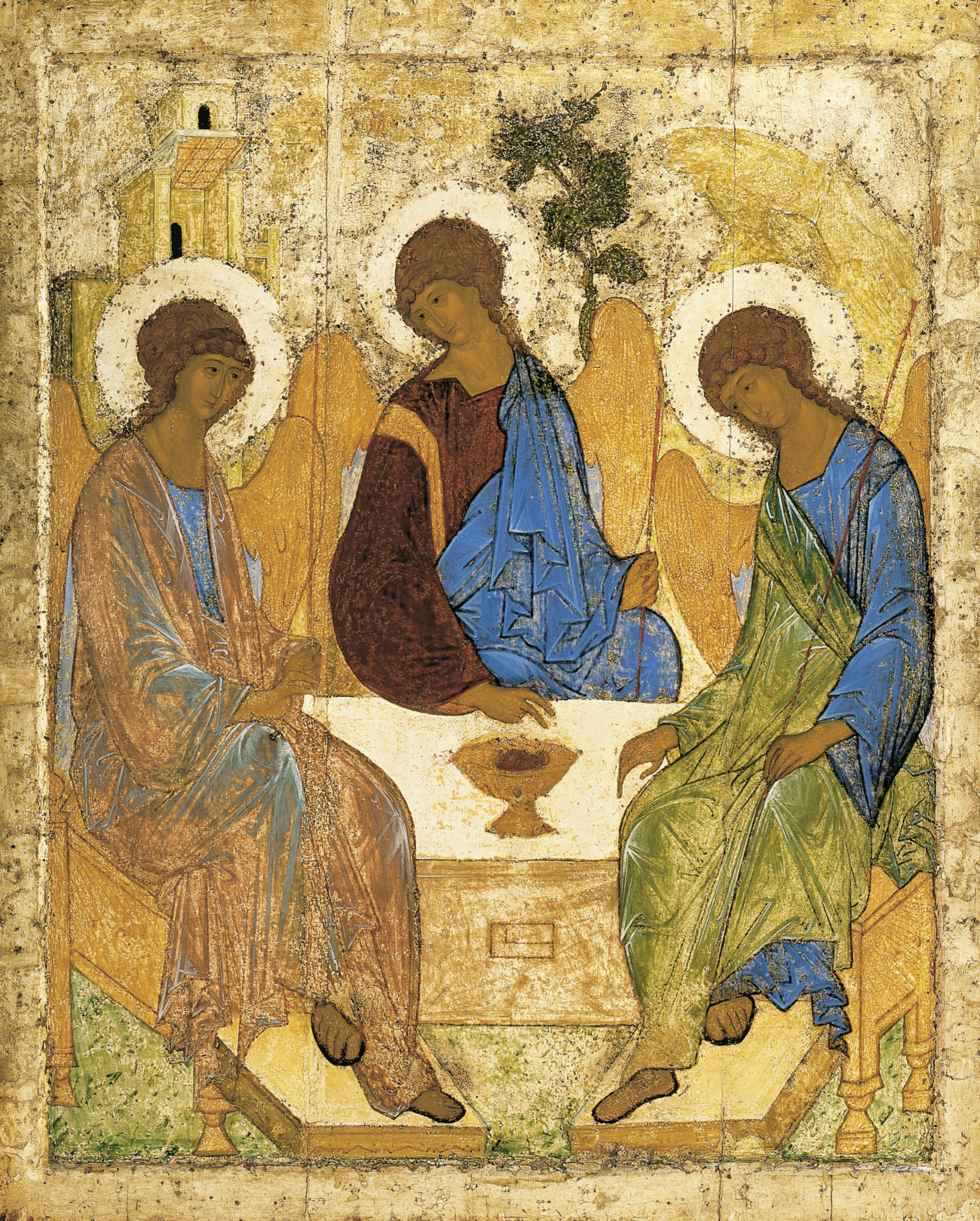
Icon of the Trinity by Andrei Rublev

Icon of the Trinity by Andrei Rublev

Today’s readings provide an object lesson in the power of the Daily Office to trigger associations in the Christian imagination.

We begin with the Old Testament reading from Genesis in which Abraham is buying some property from the Hittites in order to bury his wife Sarah in a cave in a particular field facing Mamre.

So the field of Ephron in Machpelah, which was to the east of Mamre, the field with the cave that was in it and all the trees that were in the field, throughout its whole area, passed to Abraham as a possession in the presence of the Hittites, in the presence of all who went in at the gate of his city. After this, Abraham buried Sarah his wife in the cave of the field of Machpelah facing Mamre (that is, Hebron) in the land of Canaan. (Genesis 23:17-19)

The canticle which follows, the Song of Moses, is one of the songs we sing at the Easter Vigil, when we recount Christ’s resurrection from the tomb and his victory over death.

So we have this association between the Genesis story and the resurrected Christ. Sarah is laid to rest in a cave; the cave where Christ was buried is empty when the disciples arrive there on Sunday morning. Every cave reminds us Christians of the cave which could not contain Jesus.

But the association goes deeper.

Just as Sarah’s tomb faced the oaks of Mamre, where she and Abraham laughed with the three travelers who were really God (Genesis 18), so we rejoice in the garden outside of Christ’s empty tomb and worship him as our risen Lord.

The chain of associations triggered by today’s readings — and by every day’s readings — helps us see Jesus throughout Scripture, from creation through the appearance to Abraham and Sarah, to his incarnation and passion.

We come to see and name him as one of the persons of the Trinity, as “Christ, the king of glory, the eternal Son of the Father” (BCP 96).


Remembering only one thing


Timeline-of-Church-History

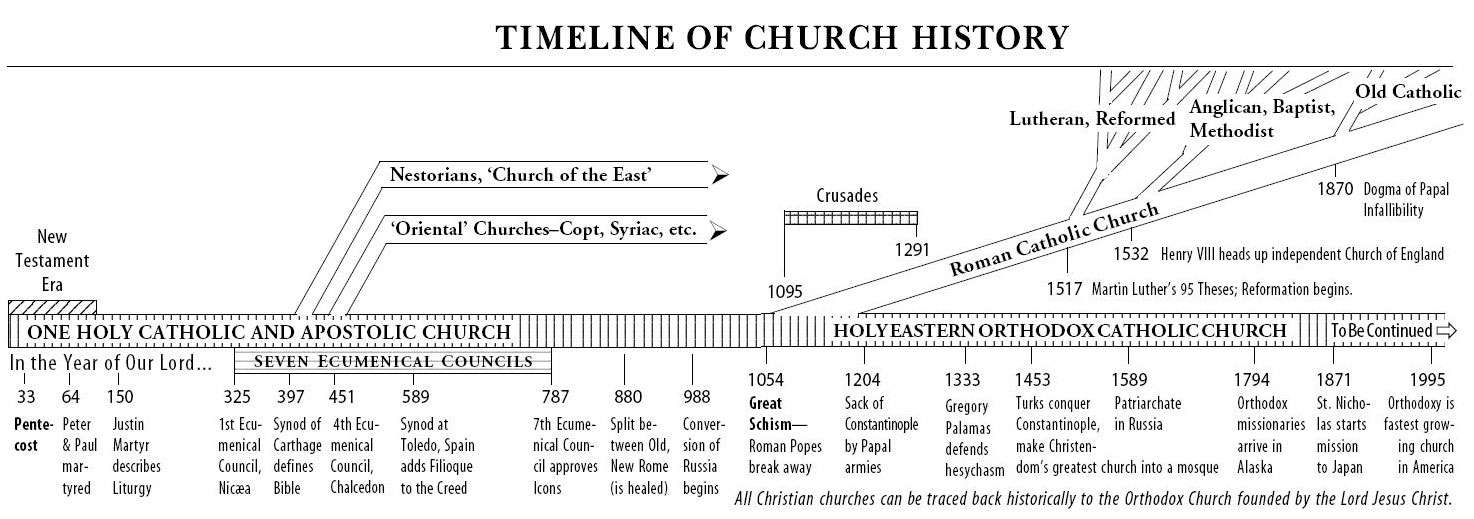
At one of the noon Eucharists last week at Bexley Seabury, during the Week of Prayer for Christian Unity, the Rev. John Dally remarked that there are now some 33,582 Christian denominations in the world.

While it is commonplace to mark the first “unhappy division” of the church to 400 CE (the Nestorians and the “Oriental” Churches) or to the Great Schism between Orthodoxy and Catholicism in 1054 CE, I wonder if we don’t actually see hints of the first division much earlier.

There’s some evidence in today’s reading from Paul’s letter to the Galatians.

On the contrary, when they saw that I had been entrusted with the gospel for the uncircumcised, just as Peter had been entrusted with the gospel for the circumcised (for he who worked through Peter making him an apostle to the circumcised also worked through me in sending me to the Gentiles), and when James and Cephas and John, who were acknowledged pillars, recognized the grace that had been given to me, they gave to Barnabas and me the right hand of fellowship, agreeing that we should go to the Gentiles and they to the circumcised. They asked only one thing, that we remember the poor, which was actually what I was eager to do. (Galatians 2:7-10)

The Week of Prayer for Christian Unity is bracketed by two feasts — the Confession of St. Peter and the Conversion of St. Paul — celebrating two men who became convinced that the good news of the kingdom of God announced by Jesus applied to both Jews and Gentiles, that is, to everyone.

But listen to what Paul describes in his letter: “we should go to the Gentiles and they to the circumcised.” Peter and Paul are, in effect, dividing the mission of the new church between them, creating two apostolates, carving out overlapping jurisdictions, however you want to describe it. They have one goal, but will pursue it in two different ways with two different populations.

Certainly Paul sees this as a happy division characterized by the “right hand of fellowship,” but I wonder if this isn’t how the whole ball got rolling. Two thousand fourteen years and 33,582 denominations later, we have gotten good at division.

Many of the divisions in Christianity are being healed by time — I just sang the same hymn “Christ, Be Our Light” with Lutherans, Episcopalians, and Roman Catholics this past week — so I wonder if in our time we could become equally good at “only one thing, that we remember the poor.”

Imagine 33,582 denominations laying aside rancor and remembering only one thing. Imagine one billion Roman Catholics and one billion of the rest of us in Christ’s Body the Church (two out of five people in the world) uniting in service for, with, and alongside the poor.

What if we extended the right hand of fellowship not only to our brothers and sisters in Christ, but also to our neighbors and all who suffer in poverty?

For the Unity of the Church

O God the Father of our Lord Jesus Christ, our only Savior, the Prince of Peace: Give us grace seriously to lay to heart the great dangers we are in by our unhappy divisions; take away all hatred and prejudice, and whatever else may hinder us from godly union and concord; that, as there is but one Body and one Spirit, one hope of our calling, one Lord, one Faith, one Baptism, one God and Father of us all, so we may be all of one heart and of one soul, united in one holy bond of truth and peace, of faith and charity, and may with one mind and one mouth glorify you; through Jesus Christ our Lord. Amen. (BCP 818)

Daily Office Basics

Daily Office Basics

The Daily Office Anchor Society will be actual, not just virtual, in February.

Join me on Saturday, February 15 from 8:30 to noon at St. Thomas Church, 226 Washington Street, Menasha WI 54952 for a program on Daily Office Basics.

Many Christians choose to observe Lent with “special acts of discipline or self-denial” such as praying Morning or Evening Prayer.

On February 15, you will not only learn how to pray the Church’s daily offices but you will also receive a variety of resources to help you navigate what may be an unfamiliar or confusing practice. We will have plenty of time for questions and sharing with each other.

We will enjoy coffee and light refreshments at 8:30 am and begin with Morning Prayer at 9 am. The program will conclude promptly at noon.

Surpassing human understanding

My God It's Full of Stars

In the beginning was the Word, and the Word was with God, and the Word was God. He was in the beginning with God. All things came into being through him, and without him not one thing came into being. What has come into being in him was life, and the life was the light of all people. The light shines in the darkness, and the darkness did not overcome it. (John 1:1-5)

In my Education for Ministry (EfM) group at St. Thomas Church is a priest who was ordained in 1955, about thirteen years before I was born.

He has embraced a sort of “second beginning” in his retirement, studying Old Testament all over again last year and now the New Testament this year. He has even gotten a scholarship to sign up for an online course in Biblical Hebrew!

In our reflections yesterday afternoon he shared his sense of wonder that the God who created everything that is — the universe, galaxies, stars, and planets — is present to us in the person of Jesus. “I’m having a hard time taking it all in,” he said.

After the Gospel reading at Morning Prayer today, we responded with Canticle 19:

O ruler of the universe, Lord God,
great deeds are they that you have done,
surpassing human understanding. (BCP 94)

It was in the light of this sense of wonder that I read Rabbi Daniel Brenner’s article about Bob Pollack, a Columbia University professor who teaches science to clergy.

The clergy in his class get restless and agitated when Pollack describes the universe’s origin “in a tiny particle fourteen and a half billion years ago,” but he responds with a lovely reflection on the second creation account in Genesis (2:4-25), which we also read this morning.

Look at Genesis. In Genesis the entire universe is made from words. The earth and sky and every plant and animal are made through God’s speech. But humans are not made in this way — God synthesizes humans from nature, from dirt, from a mix of organic and inorganic. In other words, we are made of live things and dead things. And we are the first example of chemistry and of transformation. As a result, we are the first species to have developed the ability to understand the bio-chemistry of the natural world. For this reason we are called “in God’s image.”

To the clergy’s objection (which I share) that understanding the natural world isn’t enough, Pollack also asked, “So what knowledge other than scientific knowledge do we need to thrive as humans?”

We also need, as we usually pray on Mondays at Morning Prayer, God’s help to “drive far from us all wrong desires, incline our hearts to keep your law, and guide our feet into the way of peace; that having done your will with cheerfulness during the day, we may, when night comes, rejoice to give you thanks” (BCP 99).

We need each day to reconnect to the God whose “ways are ways of righteousness and truth.”

May your sense of awe and wonder at God’s creation also lead you day by day to seek God’s help, and “may the peace of God, which passeth all understanding, keep your hearts and minds in the knowledge and love of God, and of his Son Jesus Christ our Lord” (BCP 339).

You who remind the Lord

Church-Circle-Graphic

You who remind the Lord, take no rest,
and give him no rest
until he establishes Jerusalem
and makes it renowned throughout the earth.
(Isaiah 62:6b-7)

As the meeting ends, we all stand and form a circle, joining hands in a moment of silence.

“Whose Father?”

“Our Father …” we begin to pray.

+ + + + +

As the Eucharistic Prayer draws to a close, the priest looks out over the congregation: “And now, as our Savior Christ has taught us, we are bold to say …”

“Our Father …”

+ + + + +

Morning and evening, after the Psalms, after the readings and canticles, after the Apostles’ Creed, we begin the Prayers by saying:

“Our Father …”

+ + + + +

We “who remind the Lord” take no rest.

We give him no rest, our Father in heaven, and that’s the way he wants it.

We ask him to be faithful to his promises, and he will.

Listen:

“You have promised through your well-beloved Son that where two or three are gathered together in his name, you will be in the midst of them” (BCP 102).

“Come unto me, all ye that travail and are heavy laden, and I will refresh you” (BCP 332).

“We came to understand that we … could not manage our own lives … but that God could and would if He were sought” (Blue Book 60).

+ + + + +

A Collect for Grace

O Lord God, almighty and everlasting Father, you have brought us in safety to this new day: Preserve us with your mighty power, that we may not fall into sin, nor be overcome by adversity; and in all we do, direct us to the fulfilling of your purpose; through Jesus Christ our Lord. Amen. (BCP 100)


Holy Innocents

Photo by REUTERS

Photo by REUTERS

A Song of Creation (Canticle 12 – BCP 88)
Appointed for use on Saturday mornings

Glorify the Lord, all you works of the Lord, *
praise him and highly exalt him for ever.
In the firmament of his power, glorify the Lord, *
praise him and highly exalt him for ever.

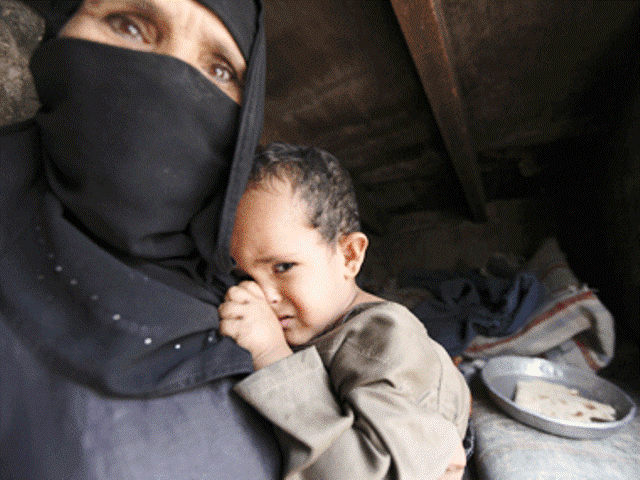
Did the government agents knock down the doors in Bethlehem early on a Sabbath morning, when they knew families would be at home?

Glorify the Lord, O beasts of the wild, *
and all you flocks and herds.
O men and women everywhere, glorify the Lord, *
praise him and highly exalt him for ever.

Did the soldiers kill children indiscriminately — under two years? over two years? After all, as crusading abbot Arnaud Almaric said 12 centuries later, “kill them all; for the Lord knoweth them that are his!”

Let the people of God glorify the Lord, *
praise him and highly exalt him for ever.
Glorify the Lord, O priests and servants of the Lord, *
praise him and highly exalt him for ever.

Did the next-door neighbors hear anything? Did families with older children or elders with no children at home comfort themselves with the thought that if the police came to their houses, those other families must have done something wrong?

Glorify the Lord, O spirits and souls of the righteous, *
praise him and highly exalt him for ever.
You that are holy and humble of heart, glorify the Lord, *
praise him and highly exalt him for ever.

Do we shut our ears to the cries of mothers whose innocent children are killed? Do we draw away when our neighbors are visited by the police? Do we comfort ourselves with the thought that at least we’ve done nothing wrong?

Holy Innocents

We remember today, O God, the slaughter of the holy innocents of Bethlehem by King Herod. Receive, we pray, into the arms of your mercy all innocent victims; and by your great might frustrate the designs of evil tyrants and establish your rule of justice, love, and peace; through Jesus Christ our Lord, who lives and reigns with you, in the unity of the Holy Spirit, one God, for ever and ever. Amen. (BCP 238)