
Author Archives: Rodger Patience

Unknown's avatar

About Rodger Patience

I am an Episcopal priest, and I am a person in recovery. My aim is to build hope in everything I do.

Ever present in God’s heart

20130509-052931.jpg

Fr. John Dally’s teaching about the meaning of the Ascension has stuck with me all these years, since he was assistant priest at St. Mary’s Episcopal Church in Park Ridge, Illinois and I was just entering the discernment process that led to my ordination.

Fr. Dally told us about the risen Jesus ascending into heaven, returning to take his place in the Trinity, but bearing the wounds of his humanity. The Son who is “seated at the right hand of the Father,” as we say in the Apostles’ Creed (BCP 96), bears the marks of the crown of thorns and raises a pierced hand in blessing.

God was changed by God’s encounter with us, and the Christ of the eternal Trinity still bears the scars.

A Collect for Guidance

Heavenly Father, in you we live and move and have our being: We humbly pray you so to guide and govern us by your Holy Spirit, that in all the cares and occupations of this life we may not forget you, but may remember that we are ever walking in your sight; through Jesus Christ our Lord. Amen. (BCP 100)

Just as we “live and move and have our being” here on earth in the presence and care of God and do well to remember that fact in the middle of our busy lives, we also “live and move and have our being” in God in the person of the ascended Jesus.

Not only are we “ever walking in God’s sight,” we are ever-present in God’s own heart.
Daily Office Challenge

2012-08-06 13.03.01

The one who thus serves Christ is acceptable to God and has human approval.
Let us then pursue what makes for peace and for mutual upbuilding
(Romans 14:18-19).

Two days ago I responded to a tweet by Marek Zabriskie of the Bible Challenge which seemed to me to be making a false opposition between the lectionary and “reading all the Scriptures.” I was hasty and abrupt in my reply — a failing of mine exacerbated by Twitter’s 140-character limit.

The Bible Challenge is an approach to reading the entire Bible in the course of a year rather than just hearing the selections read in worship on Sundays. In that sense, it is a very important project — one I have embarked on several times before, as have many members of the congregations I have belonged to. Reading the whole Bible gives you a sense of the sweep of salvation history and the relationship between parts of Scripture that you might not otherwise get on Sunday mornings.

For myself, I have benefited the most over the years from the Bible-reading plan outlined in The Illustrated Bible Handbook by Edward P. Blair (Abingdon 1985). Blair’s book is long out of print, unfortunately, though you can still find a few copies around.

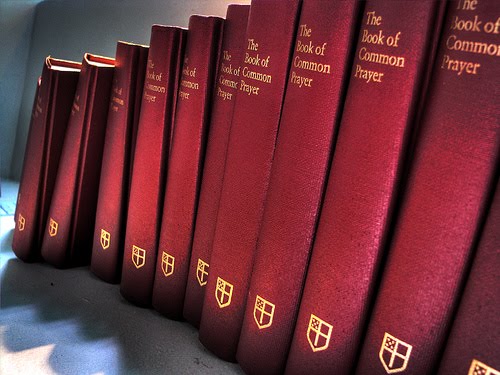
My initial point, however, is that there’s more than one lectionary in the Book of Common Prayer.

The lectionary for the Daily Office — for Morning and Evening Prayer — provides for the praying of the Psalms and the course reading of Scripture. The Psalms are prayed over a seven-week cycle, the bulk of the New Testament each year, and the bulk of the Old Testament over the course of two years (see BCP 934 and following).

Because Morning and Evening Prayer are part of the public worship of the Church (with the Holy Eucharist on Sundays), the readings in the Daily Office lectionary are organized to reflect the seasons of the Church Year, unlike the Bible Challenge’s approach of reading through the Old Testament in order, supplemented by New Testament passages and Psalms each day.

Marek observes in a subsequent tweet that “Episcopalians excel on Sunday. Our weakness is Monday to Saturday. Helping folks engage Scripture and pray each day is critical.” I couldn’t agree more.

The practice of the Daily Office puts the reading of Scripture in the context of prayer, and the canticles and collects appointed for the Sundays and weekdays of the Church Year help us to understand and interpret Scripture in the way that Christians throughout the centuries have done.

The Bible Challenge and the practice of the Daily Office complement each other, though they are designed with different purposes in mind.

“Let us then pursue what makes for peace and for mutual upbuilding.”

The more we soak ourselves in Scripture, the more we begin and end each day in prayer and Scripture reading (no matter which method we prefer to use), the more readily we will recognize Jesus’ voice and his call for our lives.

On that we can all agree.

His glory will appear upon y’all

20130430-201949.jpg

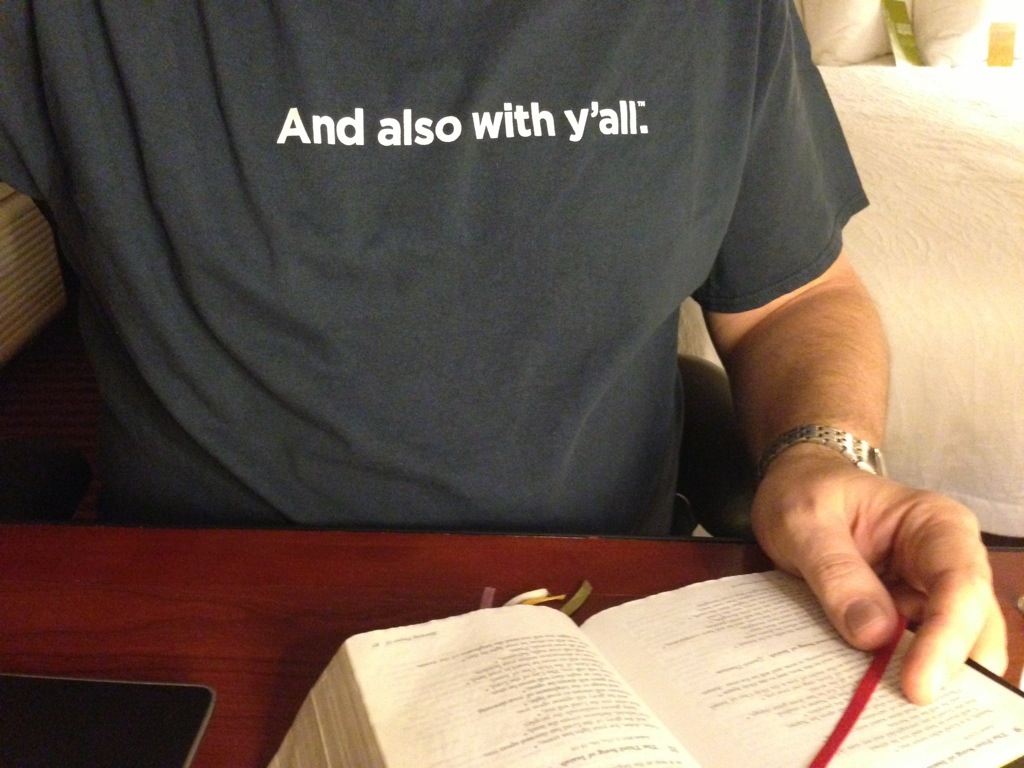
Since I’m in Tupelo, MS this morning it seems only right that I should wear my Altar Press t-shirt for Morning Prayer.

But over you the Lord will rise,
and his glory will appear upon y’all.
Nations will stream to your light,
and kings to the brightness of your dawning. (BCP 87)

Whatever language you speak in, whatever nation you belong to, wherever your life has led you to, the Lord will rise over you.

If we’re true to our calling as members of Christ’s body, if we love one another as Christ has loved us and love our neighbors as ourselves, then we will reflect the “light to enlighten the nations” himself.


You serve the Lord Christ

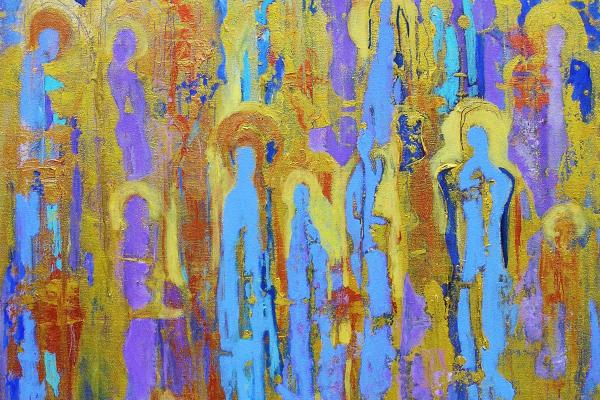
Communion-of-Saints-Elise-Ritter

Communion of Saints by Elise Ritter

Whatever your task, put yourselves into it, as done for the Lord and not for your masters, since you know that from the Lord you will receive the inheritance as your reward; you serve the Lord Christ (Colossians 3:23-24).

In a blog post from about a year ago, Rachel Held Evans, author of A Year of Biblical Womanhood, began a conversation on the Greco-Roman “household codes” reflected (and redirected) in several New Testament letters as well as in the passage from Colossians we read this morning.

One of the very interesting tensions in the Christian life is trying to decide what kind of a household we actually belong to. We are “a chosen people, a royal priesthood” (1 Peter 2:9), and we are “no longer Jew or Greek … slave or free … male and female” (Galatians 3:28), and we are married (or not), and we are a church family, and we are a historical preservation society, and we are a company of friends, and we are a food pantry, and we are a monastic community, and we are a 501 (c) (3) corporation, and we are summer camp.

Whatever we are, though, there’s a fairly constant thread in the Christian tradition. Our apparently ordinary lives are shot through with new meaning.

My parents had a plaque in our home that read like this:

Christ is the head of this house;
the unseen guest at every meal;
the silent listener to every conversation.

We may seem like an ordinary family, or we may seem like a bunch of crackpots, or somewhere in between, but we are really living as members of Christ’s household.

It starts at baptism: “We receive you into the household of God. Confess the faith of Christ crucified, proclaim his resurrection, and share with us in his eternal priesthood” (BCP 308).

In the letter to the Colossians, Paul is urging his readers to live in the light of that belonging. Whatever your task — the same work you had yesterday, and perhaps the same work you will have tomorrow — put yourself into it as done for the Lord and not for your masters, wives, brothers, volunteers, board, counselors, managers, sisters, bosses.

You serve the Lord Christ.

That peace which the world cannot give

A Collect for Peace

Most holy God, the source of all good desires, all right judgments, and all just works: Give to us, your servants, that peace which the world cannot give, so that our minds may be fixed on the doing of your will, and that we, being delivered from the fear of all enemies, may live in peace and quietness; through the mercies of Christ Jesus our Savior. Amen.

Is it any wonder that this collect used to be prayed every day during the Office?

“Give to us that peace which the world cannot give.”

Acts of violence will not save us. Bringing the perpetrators, these particular twisted people, to justice, will not save us. Speeches and nightly news commentary — endless opinion — will not save us.

We will still “fear all enemies,” foreign and domestic, external and internal, physical and spiritual.

Without that peace which the world cannot give, we will still live in fear.

I remember my father, in the months before he died, when he was still in the hospital. When I visited him, there were always nurses and staff hanging out near his room. It was because he was at peace. He might have been the only person in the hospital who was not afraid. Everyone wanted to come near to that peace.

That peace and quietness, even in the face of death, is the peace which the world cannot give.

My father knew he would be all right; he knew he would be seeing Jesus face to face. He was delivered from “fear of all enemies,” and we can be, too, through the mercies of Christ Jesus our Savior.

Cherish Christ above all

20130414-060216.jpg

We are staying the weekend with friends in Lake Geneva, WI.

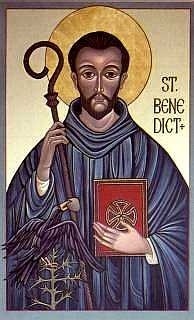
As is our custom, John and I will get up early for the first Mass at his parish, St. Benedict Catholic Church in Fontana.

I wrote about Benedict and his influence on our Anglican pattern of prayer a few days ago. Obviously, we’re hardly the only ones so influenced by his vision of a simple Rule of life — “nothing harsh, nothing burdensome” — which will help us, by ordering and organizing our prayer, study, and work, to cherish Christ above all and to cherish those around us, for whom Christ came into the world.

Beloved, we are God’s children now

20130116-061532.jpg

See what love the Father has given us, that we should be called children of God; and that is what we are. The reason the world does not know us is that it did not know him. Beloved, we are God’s children now; what we will be has not yet been revealed. What we do know is this: when he is revealed, we will be like him, for we will see him as he is. And all who have this hope in him purify themselves, just as he is pure …. This is how we know what love is: Jesus Christ laid down his life for us. And we ought to lay down our lives for our brothers and sisters. If anyone has material possessions and sees a brother or sister in need but has no pity on them, how can the love of God be in that person? Dear children, let us not love with words or speech but with actions and in truth.
(1 John 3:1-3; 16-18)

I taught sexual misconduct prevention in the Dioceses of Chicago and Milwaukee from the beginning of the Church Insurance Company’s mandates about 20 years ago. This passage from the First Letter of John formed part of the prayer I used to open training sessions for more than a dozen years.

The first year of training was really tough and stressful — the sexual abuse of children is a subject no one wants to talk about, but clergy and vestry and lay leaders were required to attend training, and (frankly) the training was pretty awful. It was heavy on statistics and risk and insurance riders and mandated reporting and penalties. Every time I taught, the tension in the room was so palpable that I ended up with a crippling headache.

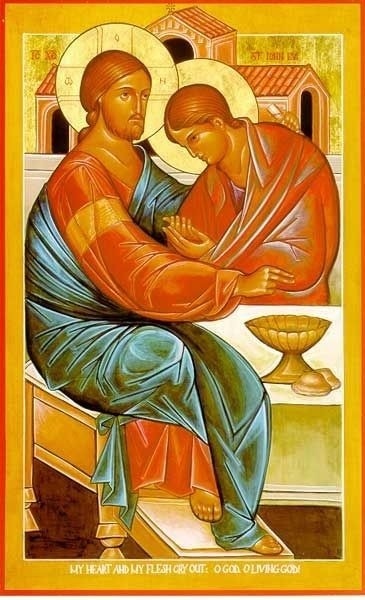
Sometime in that first year of trainings, though, I came across the new Rule of the Society of St. John the Evangelist, an Episcopal monastic order in Cambridge, MA. It was (at the time) a fresh, new rewriting of the Society’s original Rule. As I read it more deeply, I came to understand that the SSJE Rule is really an extended meditation on right relationship.

That understanding transformed the way I taught. Rather than teaching about our failures (or potential failures), my colleagues and I began to articulate a vision for what right relationship with young people and adults might look like. “If we do ministry in the light,” one priest observed, “then attempts at secrecy or abuse stand out by contrast.”

“Beloved, we are now God’s children.” As God’s children, how should we live with one another?

Aiming for right relationship doesn’t mean that we are already perfect, but it does mean that when we fail, we recommit ourselves to the high standard. “See what love the Father has given us, that we should be called children of God … and we ought to lay down our lives for our brothers and sisters.”

+ + + + +

Gracious God, you see your children growing up in an unsteady and confusing world: Give us calm strength and patient wisdom as we bring them up, that we may guard them from harm, and teach them to love whatever is just, and true, and good; following the example of our Lord and Savior Jesus Christ. Amen.

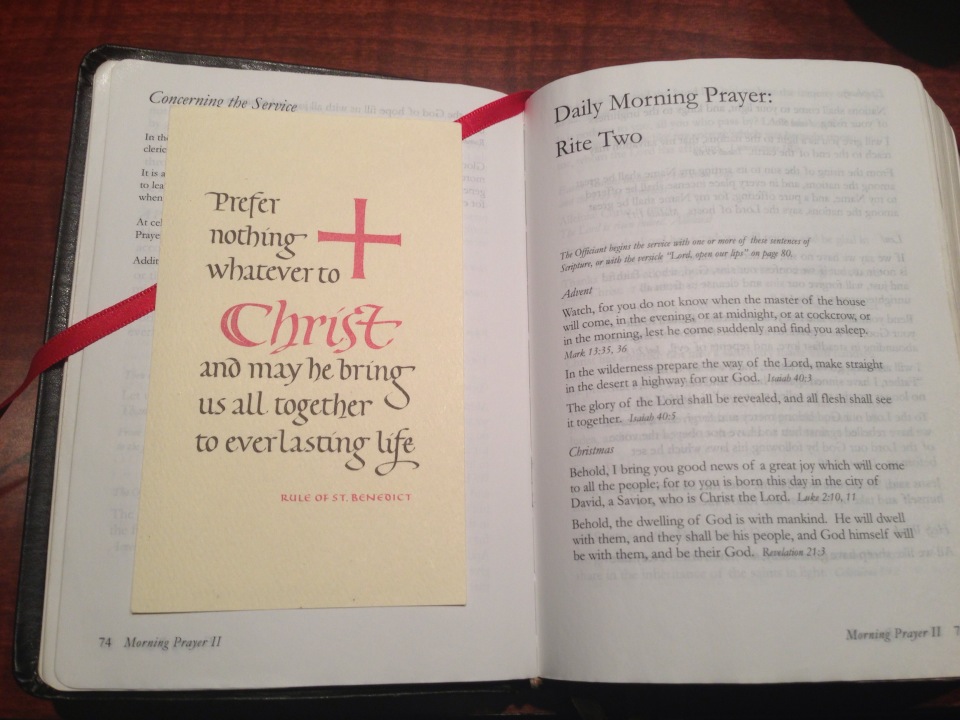
Prefer nothing whatever to Christ

Prefer Nothing to Christ

A member of my parish offers reflections on his Healing Journey Daily Blog on Facebook, and I appreciate his post yesterday from Oswald Chambers reflecting on Paul’s insight into Christ and his determination to “know nothing among you except Christ, and him crucified” (1 Cor 2:2).

Chambers says, “The lasting characteristic of a spiritual man is the ability to understand correctly the meaning of the Lord Jesus Christ in his life, and the ability to explain the purposes of God to others. The overruling passion of his life is Jesus Christ. Whenever you see this quality in a person, you get the feeling that he is truly a man after God’s own heart” (My Utmost for His Highest).

One of the lenses that helps me find insight into Christ is the Prayer Book pattern of orderly prayer — especially the Daily Offices — which was inspired in large part by the monastic pattern established by Benedict in the sixth century.

“Prefer nothing whatever to Christ,” says Benedict, “and may he lead us all together into everlasting life” (Rule 72). The Rule, the pattern of prayer, study, and work that Benedict established for his monks, was intended to free them from distractions and enable them to focus on worshiping God.

In a similar way, the Prayer Book pattern of Daily Offices and weekly Eucharist is intended to shape our lives and help us maintain our focus on the face of Christ in the face of a very distracting world. It doesn’t matter whether you use the Prayer Book itself or the online offices from Forward Movement or Mission St. Clare or some other daily devotional; all of them promote the same rhythmic, steady, daily approach to prayer.

If our guides are doing their work — Chambers or Benedict or the Prayer Book or any other guide — they help us understand how Christ is present in our lives right now, and they encourage us to share that insight with others.

May we prefer nothing whatever to Christ, and may he lead us all into everlasting life. Amen.

Cast your fate to the wind

After an early alarm and the drive to Norfolk International Airport, I was able to catch a breath in the Starbuck’s before going through security. This was part of the background music to Morning Prayer today.

Vince Guaraldi is a favorite of mine, and this song, “Cast Your Fate to the Wind,” dovetailed nicely with the reading from Acts.

“Now when they saw the boldness of Peter and John and realized they were uneducated and ordinary men, they were amazed and recognized them as companions of Jesus” (Acts 4:13). It’s the boldness of their act, healing a man in the name of Jesus, that makes them recognizable.

They recount to their friends what has happened, not just the healing but their testimony before the chief priests and the elders, and “when they had prayed, the place in which they gathered together was shaken; and they were all filled with the Holy Spirit and spoke the word of God with boldness” (Acts 4:31).

The apostles and their friends cast their fate to the wind — that is, to the mighty Spirit of God that hovered over the waters of creation and was now blowing through their lives — and that Holy Spirit not only inspired them to boldness but also made them recognizable friends of Jesus.

Why not cast your fate to the wind, to the Spirit of God, today? What bold act will make you a recognizable friend of Jesus?

It’s still beautiful

Local Hero

The film Local Hero is the story of a Texas oilman sent to Scotland to buy a fishing village so his company can put up a refinery. As the villagers dream about becoming millionaires, the oilman begins to fall in love with the peace and quiet.

The oilman’s Scottish partner, Danny, is also falling in love. Marina is a mysterious figure, a lovely marine biologist with an enigmatic manner.

After the ceilidh celebrating the conclusion of the deal, Danny and Marina are out on the beach looking at the Northern Lights.

Danny: Holy mackerel! What’s happening?
Marina: That’s just the Northern Lights, Aurora Borealis. High-energy protons spilling over into our atmosphere. They get through the magnetic shield where it’s weak, at the poles.
Danny: It’s still beautiful, I don’t care what you call it. How often does this happen?
Marina: Any old time, although it’s best when the sun’s active. That gets the solar wind up and that’s where the protons come from.
Danny: You say the darnedest things, Marina.

We have another Danny in today’s Daily Office readings, and he’s the one saying to God, “You say the darnedest things.”

I heard but could not understand, so I said, “My lord, what shall be the outcome of these things?” He said, “Go your way, Daniel, for the words are to remain secret and sealed until the time of the end. Many shall be purified, cleansed, and refined, but the wicked shall continue to act wickedly. None of the wicked shall understand, but those who are wise shall understand.” (Daniel 12:8-10)

From our Easter perspective we know the meaning behind the signs. As Julian of Norwich says of Christ, “Know it well; love was his meaning.”

It’s easy to get tangled up and confused in speculations about dates and times and the mechanics of how God acts in history. It’s easy to lose sight of the meaning — God’s love for us, reaching down and remembering us “in our low estate” (Psalm 136:23).

As our first Danny says, “It’s still beautiful, I don’t care what you call it.”