Author Archives: Rodger Patience

Unknown's avatar

About Rodger Patience

I am an Episcopal priest, and I am a person in recovery. My aim is to build hope in everything I do.

The Grace

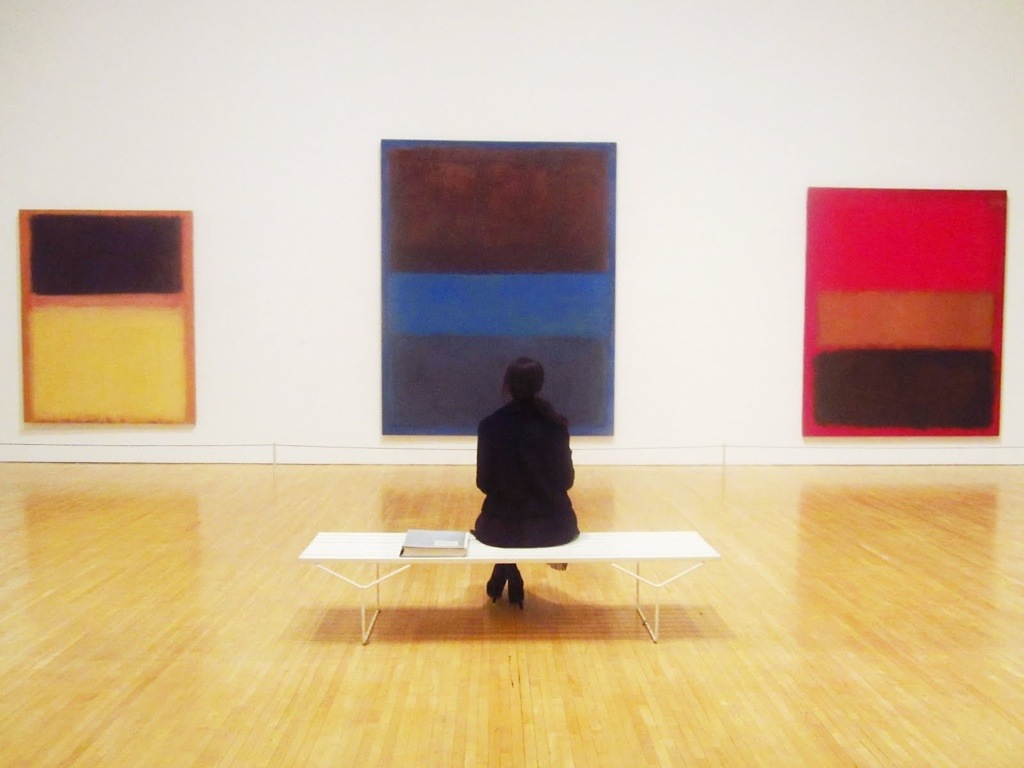
Mark_Rothko_-_White_Center_(Yellow,_Pink_and_Lavender_on_Rose)_(1950)


Finally, brothers and sisters, farewell. Put things in order, listen to my appeal, agree with one another, live in peace; and the God of love and peace will be with you. Greet one another with a holy kiss. All the saints greet you. The grace of the Lord Jesus Christ, the love of God, and the communion of the Holy Spirit be with all of you. (2 Cor. 13:11-13)

+ + + + +

At the end of both Morning and Evening Prayer, we have a choice of several concluding sentences. In the economy of the Prayer Book, the first option printed is usually preferred (as when the rubrics say “stand or kneel” they are suggesting we “stand”).

So the most familiar closing words of the Daily Office are these: “The grace of our Lord Jesus Christ, and the love of God, and the fellowship of the Holy Spirit be with us all evermore.”

Sound familiar?

What I find so intriguing is that we end our daily worship not with a pious proclamation of our goodness, but with the same appeal for unity that Paul prayed for the fractious church in Corinth. It’s as if we should sigh like he probably did: “Oh, for God’s sake, be gracious like Jesus, and share the love of God, and get along in the Spirit, wouldya?”

+ + + + +

Bonus trivia points: Who else noticed that in the NRSV Bible the last verse of 2 Corinthians is 13:13, but in the Book of Common Prayer, the closing sentence is noted as “2 Corinthians 13:14” (BCP 102)? Turns out the KJV Bible numbers the last verse as 14. I’ll have to dig a little and see if I can find out why the NRSV only goes to 13.

And before you send your cards and letters, folks, remember that verse numbers are artificial constructs not present in the biblical manuscripts. But still, it’s a little puzzle.

 

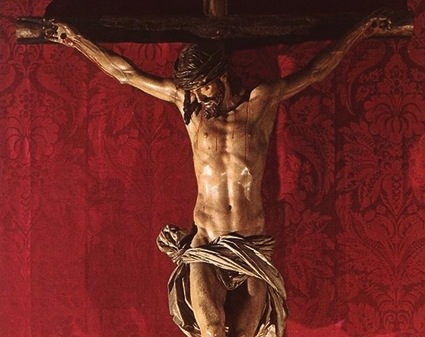
They gave me vinegar to drink

IMG_0698


They gave me gall to eat;
and when I was thirsty they gave me vinegar to drink. (Ps. 69:23)

Sometimes I wonder at the Church’s obsession for getting the society around us to do what we want. We spend a lot of energy trying to get laws passed that guarantee our rights, that grant us certain privileges, that impose our ideals on others.

We don’t get that impulse from Jesus, whose words and actions led to his arrest, scourging, and crucifixion.

We don’t get it from Paul (much), since he positively glories in the hardships he has endured for the sake of the Gospel. “I will most gladly spend and be spent for you,” he writes in his second letter to the church in Corinth (2 Cor. 12:15).

In Canticle 10, appointed for this morning, we sing about God’s word, whom we would name Jesus:

So is my word which goes forth from my mouth;
it will not return to me empty.
But it will accomplish that which I have purposed,
and prosper in that for which I sent it. (BCP 87)

God’s purposes are accomplished precisely in the gall and vinegar, precisely in Jesus’ faithfulness to the way of the cross.

Why do we think it will be different for us? Why do we think in terms of legislating behavior instead of demonstrating faithfulness?

A Collect for Fridays

Almighty God, whose most dear Son went not up to joy but first he suffered pain, and entered not into glory before he was crucified: Mercifully grant that we, walking in the way of the cross, may find it none other than the way of life and peace; through Jesus Christ our Lord. Amen. (BCP 99)


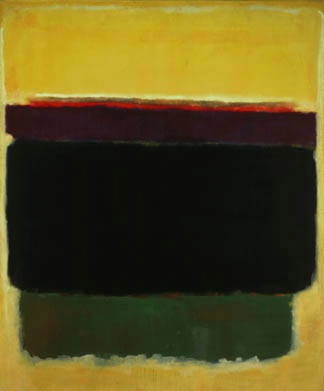
Bound by the vow I made

Rothko grey blue

I am bound by the vow I made to you, O God;
I will present to you thank offerings.

For you have rescued my soul from death and my feet from stumbling,
that I may walk before God in the light of the living. (Ps. 56:11-12)

The discussion in my Education for Ministry (EfM) group yesterday centered on two topics — rehearsing the stories of our faith and shaping our lives with practices that distinguish us from the society around us.

Those who are reading in Year One of EfM had read Second Isaiah (chapters 40-55) and the books of Ezra and Nehemiah, which recount and reflect on the return of the Jews from the exile in Babylon and the rebuilding of the Temple. While in exile, the Jews focused on the Torah, circumcision, and the Sabbath as practices that distinguished them from the society around them.

Those in Year Two had read the Letter to the Hebrews, which is an extended theological argument, as much a sermon as anything else, recounting Christ’s divinity and his humanity. The EfM commentary notes:

The recipients [of the letter] needed it to help them understand, but even more to help them endure, to remain steadfast in the hope that God had given them through Christ. This letter reminds us that, although we are not likely to suffer for our faith, we do need to remain faithful in a world that seems to be increasingly uninterested in or even hostile to the Christian faith.

How are you strengthened by hearing the stories of your faith? What practices help you claim your identity as a Christian distinct from the society around you?

First fruits and offerings

20130607-062733.jpg

The Lord brought us out of Egypt with a mighty hand and an outstretched arm, with a terrifying display of power, and with signs and wonders; and he brought us into this place and gave us this land, a land flowing with milk and honey. So now I bring the first of the fruit of the ground that you, O Lord, have given me. (Deut. 26:8-10)

Tithes and offerings are two different things.

The tithe, or “tenth,” is the giving of one’s first fruits back to God in gratitude. It is an objective giving — that is to say, tithing is meant to be done deliberately and first. Some people make their tithe the first check they write each month. Others set up an automatic payment. In either case, tithing is a deliberate, routine practice.

Offerings, on the other hand, are more subjective. Paul spends a fair amount of time in his letters talking about the offering he is taking up for the benefit of the church in Jerusalem, and we will read one such appeal tomorrow:

Each of you must give as you have made up your mind, not reluctantly or under compulsion, for God loves a cheerful giver. And God is able to provide you with every blessing in abundance, so that by always having enough of everything, you may share abundantly in every good work. (2 Cor. 9:7-8)

Offerings are free gifts, given generously as specific needs arise, and given out of our abundance.

Like most Americans, I’m pretty good at offerings. I’m ready to contribute when asked, whether it’s through a neighbor’s foundation or through Episcopal Relief and Development, or by donating to Goodwill or spending time to help with a fundraising event. When asked, I tend to rise to the occasion, and I think most people do, too.

Where I do not do well at all is in tithing — the objective offering of my money to God.

I have only tithed for brief periods in my life, and while I can easily offer the first fruits of my time (rising early for the last 20 years to say Morning Prayer, for example), I struggle to make the same routine offering of my money.

Let the lessons today sit with you as you think about your own relationship with money and with God.

How do you make routine giving a habit? How do you respond with offerings for specific needs? How might God’s generosity draw from your abundance in a new way?

The pilgrims’ way

11 - Mark Rothko, Sin titulo 1969 2

I’ve done a lot of driving this week in Indiana, where the landscape on an overcast day like today looks an awful lot like this painting.

One of the Psalms appointed for this evening struck me particularly:

Happy are the people whose strength is in you!
whose hearts are set on the pilgrims’ way. (Ps. 84:4)

And the Collect for the Presence of Christ, customarily prayed on Thursday evenings, asks:

Lord Jesus, stay with us, for evening is at hand and the day is past; be our companion in the way, kindle our hearts, and awaken hope, that we may know you as you are revealed in Scripture and the breaking of bread. Grant this for the sake of your love. Amen. (BCP 124)

How does Scripture nourish your heart along the pilgrims’ way?

How might you break bread with fellow pilgrims and share in Jesus’ companionship?

Our heart is wide open to you

20130604-060449.jpg

All glorious is the princess as she enters;
her gown is cloth-of-gold.

In embroidered apparel she is brought to the king;
after her the bridesmaids follow in procession.

With joy and gladness they are brought,
and enter into the palace of the king.
(Psalm 45:14-16)

It’s a little hard to place ourselves in this picture.

To the Psalmist, we are the singer describing the scene at a royal wedding. To the Deuteronomist, we are God’s chosen people, set apart and soon to worship in a Temple in our own land.

To Paul, we are that Temple ourselves:

For we are the temple of the living God; as God said,
“I will live in them and walk among them,
and I will be their God,
and they shall be my people”
(2 Cor. 6:16)

The Church has also understood itself to be the bride in mystic union with Christ the Bridegroom.

Open your heart wide today to these images of glory and beauty and worship and relationship. What is your place in this picture?

An eternal weight of glory

20130601-084045.jpg

So we do not lose heart. Even though our outer nature is wasting away, our inner nature is being renewed day by day. For this slight momentary affliction is preparing us for an eternal weight of glory beyond all measure, because we look not at what can be seen but at what cannot be seen; for what can be seen is temporary, but what cannot be seen is eternal. (2 Cor. 4:16-18)

Silence is so accurate

20130531-100257.jpg

A Boston Globe article on the value of paying close, sustained attention to art as a way to combat digital distraction really struck me today, so I have decided to try a project during the month of June.

For 30 minutes each day, after I say Morning Prayer, I will look closely at a painting by Mark Rothko, whose abstract color paintings have always intrigued me.

According to the National Gallery of Art, Rothko largely abandoned conventional titles in 1947, sometimes resorting to numbers or colors in order to distinguish one work from another. The artist also … resisted explaining the meaning of his work. “Silence is so accurate,” he said, fearing that words would only paralyze the viewer’s mind and imagination.

I’m looking forward to both the seeing and the silence.

Photo by coco of cococozy.

Golden with fruit of a man’s body

20130530-172526.jpg

On that day the root of Jesse shall stand as a signal to the peoples; the nations shall inquire of him, and his dwelling shall be glorious. (Isaiah 11:10)

In a Country Church

To one kneeling down no word came,
Only the wind’s song, saddening the lips
Of the grave saints, rigid in glass;
Or the dry whisper of unseen wings,
Bats not angels, in the high roof.

Was he balked by silence? He kneeled long,
And saw love in a dark crown
Of thorns blazing, and a winter tree
Golden with fruit of a man’s body.

R S Thomas

Sharing the everyday, ordinary ‘Yes’

As surely as God is faithful, our word to you has not been “Yes and No.” For the Son of God, Jesus Christ, whom we proclaimed among you, Silvanus and Timothy and I, was not “Yes and No”; but in him it is always “Yes.” For in him every one of God’s promises is a “Yes.” (2 Cor. 1:18-20)

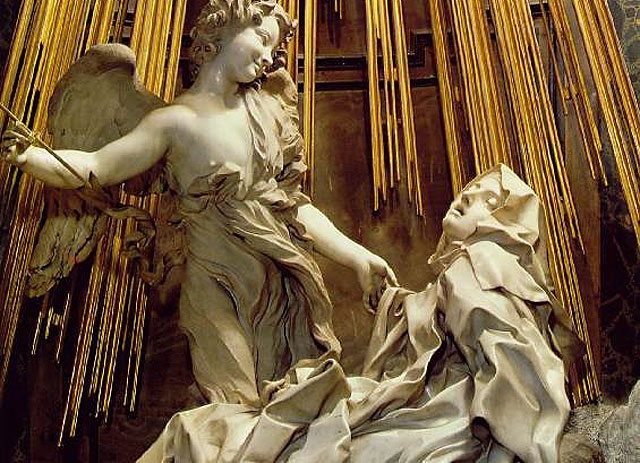
Ecstasy of St. Teresa by Bernini

“God, deliver me from frowning saints.” (St. Teresa of Avila)

+ + + + +

Do you live your ordinary life as though God, in Jesus, has said “Yes” to you?

We are meant for intimate union with God; that is what the Holy Eucharist and the Daily Offices and our private devotions are for.

Intimacy with God is the “mystic, sweet communion” we sing about in church. We are meant to know, in “our selves, our souls and bodies,” that God loves us and desires every blessing for us.

Jesus’ Incarnation serves to make that fact — God’s “Yes” — not only concrete, but historical and lasting. Jesus lived and taught and died and rose at a specific time and place, sharing our everyday human life. His Ascension means that humanity is already and forever united with God in the ongoing, ordinary life of the Trinity.

Can people tell when they see you that God, in Jesus, has said “Yes” not only to you but also to them?

If you’re a “frowning saint,” why not make it your practice during the next several months of Ordinary Time to share God’s everyday, ordinary “Yes” in your smile and words, in your devotion and hard work, in your resting and your playing?