Tag Archives: Evening Prayer

Non nobis, Domine

Not to us, O Lord, not to us,
but to your Name give glory;
because of your love and because of your faithfulness.

Why should the heathen say,
“Where then is their God?”

Our God is in heaven;
whatever he wills to do he does.
(Psalm 115:1-3)

In his first “sign” at the wedding in Cana, Jesus deflects attention away from himself.

First, it’s a son’s normal reaction because his mom is pressuring him to do something: “What is it to you? My time has not yet come.” And even when Jesus does “whatever he wills to do” and changes the water into wine, the steward doesn’t know who did it, so he gives praise instead to the bridegroom for saving the best wine for last.

Not to us, O Lord, not to us, but to your Name give glory.

In Jesus, John and the other Gospel writers see the glory of God revealed, “the glory as of a father’s only son, full of grace and truth” (John 1:14).

Though Jesus does point to himself in the signs, especially those that follow this first one, what he’s really doing is pointing to God. “No one has ever seen God,” writes John. “It is God the only Son, who is close to the Father’s heart, who has made him known” (John 1:18).

Not to us, O Lord, not to us, but to your Name give glory.

We’re meant to follow in Jesus’ footsteps as his Body here on earth, sharing his forgiveness and healing power with those around us, and making known God’s love and faithfulness.

Morning and evening (at least) we’re also meant to give “Glory to God, whose power, working in us, can do infinitely more than we can ask or imagine. Glory to him from generation to generation in the Church, and in Christ Jesus for ever and ever” (BCP 102, 126).
Joy and peace to all

For as the new heavens and the new earth,
which I will make,
shall remain before me, says the Lord;
so shall your descendants and your name remain.
From new moon to new moon
and from sabbath to sabbath,
all flesh shall come to worship before me,
says the Lord. (Isaiah 66:22-23)

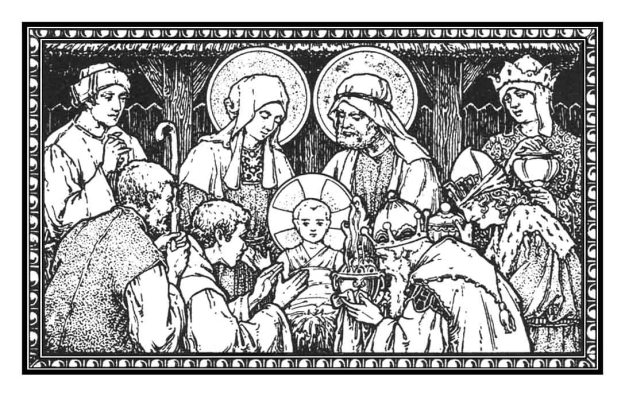
One of the Principal Feasts of the church year, the Epiphany celebrates the “Manifestation of Christ to the Gentiles,” as our Prayer Book calendar calls it (BCP 31). The wise men stand in for the whole Gentile world (that is, all of us) as they see and recognize in the child Jesus the promised salvation of the world.

Listen to one of the prayers for mission that we commonly use at Evening Prayer:

“O God and Father of all, whom the whole heavens adore: Let the whole earth also worship you, all nations obey you, all tongues confess and bless you, and men and women everywhere love you and serve you in peace; through Jesus Christ our Lord. Amen.” (BCP 124)

Christ’s coming is for all, not just for the Jews, not just for the Orthodox or the Catholics, not just for the Lutherans or the Presbyterians or the Calvinists, not just for the Anglicans or the “real” Anglicans, not just for my parish or for yours, but for all.

Our religious tendency toward exclusivity does not serve God’s purpose of bringing light to all — to the whole earth, all nations, all tongues, men and women everywhere.

In the readings appointed for this Eve of the Epiphany, Isaiah points toward that future day when all flesh will worship God together, and Paul prays on behalf of the Romans (Gentiles like us): “May the God of hope fill you with all joy and peace in believing through the power of the Holy Spirit” (BCP 126).

“All joy and peace.” Joy and peace to all. That’s a fitting note on which to begin our worship this Epiphany.

The Prayer Book Office

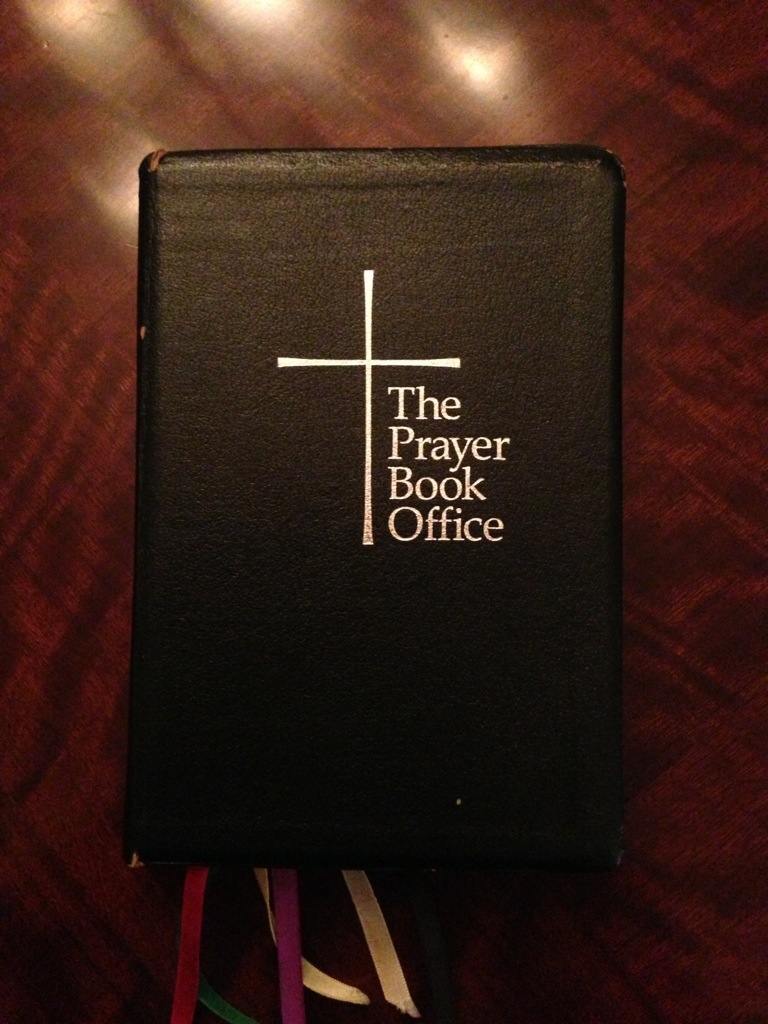
20121221-173602.jpg

On a lighter note, tonight marks 20 years since I began seriously to use the Daily Office as a regular part of my spiritual discipline.

Howard Galley’s two volumes, The Prayer Book Office and Morning and Evening Prayer, were invaluable to me as I took the first steps and felt my way into this way of praying.

Regrettably, The Prayer Book Office remains out of print. One can occasionally find a copy of Morning and Evening Prayer, a nice volume with selected readings and psalms suited for the beginner or those who prefer a simpler version of the office.

Anyway, on this anniversary day, whether you’re just starting out or celebrating many years following the Prayer Book pattern, I pray that “the God of hope will fill you with all joy and peace in believing, through the power of the Holy Spirit.”

The Christmastide Lectionary

ChristmastideI know it’s still Thursday in the Third Week of Advent, but I want to give you all a jump on the complicated lectionary for the days after Christmas so that you can enjoy the holiday with minimal frustration.

Because Christmas Day occurs on a fixed date and several Major Feasts fall on the next few days after it, the Daily Office lectionary has to supply several options for the days between Christmas and the Epiphany, which also falls on a fixed date.

Here’s the crib sheet for the offices during Christmastide this year. You may wish to print it out and fold it into your prayer book for easy reference.

(The abbreviations MP and EP, as you might expect, stand for Morning Prayer and Evening Prayer; BCP for the page number in the Book of Common Prayer):

Dec. 23 – Fourth Sunday of Advent
MP and EP as on BCP 938
Collect on BCP 212

Dec. 24 – Christmas Eve
MP as on BCP 938 “Dec. 24”
MP Collect on BCP 212 (4 Advent)
EP as on BCP 938 “Christmas Eve”
EP Collect on BCP 212 (Christmas Day – second option)

Dec. 25 – Christmas Day
MP and EP as on BCP 940
Collect on BCP 212-13

Dec. 26 – Saint Stephen, Deacon and Martyr
MP and EP as on BCP 996
Collect on BCP 237

Dec. 27 – Saint John, Apostle and Evangelist
MP and EP as on BCP 996
Collect on BCP 238

Dec. 28 – The Holy Innocents
MP and EP as on BCP 996
Collect on BCP 238

Dec. 29 – Saturday after Christmas Day
MP and EP as on BCP 940 “Dec. 29”
Collect of a Martyr on BCP 246 (Thomas Becket)

Dec. 30 – First Sunday after Christmas Day
MP and EP as on BCP 940
Collect on BCP 213

Dec. 31 – Monday after 1 Christmas
MP as on BCP 940 “Dec. 31”
MP Collect on BCP 213 (1 Christmas)
EP as on BCP 940 “Eve of Holy Name”
EP Collect on BCP 213 (Holy Name)

Jan. 1 – The Holy Name of Our Lord Jesus Christ
MP and EP as on BCP 940
Collect on BCP 213

Jan. 2-4 – Weekdays after 1 Christmas
MP and EP as on dated days on BCP 940
Collect on BCP 213 (1 Christmas)

Jan. 5 – Saturday after 1 Christmas
MP as on BCP 940 “Jan. 5”
MP Collect on BCP 213 (1 Christmas)
EP as on BCP 940 “Eve of Epiphany”
EP Collect on BCP 214 (Epiphany)

Jan. 6 – The Epiphany
MP and EP as on BCP 942
Collect on BCP 214

The O Antiphons

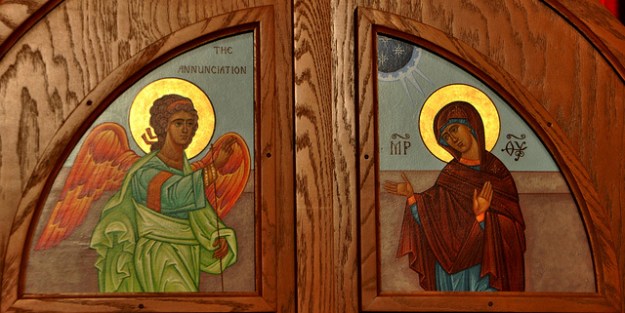
Royal doors of St. George's Orthodox Cathedral, Toledo.

Royal doors of St. George’s Orthodox Cathedral, Toledo.

A perennial favorite among Advent hymns, “O come, O come, Emmanuel” is a 19th century reworking of the “O Antiphons,” which accompany the saying of the Magnificat (Song of Mary) at Evening Prayer in the last week of Advent.

Whew! That’s a mouthful. Wait, what?

Try this:

You’re saying Evening Prayer tonight, right? Right.

You’ll say the Magnificat after the Gospel reading, right? Right.

Why not add a little touch of extra seasonal solemnity and use an antiphon before and after the Magnificat? It’ll read like this:

O Come, thou Wisdom from on high, who orderest all things mightily;
to us the path of knowledge show, and teach us in her ways to go.

My soul proclaims the greatness of the Lord,
my spirit rejoices in God my Savior; *
for he has looked with favor on his lowly servant.
From this day all generations will call me blessed: *
the Almighty has done great things for me,
and holy is his Name.
He has mercy on those who fear him *
in every generation.
He has shown the strength of his arm, *
he has scattered the proud in their conceit.
He has cast down the mighty from their thrones, *
and has lifted up the lowly.
He has filled the hungry with good things, *
and the rich he has sent away empty.
He has come to the help of his servant Israel, *
for he has remembered his promise of mercy,
The promise he made to our fathers, *
to Abraham and his children for ever.

Glory to the Father, and to the Son, and to the Holy Spirit: *
as it was in the beginning, is now, and will be for ever.  Amen.

O Come, thou Wisdom from on high, who orderest all things mightily;
to us the path of knowledge show, and teach us in her ways to go.

Tomorrow evening, you’ll use a different O Antiphon with the Magnificat, and so on for the next week leading up to Christmas Eve. Oh, that’s not so hard!

If you have an Episcopal Hymnal 1982, you can find hymn 56 which has the verses conveniently labeled with the date, but I am also including them here.

(Dec. 17) O come, thou Wisdom from on high, who orderest all things mightily;
to us the path of knowledge show, and teach us in her ways to go.

(Dec. 18) O come, O come, thou Lord of might, who to thy tribes on Sinai’s height
in ancient times didst gave the law, in cloud, and majesty, and awe.

(Dec. 19) O come, thou Branch of Jesse’s tree, free them from Satan’s tyranny;
that trust thy mighty power to save, and give them victory over the grave.

(Dec. 20) O come, thou Key of David, come, and open wide our heavenly home;
make safe the way that leads on high, and close the path to misery.

(Dec. 21) O come, thou Dayspring from on high, and cheer us by thy drawing nigh;
disperse the gloomy clouds of night, and death’s dark shadows put to flight.

(Dec. 22) O come, Desire of nations, bind in one the hearts of all mankind;
bid thou our sad divisions cease, and be thyself our King of Peace.

(Dec. 23) O come, O come, Emmanuel, and ransom captive Israel,
that mourns in lonely exile here until the Son of God appear.

You’ll find a nice summary article about the O Antiphons here.

The O Antiphons are a lovely addition to the practice of the Daily Office during Advent. I hope they will enhance your prayers as you prepare to greet the coming of our Incarnate Lord at Christmas.

Your love, O Lord, reaches to the heavens

The Milky Way, from the bright star Sirius in the upper right corner all the way down to Eta Carina, the red nebula visible on the horizon, as seen from the Florida Keys. Image Credit: Tony Hallas/Science Fiction/Getty Images

“We might understand at some level that those tiny points of light in the night sky are similar to our sun, made of atoms identical to those in our bodies, and that the cavern of outer space extends from our galaxy of stars to other galaxies of stars, to distances that would take light billions of years to traverse. We might understand these discoveries in intellectual terms, but they are baffling abstractions, even disturbing, like the notion that each of us once was the size of a dot, without mind or thought. Science has vastly expanded the scale of our cosmos, but our emotional reality is still limited by what we can touch with our bodies in the time span of our lives.”

-Alan Lightman, Our Place in the Universe | Harper’s Magazine.

When I think about the Incarnation, the mystery toward which the season of Advent is leading us, I most often think of swimming in the lake at Interlochen arts camp in Michigan the summer after my junior year in college, one night around midnight.

The night sky was pitch-black, just like the water. I couldn’t tell where the warm water ended and the warm night air began. As I floated on my back in that womblike state, the Milky Way arched overhead from one end of the sky to the other.

All of that vast immensity is God’s creation. All of that creative power, filling “distances that would take light billions of years to traverse,” came to dwell in a child born to Mary. That child’s life and example transformed the people around him and continues to influence the world. That creative power could not be contained by death.

Lightman writes in this month’s Harper’s Magazine that “our emotional reality is still limited to what we can touch with our bodies in the time span of our lives.”

That’s why I think the Incarnation matters so much. That’s why many Christians (especially Anglicans) bow at the words “he became incarnate from the Virgin Mary, and was made man” in the Nicene Creed. We bow at the billions of burning stars contained in 11 short words.

“No one has ever seen God,” John writes in the prologue to his Gospel. “It is God the only Son, who is close to the Father’s heart, who has made him known” (John 1:18).

I hope that as you look on the baby in the manger this Christmas, your eyes will fill with stars and your heart with gratitude for God’s love, which “reaches to the heavens.”

Not only with our lips, but in our lives

Behold, the kings of the earth assembled *
and marched forward together.

They looked and were astounded; *
they retreated and fled in terror.

Trembling seized them there; *
they writhed like a woman in childbirth,
like ships of the sea when the east wind shatters them. (Psalm 48:4-6)

What does it take to get your attention? What does it take to shake your confidence? What does it take to make you reevaluate the way you’re living your life?

For some people, it’s a natural disaster that flings ships around like toys. For me, it’s a wake up call from people near me whom I trust.

Just as the Psalmist contrasts the terror of the “kings of the earth” with the solidity and glory of Jerusalem’s bulwarks, so in the General Thanksgiving we praise God not only for our creation and preservation in the struggles of life, but also “for the means of grace, and the hope of glory” (BCP 125).

It is possible for us to get back on track, to place our trust where it belongs, to stand on a firmer foundation that we had been on before. It is possible, as Jesus says in the parable, for our eye to be clear and light up our being (Luke 11:36).

We can make the way we live our lives match what we say with our lips. God grant me the wisdom, not just today but every day, to heed the wake up call and stand on solid ground again.

Asking is not enough

So I say to you, Ask, and it will be given you; search, and you will find; knock, and the door will be opened for you. For everyone who asks receives, and everyone who searches finds, and for everyone who knocks, the door will be opened.  (Luke 11:9-10)

Matthew 7:7 (Commentary)

Asking is not enough,
says Bede
the venerable

We must diligently seek

Read the blueprint
heart’s desire

Lay the first stone

On stone and stone
the house
reveals itself

Plan becomes a home

I must lay my heart
(rejected stone)
firmly in place

Daily build the home I seek

Rodger Patience
Mepkin Abbey + July 1998

Red-Letter Days

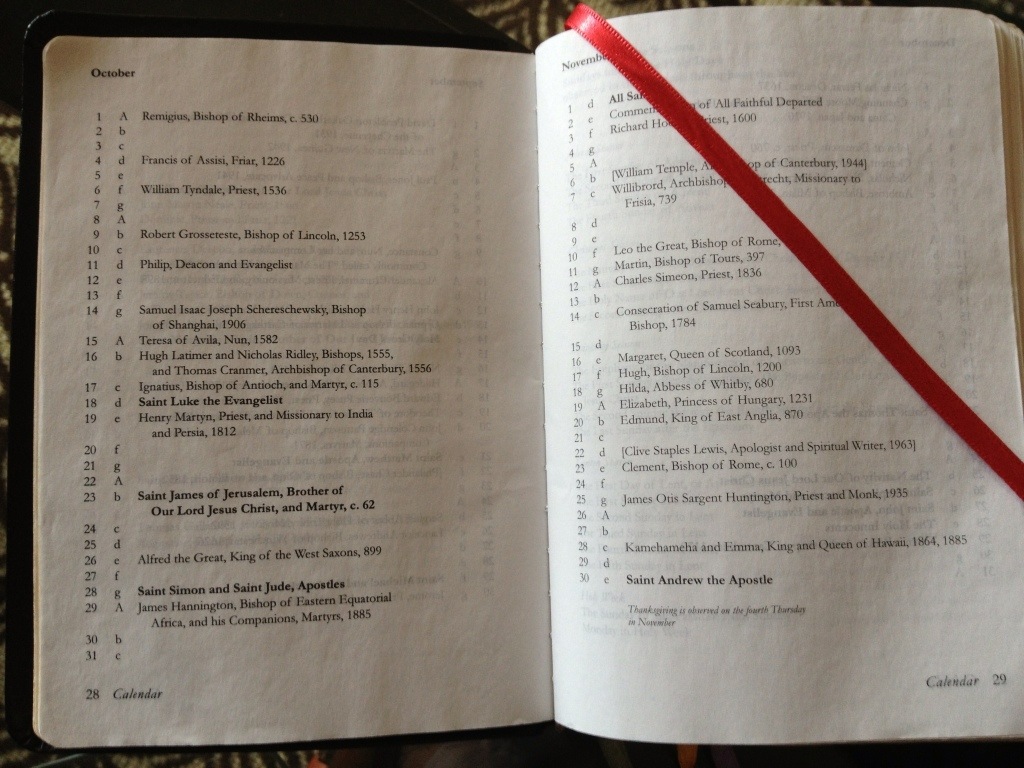
20121018-125413.jpg

In my post this morning I reflected on the lessons appointed for the Thursday after Proper 23, having completely missed the fact that today is actually the Feast of St. Luke the Evangelist.

Perhaps if the Calendar in the front of the Book of Common Prayer still printed the Major Feasts in red (the origin of the term “red-letter days) I might have caught it. The current prayer book (see above) is a bit more subtle.

I probably wouldn’t have caught it, anyway, since my early-morning, barely-caffeinated routine has me turning first to the bookmarked Daily Office Lectionary, 961 pages away from the Calendar page for October, and then marking psalms and readings with the appropriate ribbons.

Oh well, there’s always Evening Prayer. I’ll have a chance to erase the black mark soon enough.

Thanksgiving for the Birth of a Child

O God, you have taught us through your blessed Son that whoever receives a little child in the name of Christ receives Christ himself: We give you thanks for the blessing you have bestowed upon this family in giving them a child. Confirm their joy by a lively sense of your presence with them, and give them calm strength and patient wisdom as they seek to bring this child to love all that is true and noble, just and pure, lovable and gracious, excellent and admirable, following the example of our Lord and Savior, Jesus Christ. Amen. (BCP 443)

My wife and I have just become grandparents, so in addition to the prayer above (from the service Thanskgiving for the Birth of a Child) I’ll be saying the Magnificat at Evening Prayer tonight with a new appreciation.

Rejoice with us as our souls proclaim the greatness of the Lord!