Tag Archives: Evening Prayer

A window on the whole

“Facing the Canon” is a lengthy, but lovely interview with NT (Tom) Wright.

At 15:00 or so, in response to a question about how we should read the Bible “properly,” he responds by saying “we should be reading the whole Bible all the time, but that’s difficult as it’s a very long book.”

He then points to the Anglican practice of the Daily Office as an approach to the task. Each short passage we read — morning and evening, day after day — is a window, as it were, on the whole Bible story.

The place of God’s dwelling

At the Advisory Board Company, we teach a course called “Leading Amidst Uncertainty.”

In one of my favorite moments we suggest to leaders, as they must respond personally to the anxiety arising from uncertainty, that they regularly pause to breathe.

This timeless wisdom is not copyrighted, and it’s free for anyone at any time.

We go on to suggest making time for reflection in whatever way may work best — go outside for a walk or exercise to clear your head, schedule five minutes of nothing on your calendar to regroup, or eat lunch away from your desk to find clarity.

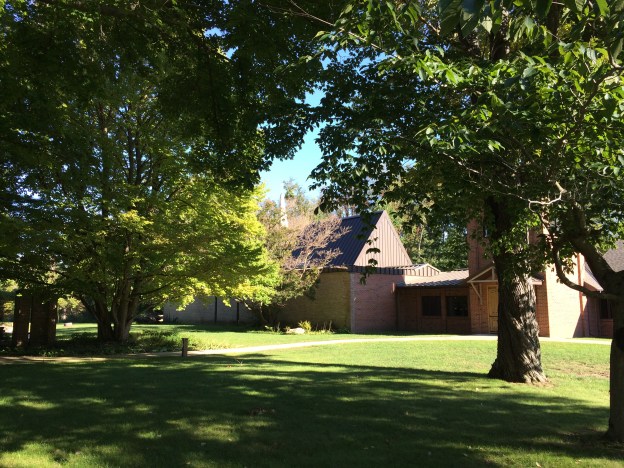
My teaching brought me to Kalamazoo, Michigan this week, so I took advantage of being just 30 minutes away to stop in for a visit this afternoon at St. Gregory’s Abbey in Three Rivers.

St. Gregory’s is a Benedictine Abbey in the Episcopal Church. I have been a confrater, or associate, of the abbey for at least 20 years but have rarely visited. It must be 10 years since my last visit.

Before vespers I had some time to sit quietly in the sun, to pet one of the Abbey cats, and to have tea with the monks and with another guest, the Rt. Rev. Ed Little, Bishop of Northern Indiana.

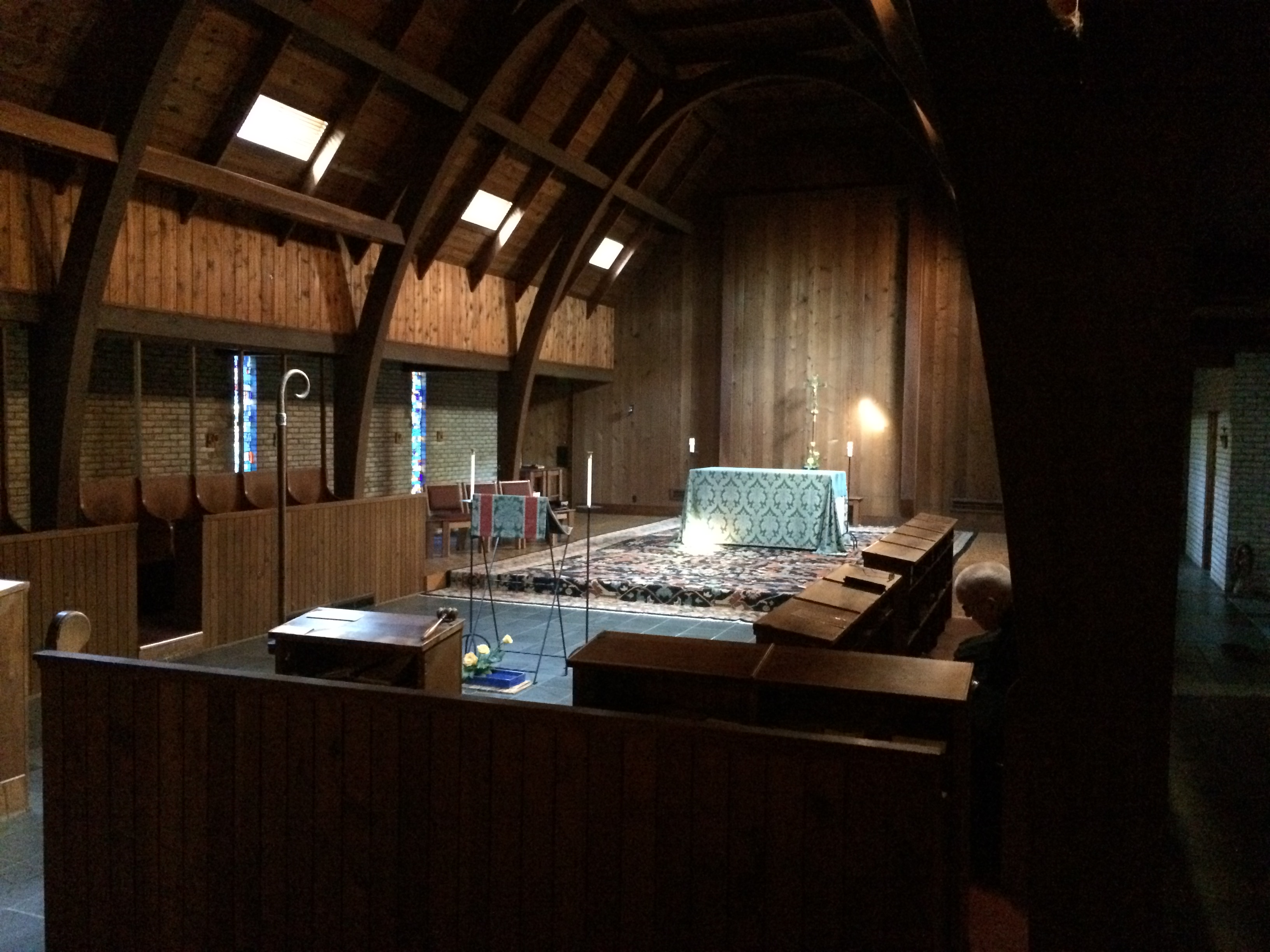
The Abbey Church is one of the loveliest I know, and vespers in that quiet place redolent of incense is truly peaceful.

St. Gregory's Abbey Church

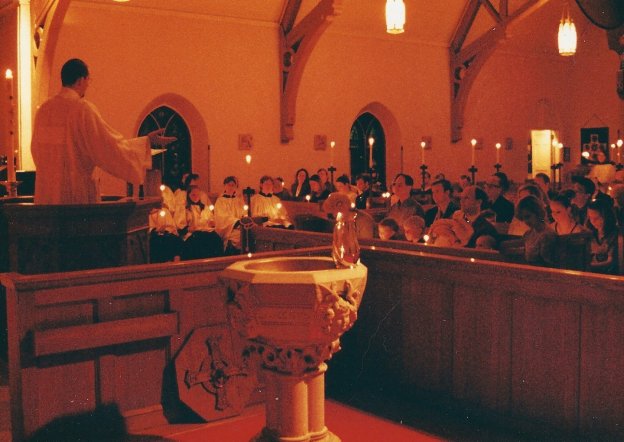
Vespers in St. Gregory’s Abbey Church

The chapter appointed for this evening (a short Scripture passage) is also a personal favorite of mine:

See what love the Father has given us, that we should be called children of God; and that is what we are. The reason the world does not know us is that it did not know him. Beloved, we are God’s children now; what we will be has not yet been revealed. What we do know is this: when he is revealed, we will be like him, for we will see him as he is (1 John 3:1-2).

I am grateful for a couple of hours today in “the place of God’s dwelling” — or at least one particular place — and for the pause to breathe.

All this has come upon us

A Collect for Peace

Most holy God, the source of all good desires, all right judgments, and all just works: Give to us, your servants, that peace which the world cannot give, so that our minds may be fixed on the doing of your will, and that we, being delivered from the fear of all enemies, may live in peace and quietness; through the mercies of Christ Jesus our Savior. Amen. (BCP 123)

Peace which the world cannot give

The psalmist laments that “all this has come upon us” and prays to the Lord for help:

All this has come upon us; *
yet we have not forgotten you,
nor have we betrayed your covenant.

Our heart never turned back, *
nor did our footsteps stray from your path;

Though you thrust us down into a place of misery, *
and covered us over with deep darkness.

If we have forgotten the Name of our God, *
or stretched out our hands to some strange god,

Will not God find it out? *
for he knows the secrets of the heart.

Indeed, for your sake we are killed all the day long; *
we are accounted as sheep for the slaughter.

Awake, O Lord! why are you sleeping? *
Arise! do not reject us for ever.

Why have you hidden your face *
and forgotten our affliction and oppression?

We sink down into the dust; *
our body cleaves to the ground.

Rise up, and help us, *
and save us, for the sake of your steadfast love. (Psalm 44:17-26)

In this lament, two “generations” of the children of Israel have expressed their desire for God’s peace in the middle of difficulty and in the face of enemies.

The Jews, who had prayed the Psalms in worship for at least 1,000 years before the time of Christ, were joined in that song by the Christians who, some 2,000 years ago, retained the Psalms in their daily worship and taught them to Gentile converts who had begun to follow the Way.

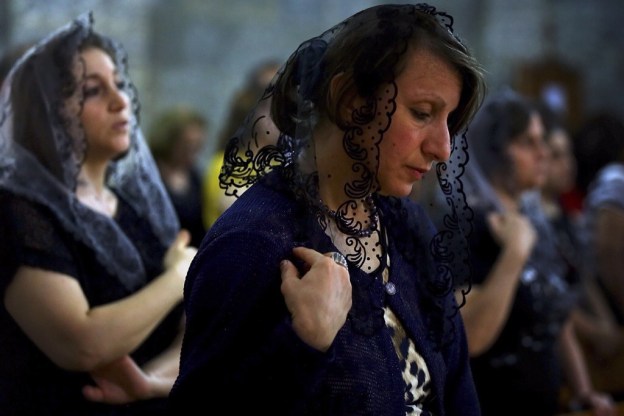
It’s sobering to think that the Psalms have been sung, until this week, by Christians in Mosul for 1,700 of the last 2,000 years.

Abraham and his children for ever

Another of the songs that Christians sing in their evening worship is the Magnificat, or the Song of Mary (BCP 119).

In the Magnificat, Mary’s words echo those of Hannah from 1 Samuel 2. Both women look to God to “show the strength of his arm” and to “scatter the proud in their conceit.”

Luke’s Gospel (where the Magnificat comes from) and his Book of Acts are focused on the spread of the church throughout the world.

In his telling, Mary’s song broadens in scope from God lifting up the “lowly” and looks toward the glorious day when all will be free to worship God without fear, “Abraham and his children for ever.”

It is also sobering this week to realize that the children of Abraham — Jews, Christians, and Muslims — continue to pray for peace for themselves in difficulty but to live as enemies of each other.

Prayer for Mission

O God and Father of all, whom the whole heavens adore: Let the whole earth also worship you, all nations obey you, all tongues confess and bless you, and men and women everywhere love you and serve you in peace; through Jesus Christ our Lord. Amen. (BCP 124)

Though we Christians pray “through Jesus Christ our Lord,” our prayer is that all men and women everywhere may love and serve the God and Father of all in peace.

All this has come upon us; may we all turn back to God.

Holy, good, and peaceful

That this evening may be holy, good, and peaceful,
We entreat you, O Lord. (BCP 122)

Today I am grateful.

I was fortunate to spend a couple of holy hours this morning with three people who are in a process of vocational discernment.

We reflected on the promises made by all Christians in the Baptismal Covenant (BCP 304) and the promises made by those being ordained as bishops (BCP 518), priests (BCP 531), and deacons (BCP 543).

We also shared which qualities — from any or all of those promises — we see operating in each other’s lives. It was both affirming and eye-opening.

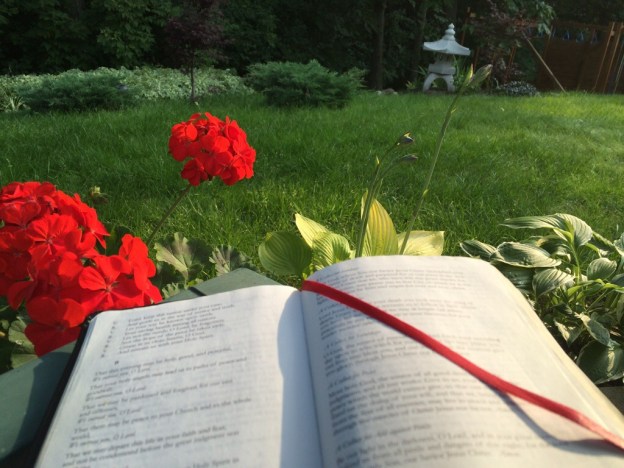
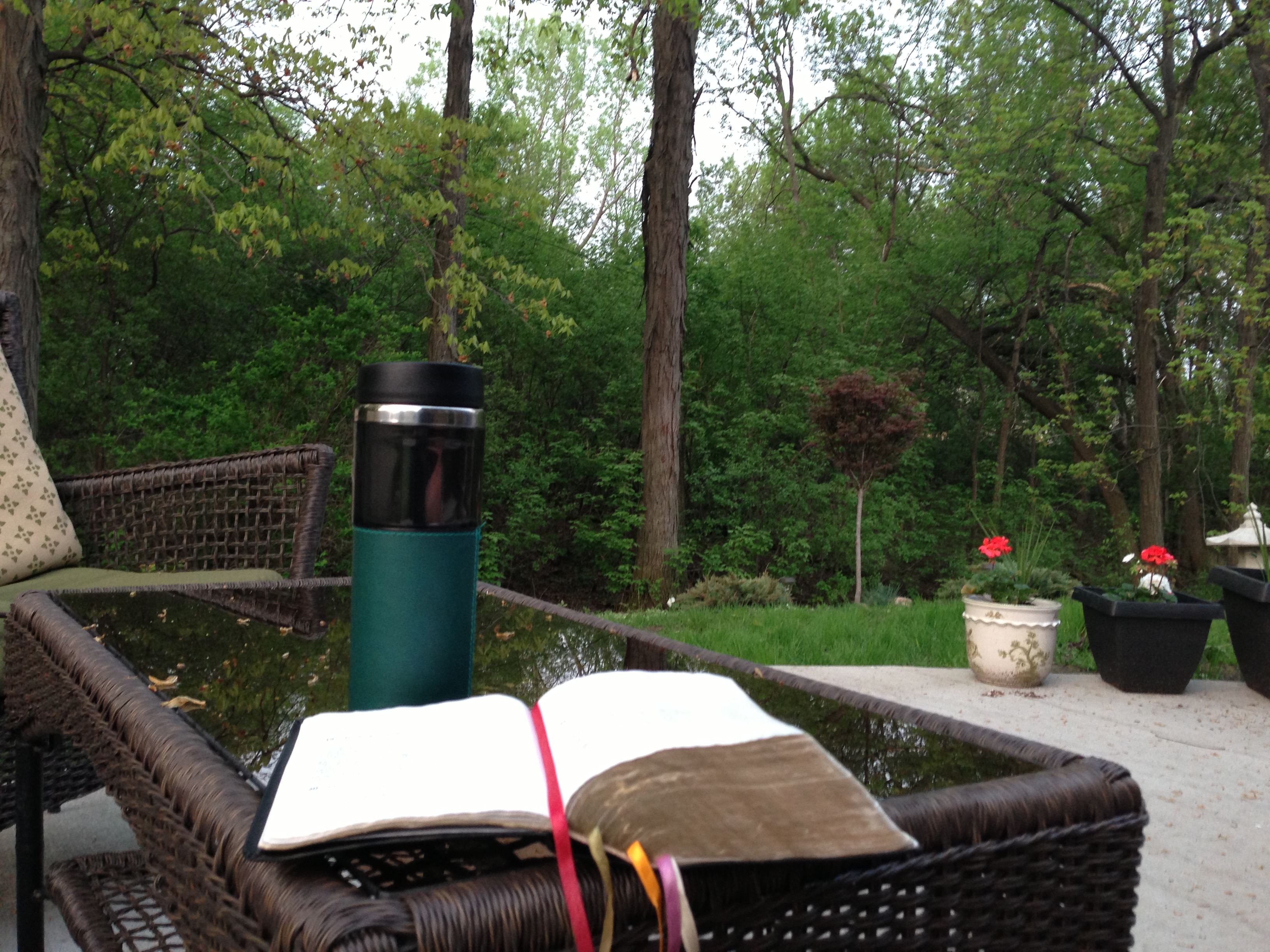
This afternoon, Lovely Wife and I have been reading and dozing on our patio, enjoying the sound of birdsong and the breezes through our Japanese garden. It’s been a good Sabbath afternoon.

And even though I’m not watching the news, I am mindful of the blessing of peace that we enjoy.

Pray for those “who go so heavily while the enemy oppresses [them]” (Psalm 42), and work to make God’s peace come alive for all.

Open invitation, no barriers

There’s an interesting thread unfolding on Twitter today about Choral Evensong.

The conversation started in response to this thoughtful post by Gerry Lynch on Episcopal Cafe.

People laud the benefits or rue the disadvantages of Choral Evensong based on their understanding of “participation.”

Participation

Is listening to lovely choral music participating?

Is being a choir member participating?

What if you are a paid singer? Does that count?

These are all intriguing questions, but I’m not interested in them, really.

I am interested in the Daily Office — Morning and Evening Prayer especially — as a form of worship that is an open invitation with no barriers to lay participation.

Open invitation, no barriers

You see, the Holy Eucharist, the proper service of public worship on the Lord’s Day, requires a bishop or priest to celebrate, and Communion is properly shared by the baptized.

Anyone can officiate at the Daily Office, on the other hand, and there is no requirement that those joining in the prayers be baptized.

There’s a lot of buzz in evangelical circles about “seeker services,” and many places like St. Mark’s Cathedral in Portland attract people to services like Compline.

What if we offered the Daily Office in our churches with an open invitation for anyone to join us in prayer “that we may be bound together by [God’s] Holy Spirit in the communion of all [God’s] saints” (BCP 122)?

Our daily prayer is not only Choral Evensong, though when it is, it’s glorious.

More importantly, our daily prayer is ours to do and ours to share — with an open invitation and no barriers.

Rejoicing, restored, redeemed, and reconciled

At Evening Prayer on this Easter Eve, we read from Paul’s letter to the Romans:

There is therefore now no condemnation for those who are in Christ Jesus. For the law of the Spirit of life in Christ Jesus has set you free from the law of sin and of death. (Romans 8:1-2)

For the 19th year now, I will carry the Paschal Candle into the darkened church tonight at the Great Vigil of Easter and sing the ancient Easter proclamation called the Exsultet (BCP 286).

Rejoice

What we do, as followers of Christ, is rejoice. Paul wrote to the Romans about the reason why: “The law of the Spirit of life in Christ Jesus has set us free from the law of sin and death.”

Rejoice now, heavenly hosts and choirs of angels,
and let your trumpets shout Salvation
for the victory of our mighty King.
Rejoice and sing now, all the round earth,
bright with a glorious splendor,
for darkness has been vanquished by our eternal King.
Rejoice and be glad now, Mother Church,
and let your holy courts, in radiant light,
resound with the praises of your people.

Restored

Time bends in upon itself on this particular night. It is not only now, but also that Passover in Jerusalem when Jesus was crucified, and even that first Passover in Egypt when God’s people escaped from slavery.

In God’s salvation history we are now and always experiencing restoration from bondage to grace and holiness.

This is the night, when you brought our fathers, the children of Israel,
out of bondage in Egypt, and led them through the Red Sea on dry land.
This is the night, when all who believe in Christ are delivered from the gloom of sin,
and are restored to grace and holiness of life.
This is the night, when Christ broke the bonds of death and hell,
and rose victorious from the grave.

Redeemed and reconciled

We realize we are powerless to overcome our sins, but God can and will redeem us. We try to hide from God in our shame, but God sees through to our loveliness. We think we’re all alone, but God continually acts to reunite us with one another and all of creation.

How wonderful and beyond our knowing, O God, is your mercy and loving-kindness to us,
that to redeem a slave, you gave a Son.
How holy is this night, when wickedness is put to flight, and sin is washed away.
It restores innocence to the fallen, and joy to those who mourn.
It casts out pride and hatred, and brings peace and concord.
How blessed is this night, when earth and heaven are joined and we are reconciled to God.

Daily Office Basics

Daily Office Basics

The Daily Office Anchor Society will be actual, not just virtual, in February.

Join me on Saturday, February 15 from 8:30 to noon at St. Thomas Church, 226 Washington Street, Menasha WI 54952 for a program on Daily Office Basics.

Many Christians choose to observe Lent with “special acts of discipline or self-denial” such as praying Morning or Evening Prayer.

On February 15, you will not only learn how to pray the Church’s daily offices but you will also receive a variety of resources to help you navigate what may be an unfamiliar or confusing practice. We will have plenty of time for questions and sharing with each other.

We will enjoy coffee and light refreshments at 8:30 am and begin with Morning Prayer at 9 am. The program will conclude promptly at noon.

Beginning the Office

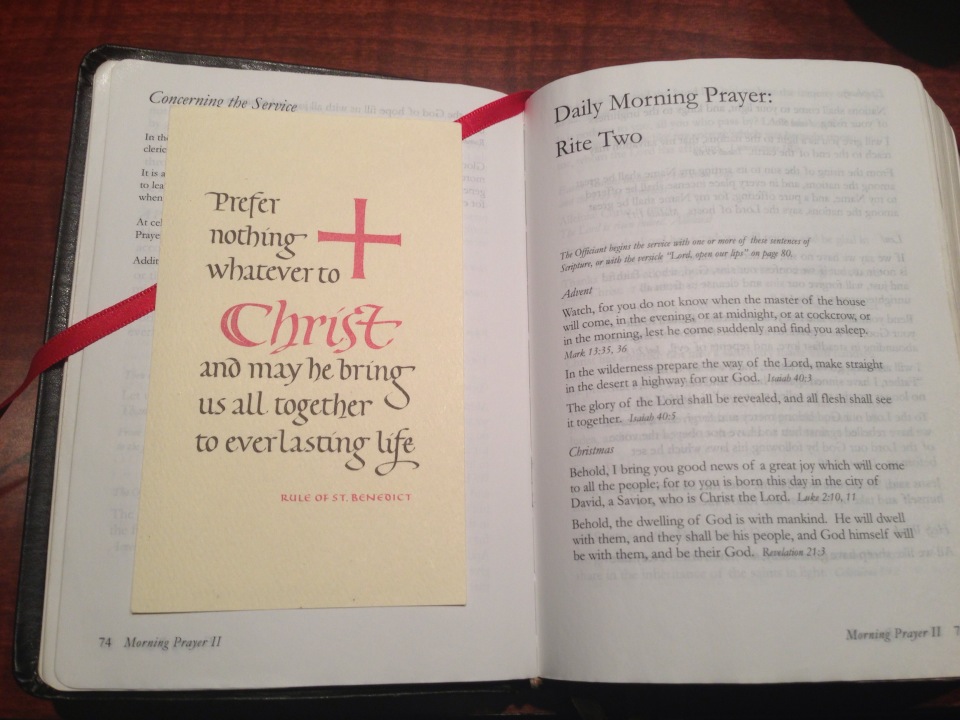
Prefer Nothing to Christ

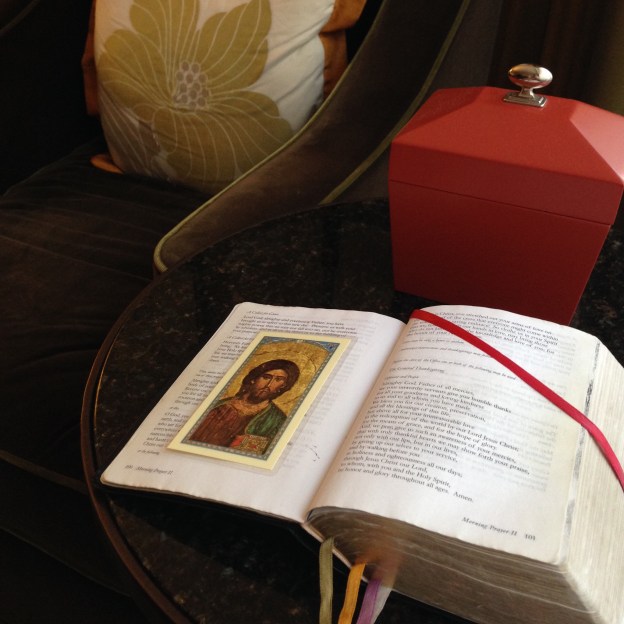
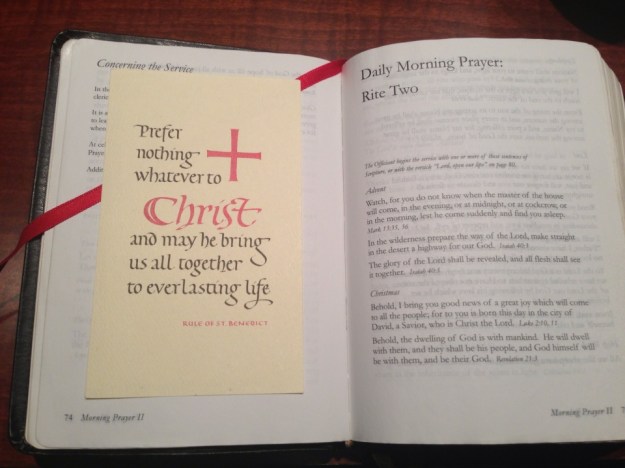
Yesterday we prepared to say the Office by finding our place in the Book of Common Prayer and marking various places in the prayer book and Bible for easy reference.

Today we will begin the Office, looking at the opening sentences, the Confession of Sin, the Invitatory and Psalter.

Tomorrow we will look at the Lessons and Canticles, and the next day at the Prayers.

Where to begin?

The proper beginning of Morning Prayer is the opening sentences on BCP 80: “Lord, open our lips. / And our mouth shall proclaim your praise.”

At Evening Prayer (and other offices throughout the day), the opening sentences are “O God, make speed to save us. / O Lord, make haste to help us.” (BCP 117).

You’ll notice, though, that there are several pages of material printed before those opening sentences. You may choose to begin the Office with a seasonal sentence from Scripture and/or the Confession of Sin.

Seasonal Sentences

Look at BCP 75-78. You’ll see four pages of Scripture verses chosen to fit the seasons of the Church Year.

You might choose to begin the Office with one of these sentences in order to give your prayers the “flavor” of the season. This is especially helpful to distinguish seasons like Advent and Christmas, Lent and Easter, from the long “ordinary” seasons after Epiphany and Pentecost.

Since it’s Advent now, you might choose to begin with “Watch, for you do not know when the master of the house will come …” (BCP 75). Over the next four weeks, you might change it up a little by using one of the other two choices.

Confession of Sin

Look at BCP 79. The italics at the very top of the page are called rubrics. They are directions telling you what to do next.

In this case, the rubrics say, The following Confession of Sin may be said; or the Office may continue at once with “Lord, open our lips” (BCP 79).

“May” is an important word in the rubrics, and it means what it says. You don’t have to say the Confession every time you say the Office; you may say it.

Many people who say both Morning and Evening Prayer choose to say the Confession only in the evening.

In this somewhat more penitential season of Advent, and certainly in the season of Lent, it may seem right to say the Confession at every Office. Again, the choice helps us focus on the season of the Church Year and its emphases.

At any rate, if you’re saying the Office alone, you can omit the introduction to the Confession and simply start, “Most merciful God …”

When you say the absolution at the top of BCP 80, change the pronouns from “you” to “us” — you’ll see the rubrics there to remind you.

The Invitatory and Psalter

Everything we’ve said so far is optional, remember. You could simply begin the Office here on BCP 80 with “Lord, open our lips.”

It’s customary to make a sign of the cross with your thumb over your lips when you say “Lord, open our lips” at Morning Prayer and to make the regular sign of the cross at the sentence “O God, make speed to save us” at the other offices.

Here’s how it goes:

Lord, + open our lips.
And our mouth shall proclaim your praise.
Glory to the Father, and to the Son, and to the Holy Spirit:
as it was in the beginning, is now, and will be for ever. Amen.
Alelluia.

Pause here for breath while we talk about …

The Invitatory Psalm

The Office begins with a selection from the Psalter, which you looked up in the Daily Office Lectionary and marked with a bookmark. Before you say those Psalms, however, you say the Invitatory (or opening) Psalm.

There are two Invitatory Psalms, called Venite and Jubilate after the first word of the Psalm in Latin: “Come” and “Be joyful,” respectively.

Because the Venite is commonly used all the time as the Invitatory, you might like to use the Jubilate during Advent and Lent, just to set the season apart a little. There’s also a special canticle called Pascha nostrum, or “Christ our Passover,” that’s meant for use during Easter.

Again you’ll notice some optional material on BCP 80-82 before the Invitatory Psalms are printed. These are antiphons, or refrains, which you may use in order to give a seasonal flavor to the Venite or Jubilate, which you say every day.

So today, saying the Jubilate might go something like this:

Our King and Savior now draws near: Come let us adore him.

Be joyful in the Lord, all you lands; *
serve the Lord with gladness
and come before his presence with a song.

Know this: The Lord himself is God; *
he himself has made us, and we are his;
we are his people and the sheep of his pasture.

Enter his gates with thanksgiving;
go into his courts with praise; *
give thanks to him and call upon his Name.

For the Lord is good;
his mercy is everlasting; *
and his faithfulness endures from age to age.

Our King and Savior now draws near: Come let us adore him.

The Psalm or Psalms Appointed

The Office continues with the Psalms appointed for the morning or evening.

You may say the “Glory to the Father” at the end of all the Psalms, or at the end of each individual Psalm.

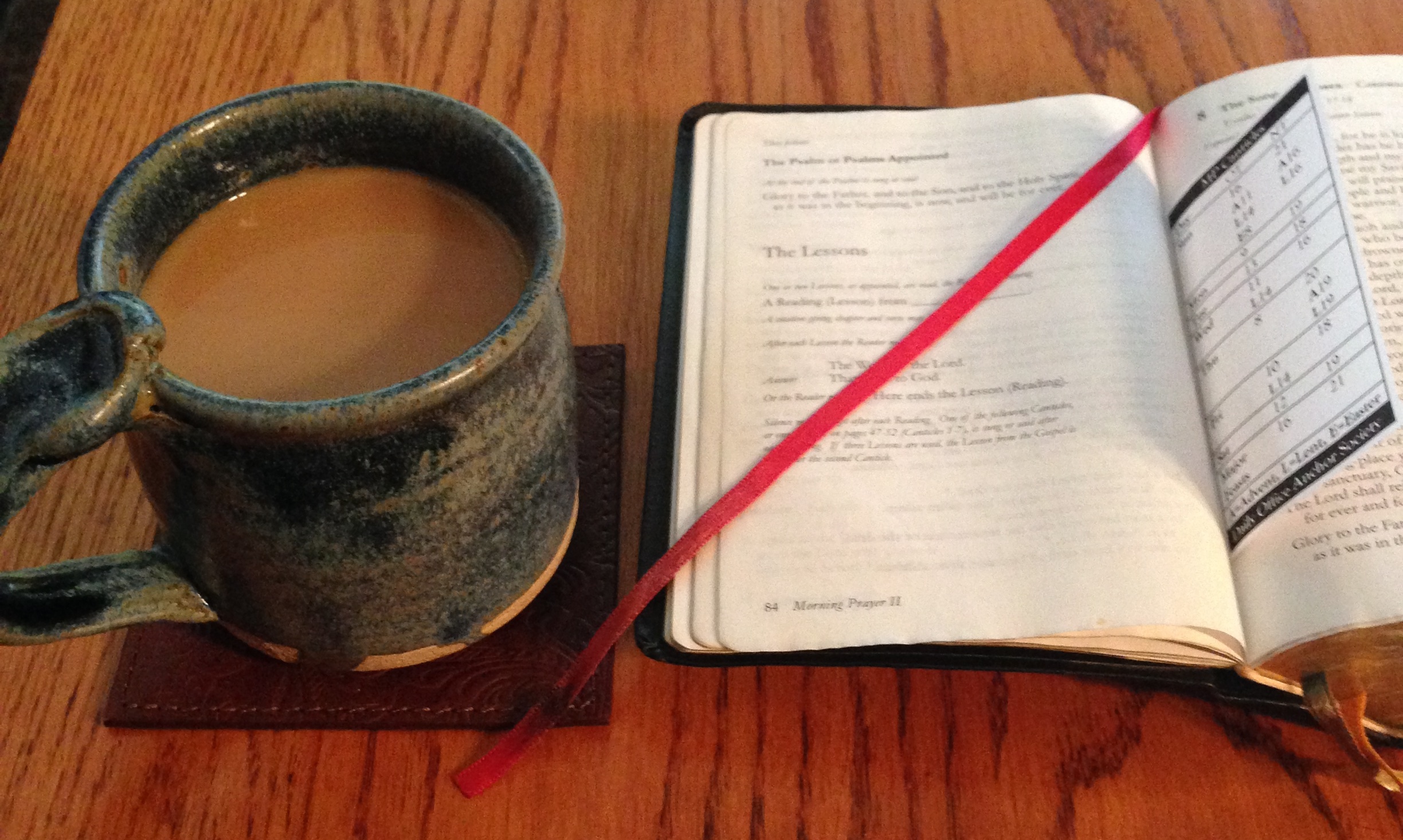
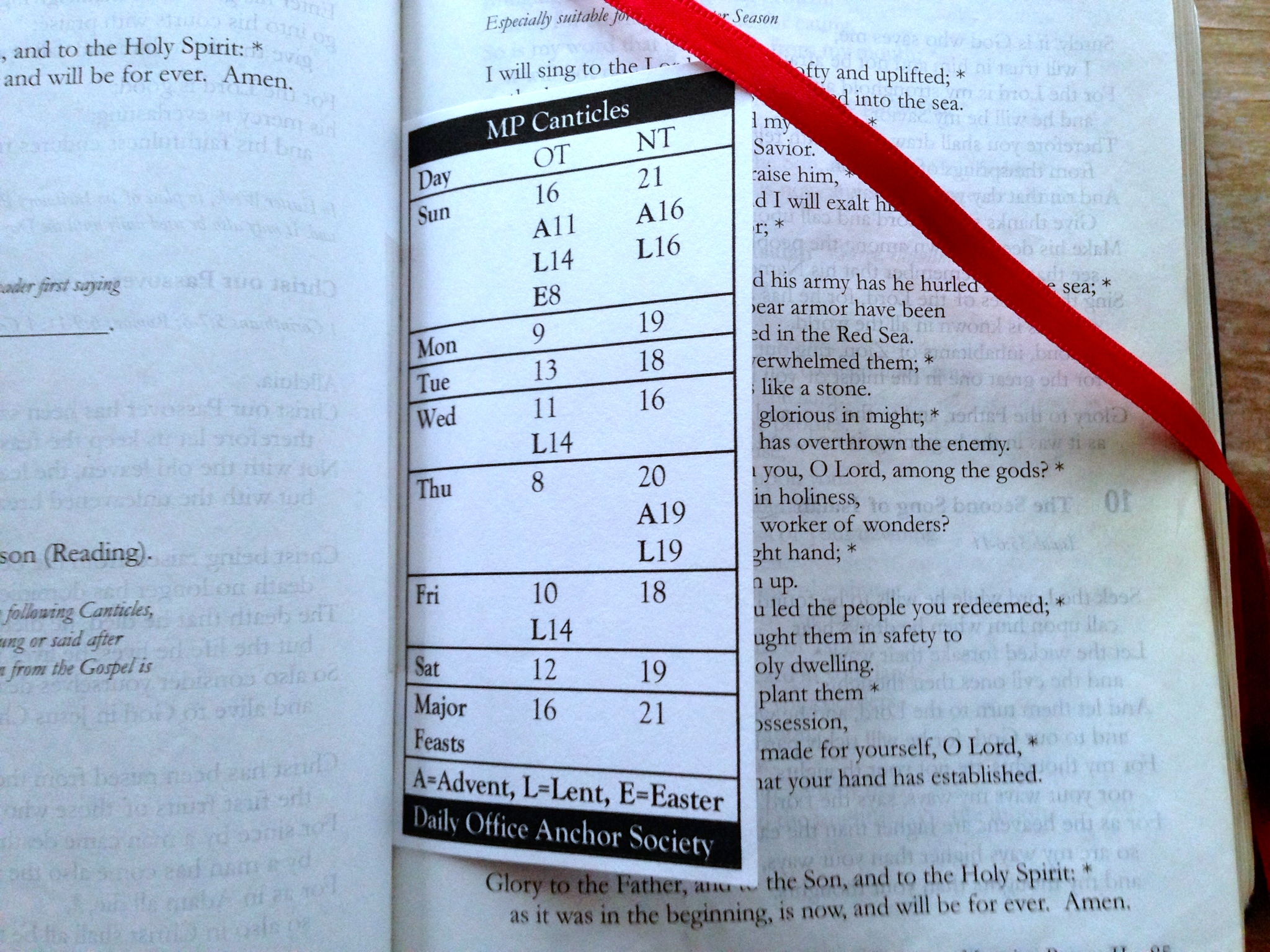
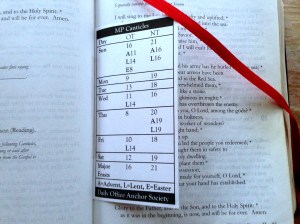
Before you turn to the Psalms, though, let me suggest that you refer to the Table of Canticles that you printed out from the Resources page and taped here at BCP 84. Move your Morning Prayer bookmark or ribbon to mark the canticle assigned to follow the first reading.

Today is Monday, for example, so Canticle 9 is appointed to follow the OT reading.
IMG_0008

If you take a moment now to mark it, you can read the Psalms, then turn directly to the OT lesson, then when you come back here, you can continue on with the Office very smoothly.

What you’re doing with your Morning Prayer bookmark or ribbon is holding your place in the service as you turn to the other resources you need for the Office: the Psalms, the Scripture readings, the Collects and other prayers.

We’ll look in more detail at the Lessons and the Canticles tomorrow morning.

Until then, I hope the Office is beginning to feel a bit more manageable. Every blessing!
For the extension of God’s kingdom

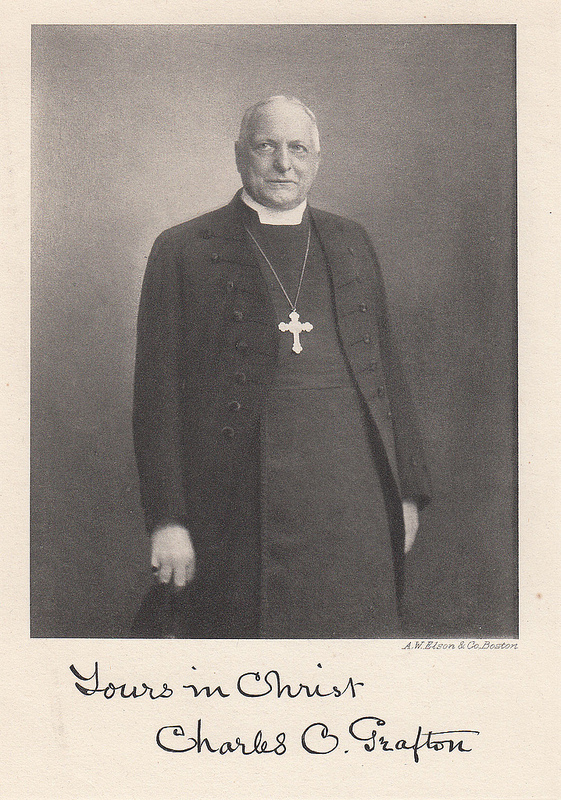
Charles Chapman Grafton


Today in the Diocese of Fond du Lac we observe the feast day of one of our “local saints.”

Charles Chapman Grafton was the second Bishop of Fond du Lac, a noted Anglo-Catholic, and an ardent ecumenist. He was also one of the founding members of the Society of St. John the Evangelist.

In between a Commission on Ministry meeting this morning and a dinner at my church this evening, I look forward to attending today’s Grafton commemoration at the Cathedral of St. Paul in Fond du Lac.

Since I was driving early this morning, I listened to Morning Prayer from the CD Singing the Daily Office by the SSJE community. At the Cathedral this afternoon, we will say Evening Prayer according to the Prayer Book of 1789, which Grafton would have used throughout most of his life.

Far from being an antiquarian curiosity, Grafton’s life speaks to me about the importance of both discipline and ecumenism — qualities vital to the Church’s life today, as always.

Collect of the Day

Loving God, you called Charles Chapman Grafton to be a bishop in your Church and endowed him with a burning zeal for souls: Grant that, following his example, we may ever live for the extension of your kingdom, that your glory may be the chief end of our lives, your will the law of our conduct, your love the motive of our actions, and Christ’s life the model and mold of our own; through the same Jesus Christ, who lives and reigns with you and the Holy Spirit, one God, throughout all ages. Amen.

So teach us to number our days

IMG_0640


So teach us to number our days,
that we may apply our hearts to wisdom. 
(Psalm 90:12)

In the context of Psalm 90, and in popular usage, this verse recalls us to a sense of our mortality. “Numbering our days” means understanding that we don’t have long to live and we should make every day count.

“Numbering our days” has stuck with me this week for a different reason, though.

In the context of the Daily Office, the ancient Jewish and Christian pattern of prayer in the morning and evening, we “number our days” in a very particular way.

I’ve been reflecting (especially since a great conversation over coffee on Wednesday with a clergy colleague) on how the Daily Office builds an awareness in us of a different “numbering,” a different way of organizing time.

The rhythm of morning and evening prayer includes collects (BCP 98-99, 123) that give shape to our weekly reflections, especially on Fridays (Jesus’ passion and death), Saturdays (God’s creative activity and our Sabbath rest), and Sundays (Christ’s victory over death and sin).

The offices also help attune us to the seasons of the Church Year, which have their own emphases and lead us through regular cycles of reflecting on Christ’s incarnation (Christmas) and his resurrection (Easter). There’s also a good long stretch of plain old “ordinary time” all summer long.

I sometimes wonder whether we Christians can regain a sense of our own sacred calendar in the face of the advertising onslaught of Back to School, Labor Day, Halloween, Thanksgiving, Santa Claus, the Easter Bunny, Mother’s Day and Father’s Day, Memorial Day and July 4th.

“Numbering our days” according to the Christian calendar might be one gentle witness to the countercultural Gospel we proclaim and to the Son of Man, Lord even of the Sabbath (Matt. 12:8), whom we follow.