Making all things new

Now I would remind you, brothers and sisters, of the good news that I proclaimed to you, which you in turn received, in which also you stand, through which also you are being saved, if you hold firmly to the message that I proclaimed to you — unless you have come to believe in vain. For I handed on to you as of first importance what I in turn had received: that Christ died for our sins in accordance with the scriptures, and that he was buried, and that he was raised on the third day in accordance with the scriptures, and that he appeared to Cephas, then to the twelve. Then he appeared to more than five hundred brothers and sisters at one time, most of whom are still alive, though some have died. Then he appeared to James, then to all the apostles. Last of all, as to one untimely born, he appeared also to me. (1 Cor. 15:1-8)

Of first importance

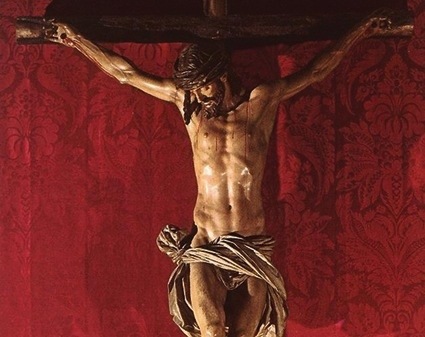
“Christ died for our sins … he was buried … he was raised on the third day in accordance with the scriptures.”

Paul makes this simple statement here just a few years after the founding of the church in Corinth in 50 or 51 AD, and Christians repeat it to this day in the words of the Nicene Creed (BCP 358).

Paul goes on to say Christ appeared to Cephas (Peter), then to the twelve, then to more than 500, then to James, then to all the apostles, then to Paul himself.

These things happened.

They connect with the record of God’s saving acts recorded in scripture.

Real people, known to the first witnesses of the resurrection, also experienced Christ’s appearing.

Not just all people, but all things

In his Easter week meditation for Brother, Give Us a Word, Br. Mark Brown of the Society of St. John the Evangelist reflects that:

Something that pertains to the whole cosmos is happening in the death and resurrection of Christ. From the depths of the inner worlds to the furthest reaches of outer space. “Behold, I am making all things new” — not just all people, but all things.

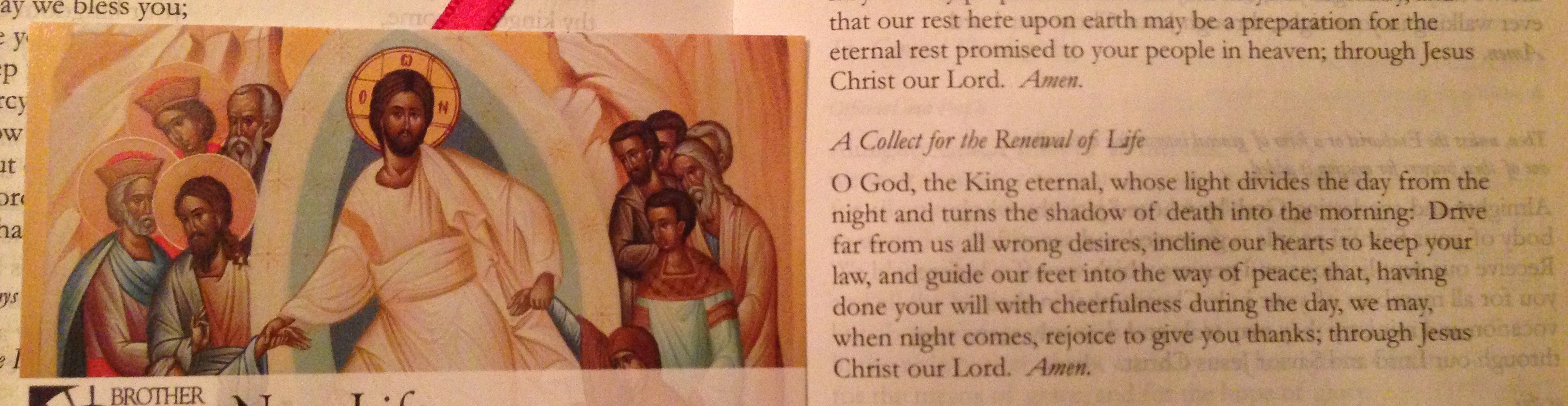
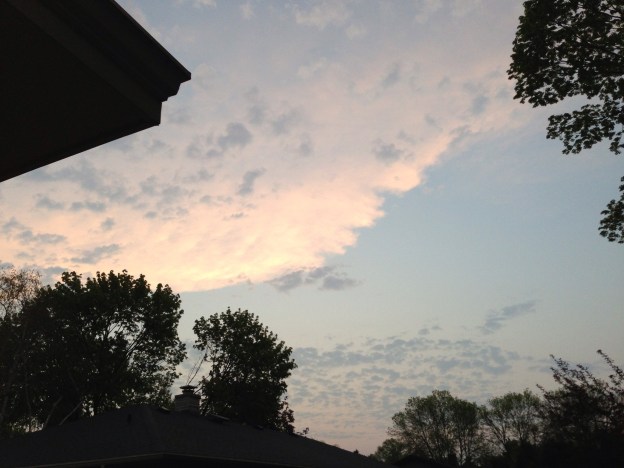
IMG_0692

Life is being renewed in Christ, but that doesn’t mean we don’t still have to work at driving away “wrong desires” or “keeping God’s law” or  following “the way of peace.”

We also still have to use the plunger on clogged toilets, as Lovely Wife and I discovered this morning.

Even the “things” sometimes resist this new creation in Christ, but as witnesses ourselves to the resurrection, we can see now that they are shot through with new promise — that even our struggles fit somehow into a larger pattern of new life at work in the world around us.

Signs of resurrection, seeds of hope

Signs of resurrection

Everything changes on Easter!

We reintroduce the Alleluias …

We recite or sing Christ our Passover in place of an Invitatory Psalm for the next 50 days …

We rehearse the salvation history of the Passover and the Exodus from Egypt (Exodus 12:1-14).

We remind ourselves in the stirring cadences of the Prologue to the Gospel of John of the present reality … “from his fullness we have received, grace upon grace” (John 1:16).

Alleluia! Christ is Risen! The Lord is risen indeed! Alleluia!

Seeds of hope

A student in my Education for Ministry (EfM) class gave me a lovely gift in an Easter card this year.

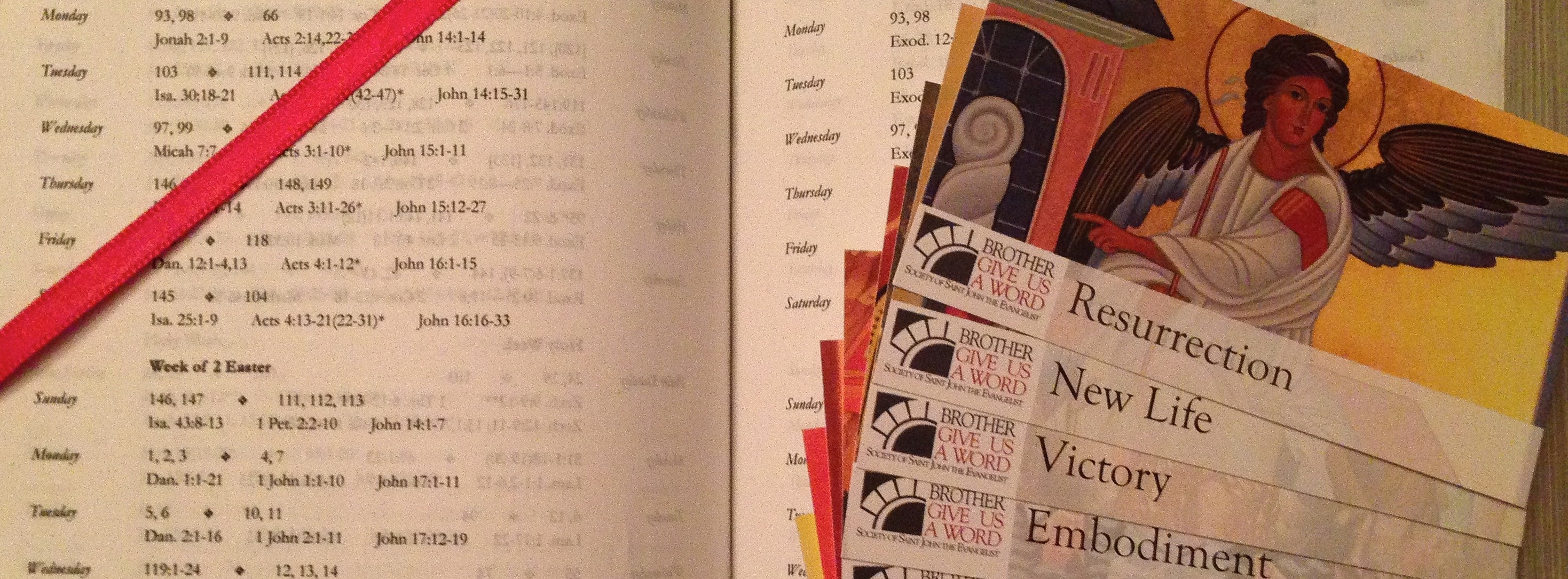
The brothers of the Society of St. John the Evangelist share a daily reflection on their website entitled “Brother, Give Us a Word.” They have also made the Easter Week reflections available as meditation cards.

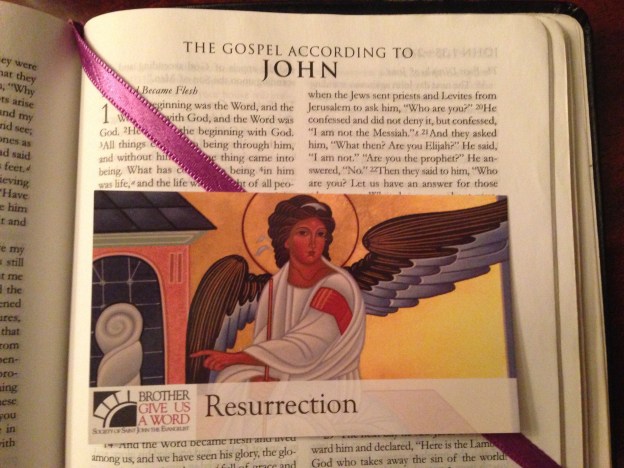
IMG_0690On this morning’s card (Resurrection), Br. Geoffrey Tristram asks:

How do we allow those seeds of hope and resurrection deep within us to burst into new life? One way is to open our eyes and see the signs of resurrection all around us.

Even the simple changes to Morning Prayer are “signs of resurrection.” The birdsong and the rain I hear through the window are part of the “bursting into new life” going on outside. The steps I have been following in my recovery are “seeds of hope” deep within me.

Alleluia! Christ is Risen! The Lord is risen indeed! Alleluia!

Easter Day

O God, who for our redemption gave your only-begotten Son to the death of the cross, and by his glorious resurrection delivered us from the power of our enemy: Grant us so to die daily to sin, that we may evermore live with him in the joy of his resurrection; through Jesus Christ your Son our Lord, who lives and reigns with you and the Holy Spirit, one God, now and for ever. Amen. (BCP 222)

Rejoicing, restored, redeemed, and reconciled

At Evening Prayer on this Easter Eve, we read from Paul’s letter to the Romans:

There is therefore now no condemnation for those who are in Christ Jesus. For the law of the Spirit of life in Christ Jesus has set you free from the law of sin and of death. (Romans 8:1-2)

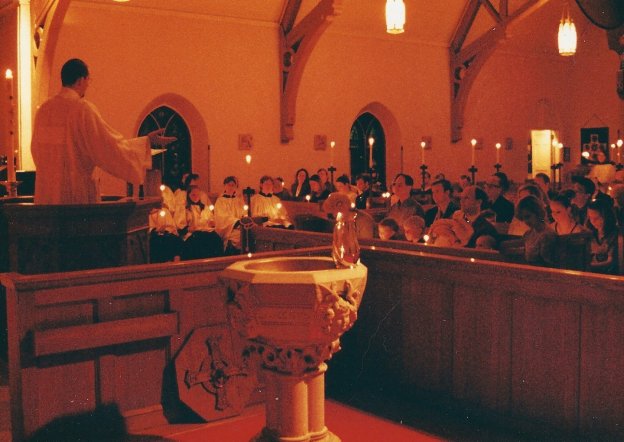
For the 19th year now, I will carry the Paschal Candle into the darkened church tonight at the Great Vigil of Easter and sing the ancient Easter proclamation called the Exsultet (BCP 286).

Rejoice

What we do, as followers of Christ, is rejoice. Paul wrote to the Romans about the reason why: “The law of the Spirit of life in Christ Jesus has set us free from the law of sin and death.”

Rejoice now, heavenly hosts and choirs of angels,
and let your trumpets shout Salvation
for the victory of our mighty King.
Rejoice and sing now, all the round earth,
bright with a glorious splendor,
for darkness has been vanquished by our eternal King.
Rejoice and be glad now, Mother Church,
and let your holy courts, in radiant light,
resound with the praises of your people.

Restored

Time bends in upon itself on this particular night. It is not only now, but also that Passover in Jerusalem when Jesus was crucified, and even that first Passover in Egypt when God’s people escaped from slavery.

In God’s salvation history we are now and always experiencing restoration from bondage to grace and holiness.

This is the night, when you brought our fathers, the children of Israel,
out of bondage in Egypt, and led them through the Red Sea on dry land.
This is the night, when all who believe in Christ are delivered from the gloom of sin,
and are restored to grace and holiness of life.
This is the night, when Christ broke the bonds of death and hell,
and rose victorious from the grave.

Redeemed and reconciled

We realize we are powerless to overcome our sins, but God can and will redeem us. We try to hide from God in our shame, but God sees through to our loveliness. We think we’re all alone, but God continually acts to reunite us with one another and all of creation.

How wonderful and beyond our knowing, O God, is your mercy and loving-kindness to us,
that to redeem a slave, you gave a Son.
How holy is this night, when wickedness is put to flight, and sin is washed away.
It restores innocence to the fallen, and joy to those who mourn.
It casts out pride and hatred, and brings peace and concord.
How blessed is this night, when earth and heaven are joined and we are reconciled to God.

Why do we call this Friday “Good”?

Just as every Sunday is for Christians a reminder of Easter and the resurrection, every Friday is a reminder of Good Friday and the crucifixion.

At Morning Prayer every Friday, we pray:

Collect for Fridays

Almighty God, whose most dear Son went not up to joy but first he suffered pain, and entered not into glory before he was crucified: Mercifully grant that we, walking in the way of the cross, may find it none other than the way of life and peace; through Jesus Christ your Son our Lord. Amen. (BCP 99)

Just as we live in the light of the Resurrection, we walk in the way of the cross.

Fr. Richard Rohr says:

I believe that the Mystery of the Cross is saying that the pattern of transformation unto God, the pattern that connects, the life that God offers us is always death transformed. The only pattern is the pattern of death and resurrection. We submit to it with trust because Jesus did.

Rohr calls this One Big Pattern “transformative dying.”

On the other side of that dying, whether it is physical illness and death, or the “daily dying to self” of the prayer book, or admitting our powerlessness over our sin, on the other side of that dying we find the truth.

The American author Reynolds Price says that the Gospel of John can be compressed down to a single sentence, “the sentence mankind craves from stories”:

The Maker of all things loves and wants me.

The Maker of all things loves and wants me — loves and wants every single one of us, loves and wants all of us so much that God was willing not only to endure the limitations of becoming human, but also to endure the suffering and death that is our lot in life.

Because he died and rose again, we too can experience “transformative dying,” can claim our small part of the one big pattern.

That’s why we call this Friday “Good.”

Collect for Fridays

Almighty God, whose most dear Son went not up to joy but first he suffered pain, and entered not into glory before he was crucified: Mercifully grant that we, walking in the way of the cross, may find it none other than the way of life and peace; through Jesus Christ your Son our Lord. Amen. (BCP 99)

New in the kingdom of God

While they were eating, he took a loaf of bread, and after blessing it he broke it, gave it to them, and said, “Take; this is my body.” Then he took a cup, and after giving thanks he gave it to them, and all of them drank from it. He said to them, “This is my blood of the covenant, which is poured out for many. Truly I tell you, I will never again drink of the fruit of the vine until that day when I drink it new in the kingdom of God.” (Mark (14:22-25)

What a difference six months makes!

I have come to realize a truth that I had only intellectually known before. As the Collect for Guidance says, “in all the cares and occupations of our life … we are ever walking in God’s sight” (BCP 100).

Six months ago, I was completely discouraged and at the end of my own power. Today, I woke up glad, looking forward to the day.

I could not manage my own life; no human power could have relieved my problem. But God could and would if I sought Him.

“In these holy mysteries,” the Collect for Maundy Thursday reminds us, Christ “gives us a pledge of eternal life” (BCP 221).

In the holy mystery of a man sharing a meal with his friends (and his betrayer) …

In the holy mystery of a teacher serving his students …

In the holy mystery of the incarnate God dying a criminal’s death …

In the holy mystery of  an empty tomb on an early Sunday morning …

That day when the Risen Christ breaks the bread and drinks the cup with us — “new in the kingdom of God” — is about to dawn again.

In that dawn, we can be glad — in every dawn, because of that one, we too can be “new in the kingdom of God.”

The sufferings of the present time

And I said, “Oh, that I had wings like a dove!
I would fly away and be at rest.

I would flee to a far-off place
and make my lodging in the wilderness.

I would hasten to escape
from the stormy wind and tempest.
(Psalm 55:7-9)

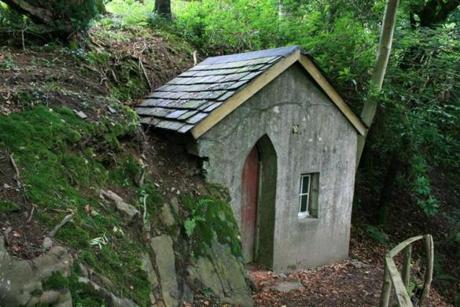
The Hermit’s Song

I wish, O Son of the living God, O ancient, eternal king
For a hidden little hut in the wilderness that it may be my dwelling.

An all-grey little lake to be by its side.
A clear pool to wash away sins by the grace of the Holy Spirit.

Quite near, a beautiful wood around it on every side,
To nurse many-voiced birds, hiding it with its shelter.

From A Celtic Primer, Brendan O’Malley

How often this kind of lovely picture comes to my mind — especially on days like today when I am conscious of my difficulties and frustrations.

“If only I could just escape, if only I could just get away, if only I didn’t have to face it, if only ….”

That sort of fantasizing, however, really leads nowhere. Even if I could flee to a hermit’s “little hidden hut,” it would still be me sitting inside it, stewing and agitated.

While going to a quiet place, physically apart from other people, is sometimes important, the more important separation here is called detachment.

I must learn to separate myself from the anxiety and circular worries, center myself in God’s presence, and renew my trust in his goodness.

That’s a habit of mind more than a physical location. That’s probably what Jesus meant when he talked about “going into your interior room to pray.”

When we cannot “fly away” physically, we must find a place of quiet inside and there “be at rest.”

Even Jesus himself struggled for that inner peace as Thursday night turned into Friday morning and he prayed that the trouble building around him could pass from him.

His sense of the Father’s presence gave him the confidence to face into the storm.

I wish, O Son of the living God, for a measure of that same confidence.

Collect for Wednesday in Holy Week

Lord God, whose blessed Son our Savior gave his body to be whipped and his face to be spit upon: Give us grace to accept joyfully the sufferings of the present time, confident of the glory that shall be revealed; through Jesus Christ your Son our Lord, who lives and reigns with you and the Holy Spirit, one God, for ever and ever. Amen.

Following the way of the cross

From the Society of St. John the Evangelist -- www.ssje.org

From the Society of St. John the Evangelist — http://www.ssje.org

A Facebook friend whose opinion I respect, William Henry Benefield BSG, posted yesterday about reading the Passion Gospel during Holy Week:

“Perhaps one day, parishes throughout the world on Palm Sunday and Good Friday will have all of us present — the baptized Eucharistic assembly — saying or chanting the part of Christ during the Passion and not playing the ‘crowd’ as our liturgical tradition so often dictates. Our theology teaches us we are the Body of Christ … so it looks and sounds rather strange, not to mention theologically questionable, for us to be shouting ‘Crucify, Crucify’ and ‘Give us Jesus Barabbas.’ Maybe one day we the Church will finally realize who we actually are, break with the previous liturgical tradition when chanting the Passion on these two sacred days, and claim our true identity in the world.”

I’ll admit I had never heard of that being done before, as William said he had experienced at an Episcopal church in New York City.

His thoughtful post got me thinking, and I enjoyed figuring out why I disagree with him.

+ + + + +

It seems to me that while we are the Body of Christ, we are not Jesus. The tension in our lives of faith is between living “in Christ” or “following the crowd.”

I think playing the part of the crowd in the Passion is entirely appropriate as a way of realizing that “while we were still sinners, Christ died for us” (Rom. 4:8). It also helps us accomplish the movement Paul describes to the Colossians: “You have stripped off the old self with its practices and have clothed yourselves with the new self, which is being renewed in knowledge according to the image of its creator” (Col. 3:9b-10).

Our creator, “being found in human form … humbled himself and became obedient to the point of death — even death on a cross” (Phil. 2:8).

In our old self, I think we are the crowd, preferring spectacle, resistant to change, and easily led. By the grace of God and through the self-offering of Jesus, we are given a new way.

Being the Body of Christ means stripping off the old self and following the way of the cross instead of following the crowd.

+ + + + +

While I completely agree with the ancient homily for Holy Saturday that William shared — “together [with Christ] we are now one undivided person” — I’m also conscious at this time in my life that I am not always the “one person” I want to be. Like Paul, I “find it to be a law that when I want to do what is good, evil lies close at hand” (Romans 7:21).

Like AA members do when they share their stories of encouragement, hope, and strength, perhaps we in the Church use the Passion Gospel during Holy Week to remind ourselves “what we used to be like, what happened, and what we are like now.”

+ + + + +

The collect for today, Monday in Holy Week, is very familiar to us as the Collect for Fridays at Morning Prayer.

I hope it will remind you as you journey with Jesus during this Holy Week what you used to be like, what happened as a result of his obedience and death, and what you are like now.

May this Holy Week open the way to life and peace for you.

Almighty God, whose most dear Son went not up to joy but first he suffered pain, and entered not into glory before he was crucified: Mercifully grant that we, walking in the way of the cross, may find it none other than the way of life and peace; through Jesus Christ our Lord. Amen. (BCP 99).

Enthroned above the flood

20140413-055308.jpg

The Lord sits enthroned above the flood;
the Lord sits enthroned as King for evermore.
The Lord shall give strength to his people;
the Lord shall give his people the blessing of peace.

(Psalm 29:10-11)

May this Holy Week be for you a time when the flood waters of your busy life recede just a bit and the Holy Spirit comes to you with a glimpse, even just a slender branch, of the Tree on which our Lord is enthroned.

“Return to your stronghold, O prisoners of hope; today I declare that I will restore to you double” (Zech. 9:12).

May your worship this Palm Sunday and throughout this Holy Week renew the hope that is in you, that “sure and steadfast anchor of the soul.”

Prayer for Mission

Lord Jesus Christ, you stretched out your arms of love on the hard wood of the cross that everyone might come within the reach of your saving embrace: So clothe us in your Spirit that we, reaching forth our hands in love, may bring those who do not know you to the knowledge and love of you; for the honor of your Name. Amen. (BCP 101)

The power and the presence of God

victory of life and peace

The Fifth Sunday in Lent + Healing Sunday

Sermon given at St. Thomas Episcopal Church + Menasha, WI

About 46 years ago, I was baptized, my Episcopal priest father scooping the water over my head with his hand, and my parents and godparents promising on my behalf to renounce Satan and all his works, to turn to Jesus Christ as Lord and Savior, and to see that I was brought up in the Christian faith and life.

About 35 years ago, I was confirmed, renewing that commitment to Jesus Christ and promising (with God’s grace) to follow him as my Savior and Lord. My godfather, Bishop Folwell, laid his hands on my head and prayed that the Holy Spirit would empower me for God’s service.

About 25 years ago, Katrin and I married each other, joining hands, and promising to “have and to hold, from this day forth, for better for worse, for richer for poorer, in sickness and in health, as long as we both shall live.”

A couple months after that, a high school friend of Katrin’s invited me to attend a John Guest evangelistic crusade in Chicago. Seriously? An evangelistic crusade? People waving their hands in the air? As the altar call began, my skeptical self was confronted by a vision of Jesus in person. That night, I accepted Jesus as my Savior and made a mature commitment to follow him as my Lord.

About 18 years ago, Bishop Frank Griswold laid his hands on my head and made me a deacon in God’s one, holy, catholic, and apostolic Church. I promised not only to be loyal to the doctrine, discipline, and worship of the Episcopal Church; but more importantly “to make Christ and his redemptive love known to those among whom I live, and work, and worship.”

+ + + + +

We make promises before we fully understand what they will mean for us and for our lives. We vow to follow, and then we find out where we’re going.

Our namesake Thomas exemplifies this pattern. Things are coming to a head between Jesus and the religious authorities, and they could expect trouble in the days ahead.

“Then Jesus told them plainly, ‘Lazarus is dead. For your sake I am glad I was not there, so that you may believe. But let us go to him.’ Thomas, who was called the Twin, said to his fellow disciples, ‘Let us also go, that we may die with him’” (John 11:14-16).

We make promises in time, without fully understanding them, and it’s only over time that we come to appreciate how they will impact our futures.

But underneath these promises, in all our lives, in all of the details of what we promise and who we share our lives with, underneath it all is the presence and the power of God continually working for our health and our salvation.

+ + + + +

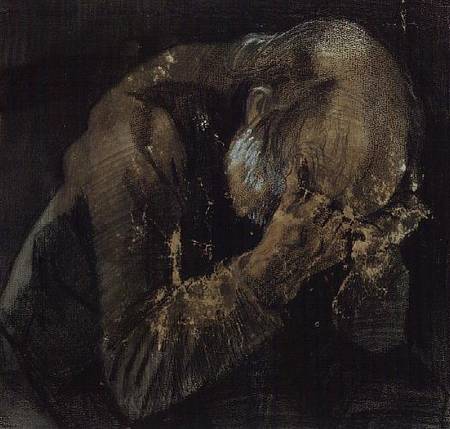
A little more than 5 months ago, head in my hands, I admitted that I was powerless over alcohol and that my life had become unmanageable, and I made a decision to turn my life and my will over to the care of God as I understand Him.
XTD68231

Ezekiel’s valley of dry bones is such an accurate picture of those moments.

“The hand of the Lord came upon me, and he brought me out by the spirit of the Lord and set me down in the middle of a valley; it was full of bones. He led me all around them; there were very many lying in the valley, and they were very dry. He said to me, ‘Mortal, can these bones live?’ I answered, ‘O Lord GOD, you know’” (Ezekiel 37:1-3).

When we admit we are powerless, time stops, and in the present moment we see how broken and dry and dead we have become. It’s only through that awareness that we begin to rely on God entirely. “Can these bones live? O Lord God, you know.” The meetings I now go to, the 12 Steps I now follow like millions before me are about learning to live a sober life, sober meaning “dependent on God and free from self-centeredness, fear, anger, and resentment.”

As our Gospel lesson continues (John 11:21-27), Jesus is almost to Bethany, and there is Martha – brimming with anger, seething with resentment: “Lord, if you had been here, my brother would not have died,” What she really means is, “if you had been here, I wouldn’t be in pain right now.”

Her faith tries to reassert itself: “But even now I know that God will give you whatever you ask of him.”

Jesus says to her, “Your brother will rise again.” Martha says to him – focusing back on her pain, her frustration – that’s no help to me, but sure, “I know that he will rise again in the resurrection on the last day.”

Jesus looks her straight in the eyes – no hiding – and says to her, “I am the resurrection and the life. Those who believe in me, even though they die, will live, and everyone who lives and believes in me will never die. Do you believe this?”

She blinks, realizing as she looks back at him that her trust is stronger than her grief, “Yes, Lord, I believe that you are the Messiah, the Son of God, the one coming into the world.”

Martha trusts Jesus, and even knows him to be the Messiah, but she actually has no idea the breadth of his power or the depth of his love for her, for Mary, and for their brother, for his brother Lazarus.

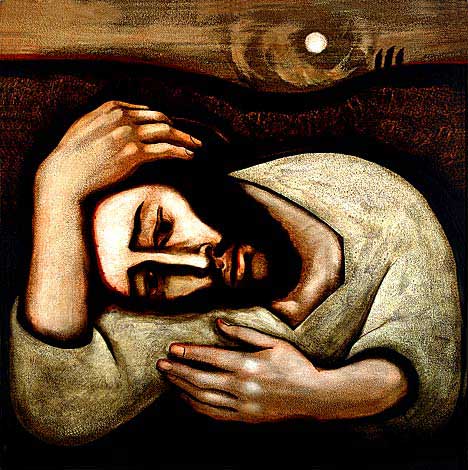
What is happening here is that, faced with our grief and frustration, faced with our anger and resentment, faced with our fear of death, God’s heart breaks.
christ-in-gethsemane-p

“God the only Son, who is close to the Father’s heart” (John 1:18), stands with us and weeps.

When God’s eternal Spirit, blowing through all creation, touches the tears on Jesus’s cheeks, even death is no match – even graves spring open.

Underneath our helplessness, underneath our fear and resentment, in all of the details of how we have failed ourselves and those we love, underneath even our own death is the presence and the power of God continually working for our health and our salvation.

+ + + + +

Until he died about 10 years ago, there was never a time in my life when my father did not pray for me. I can still hear his voice and feel his hand on my forehead:

Rodger, I lay my hands upon you and anoint you with oil, in the Name of the Father, and of the Son, and of the Holy Spirit; beseeching our Lord Jesus Christ, that all your pain and sickness of body being put to flight, the blessing of health may be restored to you and you may enjoy that victory of life and peace which will enable you to serve him now and always. Amen. 

Woven throughout my life, woven into the fabric of the promises I have made to God and the admission of my failures, is another pattern of healing prayers being offered on my behalf.

One of my first conscious memories of healing prayers other than my father’s is from about 30 years ago on my first Happening – Happening number 12 in the Diocese of Albany. I loved the singing, but I was rapidly losing my voice. I asked the Spiritual Director to pray for me at the healing service, and it felt like there was soothing honey pouring down my throat – for the rest of the weekend I could sing freely and loudly, even hitting the high notes in “I am the bread of life.” Thirty years later, and I’m still singing at Happenings – this last one was Happening number 67 in the Diocese of Fond du Lac.

Here at St. Thomas, I know myself to be surrounded by healing prayer, whether it’s in the chapel after the Eucharist, or here at the rail during a healing service, or at birthday and anniversary prayers during the Peace, or through special prayers for healing after my foot surgery. Your healing ministry also took the form of an invitation – since I have been home more often these last few months – to join the Thursday morning men’s Bible study group.

We ask for healing – we accept God’s invitation to health – before we fully understand what it will mean, before we fully grasp what wholeness may free us to do.

We admit our vulnerability, and find that, paradoxically, our weakness and honesty helps to strengthen others.

We are healed in eternity – because in praying for healing we are made open to God’s eternal love for all of creation. Like with Lazarus, even death cannot stop God’s love.

Underneath these healing prayers, in all our lives, in all of the details of our sickness and pain, in all the frustration of our limitations, in the loneliness and separation we feel, in all the push and pull of our relationships, underneath it all is the presence and the power of God continually working for our health and our salvation.

+ + + + +

If you desire to know the presence and the power of God in your life more fully, I will invite you in a moment to come forward and ask a member of the healing team to pray for you.

Who knows what that healing will mean for you, who knows where it will take you, who knows what it may set you free to do with and for others?

If you’d like to know “that victory of life and peace which will enable you to serve God now and always,” I invite you to come forward now and ask.

victory of life and peace


Frost and sleet, ice and cold

20140326-063441.jpg

Since our furnace conked out last night, Morning Prayer today is positively medieval.

I can’t quite see my breath as I say the Kyrie Pantokrator (BCP 90) and the Benedictus Dominus Deus (BCP 92), but my nose is definitely cold.

If I had a surplice at home, it would be appropriate to wear it “over my furry garment” (Lat., super pelliceum). The cats cluster round to help, so at least my legs are nice and warm.

Perhaps monks in their choir stalls sit shoulder to shoulder for the same reason.

I hope your prayers today warm you with a sense of connection to Christians past and present whose voices rise in praise to God winter and summer alike.