Category Archives: Daily Office

Let us go to the house of the Lord

20130109-070723.jpg

I was glad when they said to me,
“Let us go to the house of the Lord.”

Now our feet are standing
within your gates, O Jerusalem.
(Psalm 122:1-2)

Last night at dinner, I had a pleasant conversation with a colleague about prayer, Bible reading, churches that have impressed us, and finding a place at home to pray and read.

Back at the hotel, I am thinking this morning about the places where we pray.

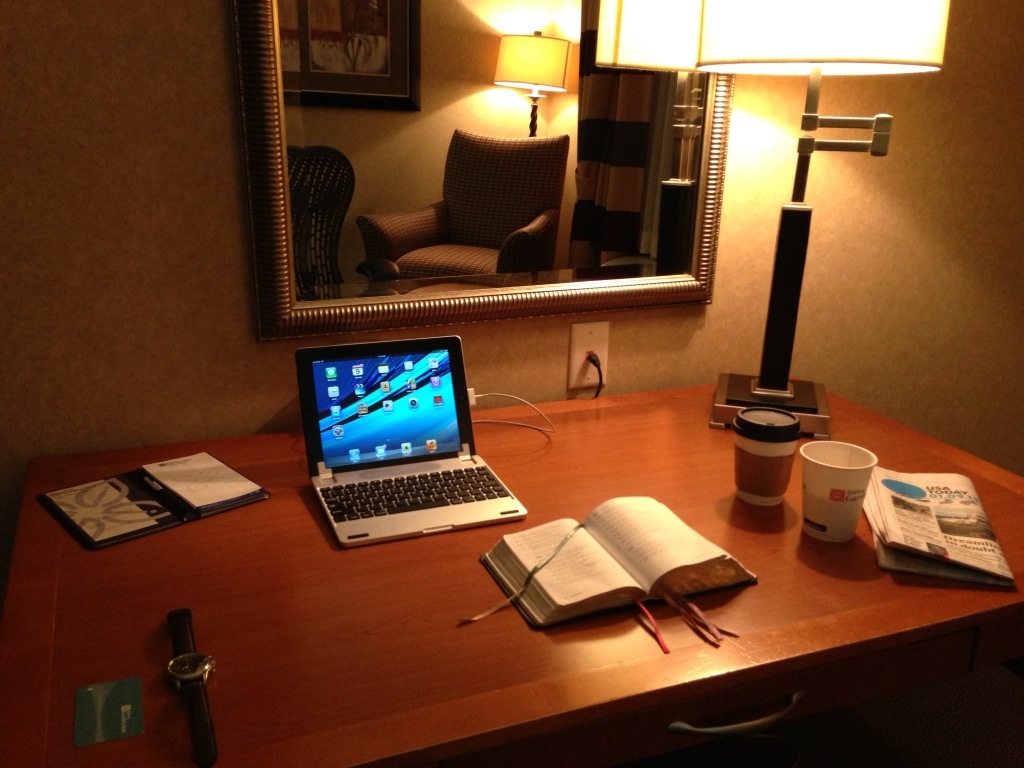
The photo above is my most regular place of prayer: the desk in whatever hotel room I happen to find myself. It has the great benefit of being completely quiet, and I can arrange the space any way I want. It’s pretty easy to shut out distractions for a short while each morning as I pray and write.

My colleague joked that when he told his wife he wanted a place of his own at home to read, she just laughed. With her and five girls (and a dog) in the house, he’d be lucky for a few minutes of peace and quiet, and no chair is truly his own for long.

Several parishioners from my church recently traveled to Israel, and their feet actually stood within the gates of Jerusalem. They all reported how seeing and standing in the physical places of the Bible affected them.

Most of us, however, have to build “the house of the Lord” a little closer to home.

How have you created space for prayer in your own home? What still needs to be attended to so that you will find “peace within your walls” and “quietness within your towers”?

Non nobis, Domine

Not to us, O Lord, not to us,
but to your Name give glory;
because of your love and because of your faithfulness.

Why should the heathen say,
“Where then is their God?”

Our God is in heaven;
whatever he wills to do he does.
(Psalm 115:1-3)

In his first “sign” at the wedding in Cana, Jesus deflects attention away from himself.

First, it’s a son’s normal reaction because his mom is pressuring him to do something: “What is it to you? My time has not yet come.” And even when Jesus does “whatever he wills to do” and changes the water into wine, the steward doesn’t know who did it, so he gives praise instead to the bridegroom for saving the best wine for last.

Not to us, O Lord, not to us, but to your Name give glory.

In Jesus, John and the other Gospel writers see the glory of God revealed, “the glory as of a father’s only son, full of grace and truth” (John 1:14).

Though Jesus does point to himself in the signs, especially those that follow this first one, what he’s really doing is pointing to God. “No one has ever seen God,” writes John. “It is God the only Son, who is close to the Father’s heart, who has made him known” (John 1:18).

Not to us, O Lord, not to us, but to your Name give glory.

We’re meant to follow in Jesus’ footsteps as his Body here on earth, sharing his forgiveness and healing power with those around us, and making known God’s love and faithfulness.

Morning and evening (at least) we’re also meant to give “Glory to God, whose power, working in us, can do infinitely more than we can ask or imagine. Glory to him from generation to generation in the Church, and in Christ Jesus for ever and ever” (BCP 102, 126).

Joy and peace to all

For as the new heavens and the new earth,
which I will make,
shall remain before me, says the Lord;
so shall your descendants and your name remain.
From new moon to new moon
and from sabbath to sabbath,
all flesh shall come to worship before me,
says the Lord. (Isaiah 66:22-23)

One of the Principal Feasts of the church year, the Epiphany celebrates the “Manifestation of Christ to the Gentiles,” as our Prayer Book calendar calls it (BCP 31). The wise men stand in for the whole Gentile world (that is, all of us) as they see and recognize in the child Jesus the promised salvation of the world.

Listen to one of the prayers for mission that we commonly use at Evening Prayer:

“O God and Father of all, whom the whole heavens adore: Let the whole earth also worship you, all nations obey you, all tongues confess and bless you, and men and women everywhere love you and serve you in peace; through Jesus Christ our Lord. Amen.” (BCP 124)

Christ’s coming is for all, not just for the Jews, not just for the Orthodox or the Catholics, not just for the Lutherans or the Presbyterians or the Calvinists, not just for the Anglicans or the “real” Anglicans, not just for my parish or for yours, but for all.

Our religious tendency toward exclusivity does not serve God’s purpose of bringing light to all — to the whole earth, all nations, all tongues, men and women everywhere.

In the readings appointed for this Eve of the Epiphany, Isaiah points toward that future day when all flesh will worship God together, and Paul prays on behalf of the Romans (Gentiles like us): “May the God of hope fill you with all joy and peace in believing through the power of the Holy Spirit” (BCP 126).

“All joy and peace.” Joy and peace to all. That’s a fitting note on which to begin our worship this Epiphany.

Crossing over and abiding

Icon of Joshua by St. Isaac of Syria Skete

Icon of Joshua by St. Isaac of Syria Skete

Be strong and courageous; for you shall put this people in possession of the land that I swore to your ancestors to give them …. I hereby command you: Be strong and courageous; do not be frightened or dismayed, for the Lord your God is with you wherever you go. (Joshua 1:6,9)

In this morning’s Old Testament lesson, Joshua is preparing to lead the people of Israel across the River Jordan into the Promised Land. God tells Joshua to “be strong and courageous” and reassures him that he will be with him.

Similarly, in the Gospel reading appointed for today, Jesus is speaking to the disciples at the Last Supper as he prepares to “cross over” through his death on the cross.

“As the Father has loved me, so I have loved you,” Jesus says; “abide in my love” (John 15:9). Jesus reassures the disciples in much the same way as God had reassured Joshua.

We, too, can receive God’s reassurance and a sense of his abiding presence in our lives — by doing just what Joshua and the disciples did.

God says to Joshua: “This book of the law shall not depart out of your mouth; you shall meditate on it day and night, so that you may be careful to act in accordance with all that is written in it” (Joshua 1:8).

“This is my commandment,” says Jesus to the disciples, “that you love one another as I have loved you … I do not call you servants any longer, because the servant does not know what the master is doing; but I have called you friends, because I have made known to you everything that I have heard from my Father” (John 15:12,15). We read in the book of Acts that the disciples did just what Jesus told them to.

Their abiding love, their joy at having “crossed over” with Jesus into new life, was visible to the Roman society in which the church began to grow. Tertullian (c. 200 AD) wrote about Roman society and how they saw the early Christians: “‘Look,’ they say, ‘how they love one another’ (for they themselves hate one another); ‘and how they are ready to die for each other’ (for they themselves are readier to kill each other)” (Apology 39.7).

Cross over (with God’s help) into the new life Christ has pioneered, and abide in friendship with him.

A tithe of your time

Then Jacob made a vow, saying, “If God will be with me, and will keep me in the way that I go, and will give me bread to eat and clothing to wear, so that I come again to my father’s house in peace, then the Lord shall be my God, and this stone, which I have set up for a pillar, will be God’s house; and of all that you give me I will surely give one-tenth to you.” (Gen. 28:20-22)

Earlier this week, I got into a conversation with a blogger named David Rosendahl regarding how we spend our time. He had done a time study and was reflecting on how little time it seemed he was devoting to “spiritual” things in relation to his work.

I commented that it actually seemed like he was tithing his time — that is, his study reveals that he spends about 10% as much time on spiritual things as he does on work. I also suggested that it’s important to consider whether the time you tithe is “first fruits,” time deliberately set aside for God rather than an afterthought.

In my case, I am typically awake for at least 12 hours each day, so a tithe of my time would be one hour and 20 minutes. Saying Morning Prayer and writing these reflections usually takes about an hour each morning; perhaps I still need to stretch a little and more regularly devote 20 minutes each day for Evening Prayer.

What might it look like for you to tithe your time? If you already do, how might you need to make sure you are giving of your “first fruits” to God?

Get your motor running

Singing Daily Office SSJE

I will be leaving shortly and driving all day today to get to meetings in Indianapolis.

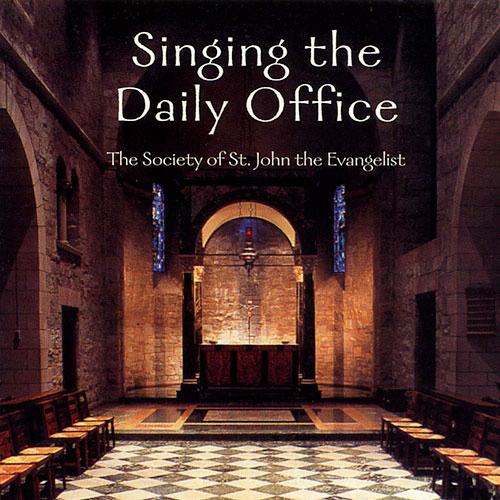
Before enjoying my normal road fare of classic rock and audiobooks, I like to listen to Morning Prayer as it is prayed by the Society of St. John the Evangelist on their CD entitled Singing the Daily Office.

In addition to the services of Morning Prayer, Noonday Prayer, Evening Prayer and Compline, the 2-CD set includes 20 minutes of plainchant hymns that the SSJE brothers sing at their monastery in Cambridge, MA. I’ve also copied my CD onto iTunes so the services and hymns are available for me to listen to anywhere.

Listening in the car like I will today not only allows me to “keep my eyes on the road / my hands upon the wheel” as Jim Morrison might put it, but it also helps me to hear the psalms, canticles, readings, and prayers of the Office in voices other than my own.

When you pray the Daily Office alone, you may fall into the habit of rushing through certain prayers or canticles. Listening to them may remind you to slow down, to observe the speed limit, to enjoy the scenery.

St. John, Apostle and Evangelist

20121227-065903.jpg

Then I was beside him, like a master worker;
And I was daily his delight,
Rejoicing before him always,
Rejoicing in his inhabited world
And delighting in the human race.

Happy is the one who listens to me,
Watching daily at my gates,
Waiting beside my doors.
(Proverbs 8:30-34)

More than the other Gospel writers, John captures the scope and grandeur of the Incarnation.

The full creative force of God, the Wisdom that rejoices in creation, became part of creation through the birth of Jesus to Mary. That man Jesus, known best perhaps to “the disciple whom he loved,” showed his followers that love is the abiding quality in God’s own life. Love is also to be the characteristic of our lives.

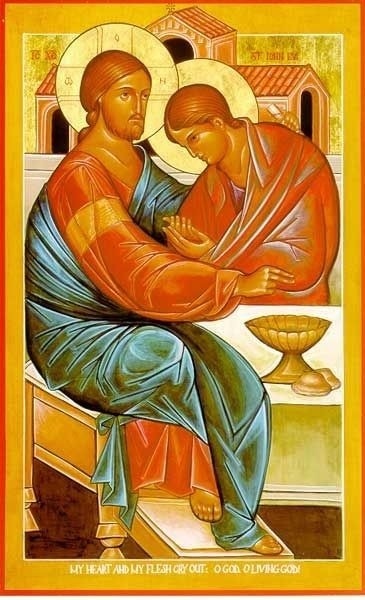
As he reclined next to Jesus at the Last Supper, John heard the new commandment “that you love one another” from a privileged position — but that privileged position is now open to each one of us.

Each of us is a Beloved Disciple in our own right, invited to share the same intimacy with Jesus that John did, and called to share the same good news of love with those around us.

That is not what ships are built for

20121225-074400.jpg

“A ship in harbor is safe, but that is not what ships are built for.” -John Augustus Shedd

It’s tempting to read words like those from today’s Epistle and feel content. “So we have known and believe the love God has for us. God is love, and those who abide in love abide in God, and God abides in them” (1 John 4:16).

Abiding sounds like being snug in port, securely tied to the dock, battened down, gently rocking on the peaceful swells. It’s a lovely picture.

But that’s not what ships are built for, and that’s not what we are meant for.

John goes further in his letter: “Those who love God must love their brothers and sisters also” (1 John 4:21).

Abiding in God means living in the way God lives – out in the world, vulnerable, open, available, giving without fear. We can live that way because God did it first in the person of Jesus.

So don’t be afraid to put out from safe harbor, and don’t be afraid of the storms that may come. That’s what your ship is built for, and the One who built it abides in you.

For God alone my soul in silence waits

Early in the morning, the hotel lobby is a very comfortable place to read Morning Prayer with a cup of coffee close at hand (and it means I won’t disturb Lovely Wife, who is still asleep in the room).

I will admit, however, that it is tough to read Psalm 62:1 — “For God alone my soul in silence waits / from him comes my salvation” — while Jose Feliciano’s “Feliz Navidad” wafts from the speakers above my head.

Nevertheless, the brief time apart provides space for God’s “daily visitation,” in the lovely phrase from our collect for the Fourth Sunday of Advent:

Purify our conscience, Almighty God, by your daily visitation, that your Son Jesus Christ, at his coming, may find in us a mansion prepared for himself; who lives and reigns with you, in the unity of the Holy Spirit, one God, now and for ever. Amen. (BCP 212)

What small space of inner silence might you need to create in the middle of this holiday whirl, making room for God to visit so that you are “a mansion prepared” for Jesus’ coming?

The Prayer Book Office

20121221-173602.jpg

On a lighter note, tonight marks 20 years since I began seriously to use the Daily Office as a regular part of my spiritual discipline.

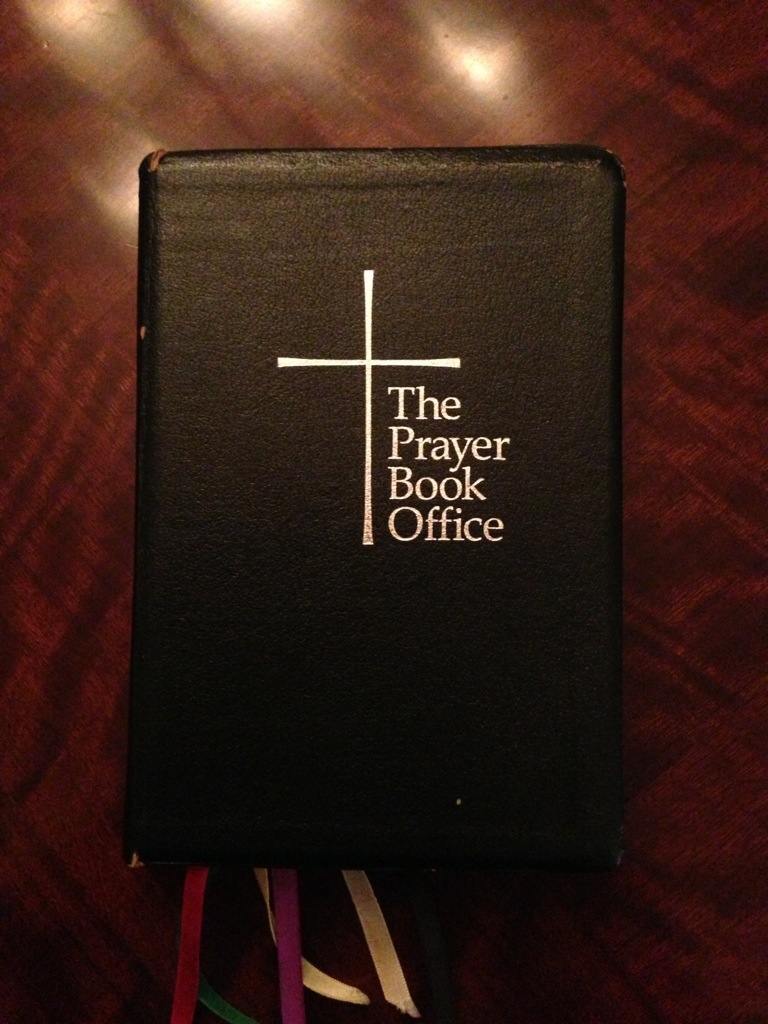
Howard Galley’s two volumes, The Prayer Book Office and Morning and Evening Prayer, were invaluable to me as I took the first steps and felt my way into this way of praying.

Regrettably, The Prayer Book Office remains out of print. One can occasionally find a copy of Morning and Evening Prayer, a nice volume with selected readings and psalms suited for the beginner or those who prefer a simpler version of the office.

Anyway, on this anniversary day, whether you’re just starting out or celebrating many years following the Prayer Book pattern, I pray that “the God of hope will fill you with all joy and peace in believing, through the power of the Holy Spirit.”