Category Archives: Book of Common Prayer

Step Four on Ash Wednesday

genuflect

Then I acknowledged my sin to you,
and did not conceal my guilt.
I said, “I will confess my transgressions to the LORD.”
Then you forgave me the guilt of my sin.

(Psalm 32:5-6)

A couple of weeks ago my AA sponsor and I knelt together as I prayed that God would “relieve me of the bondage of self, that I may better do his will … and take away my difficulties, that my victory over them may bear witness to those I would help of Thy power, Thy love, and Thy way of life” (Big Book 63).

This prayer of abandonment to God’s will is what AA calls Step Three and what the Book of Common Prayer calls in the Ash Wednesday liturgy “a right beginning of our repentance, and a mark of our mortal nature” (BCP 265).

Today Lent begins, and for me a very particular process of self-examination and repentance.

I have reached the point in my recovery where it’s time to begin Step Four — to conduct a “searching and fearless moral inventory” of myself — and then to take Step Five, to admit to God, to myself, and to another human being the exact nature of my wrongs.

Though I have been in the Church all my life, I am beginning to understand for myself the wisdom of traditional practices like Confession, what the Book of Common Prayer calls Reconciliation of a Penitent (BCP 447). We need at times to write down what we’ve done wrong, to say it out loud to another person, and to hear from them our Lord’s assurance of forgiveness.

Lent is a particularly appropriate time for this hard and holy work, and I am embracing it gladly as my main observance this year.

And now, O Lord, I bend the knee of my heart,
and make my appeal, sure of your gracious goodness.
(Canticle 14, BCP 91)

Whatever you may decide to do to mark this Lent, I invite you to take it seriously but joyfully.

I invite you, therefore, in the name of the Church, to the observance of a holy Lent, by self-examination and repentance; by prayer, fasting, and self-denial; and by reading and meditating on God’s holy Word. And, to make a right beginning of repentance, and as a mark of our mortal nature, let us now kneel before the Lord, our maker and redeemer (BCP 265).

20 minutes with Derek Olsen

Richard Mammana, Jr. interviews Derek Olsen today in The Living Church.

I cannot praise Derek’s work highly enough. I commend his blog haligweorc (he explains the name in the article) to anyone wanting solid food on the subject of liturgical spirituality. He is, to use his own words, “a tireless advocate for the Book of Common Prayer and the spirituality embedded within it.”

I also recommend that if you don’t want to pray the Daily Office “old school” with bookmarks and ribbons, you use the Forward Movement Daily Prayer website or iOS app — both of which are built on the backbone of Derek’s St. Bede’s Breviary.


Visions of peace

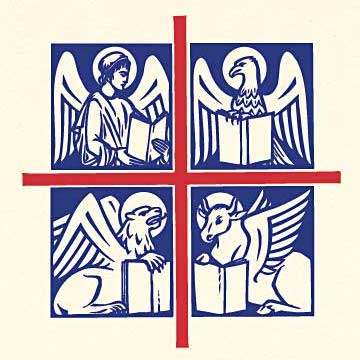
Four Evangelists cross from the Printery House

Four Evangelists cross from the Printery House

Therefore we praise you,
joining our voices with Angels and Archangels
and with all the company of heaven,
who forever sing this hymn
to proclaim the glory of your Name:

Holy, holy, holy Lord; God of power and might,
heaven and earth are full of your glory.
Hosanna in the highest.
Blessed is he who comes in the Name of the Lord.
Hosanna in the highest. (BCP 362)

Today the assigned readings and the canticles appointed for the day line up perfectly to create a single unifying image for Morning Prayer.

In the Book of Ezra, we read about the rebuilding of the Temple following the return of the Israelites from exile in Babylon. They are restoring the site of their worship, and with them we picture their prayers once more ascending to God, with incense surrounding the golden cherubim atop the Ark of the Covenant.

Glory to you, Lord God of our fathers;
you are worthy of praise; glory to you ….
Glory to you, seated between the Cherubim;
we will praise you and highly exalt you for ever.
(Canticle 13, BCP 90)

In the Revelation to John, we similarly see a vision of restoration, of worship to God in the heavenly City, the new Jerusalem. John describes his vision of a throne surrounded by 24 thrones, on which are seated 24 elders, in front of whom are seven torches and a sea of glass, and around whom are the “four living creatures, full of eyes in front and behind.”

Christian tradition has long associated the four living creatures — “at his feet the six-winged seraph; cherubim with sleepless eye” (Hymn 324) — with the four Evangelists: Matthew like a lion, Mark like a man, Luke like an ox, and John like an eagle.

In Canticle 18, we respond to the reading with the same song the angels and elders are singing around the throne:

And so, to him who sits upon the throne,
and to Christ the Lamb,
Be worship and praise, dominion and splendor,
for ever and for evermore.
(BCP 94)

Now, if that were the whole story, that would be enough — a nice symmetry making Morning Prayer extra lovely. Fine.

But there’s even more.

These visions of a restored Temple, of a City with the Lamb at its center, were recorded in order to give comfort to God’s people in hard times. The exiles were struggling to recover their sense of self, and it seemed like the grinding bureaucracy of the Babylonian empire might slow down or stop their building project. The early Christian communities of John’s time were beginning to be thrown out of the synagogues where they had been worshiping and to experience persecution by the Roman empire.

These are not just lovely songs, but visions of peace meant to sustain God’s people in times of trouble.

How will you imagine peace in your life today? What images will help you get through your struggles?

A Collect for Peace

O God, the author of peace and lover of concord, to know you is eternal life and to serve you is perfect freedom: Defend us, your humble servants, in all assaults of our enemies; that we, surely trusting in your defense, may not fear the power of any adversaries; through the might of Jesus Christ our Lord. Amen. (BCP 99)

Come to a sober and right mind

A friend spoke to me earlier this week about sobriety. He said, “What we really have is a daily reprieve contingent on the maintenance of our spiritual condition.”

I now know that he was quoting from the Big Blue Book of Alcoholics Anonymous, but those words spoke volumes to me about the difference between duty and grace.

The duty of “maintaining our spiritual condition” is at the heart of programs like AA — and I’m beginning to understand how hard and serious that work is in every life.

The gift, the grace of a daily reprieve, is what sobriety represents.

I have often thought of my struggles to maintain a regular discipline of prayer — or any discipline of any kind, for that matter.  Like Paul, “I do not understand my own actions. I do not do what I want, but the very thing I hate” (1 Cor. 7:15).

My friend has me thinking differently today.

What if the daily prayer, the day without drinking, the day without shopping (or whatever else it may be), is not a burdensome duty to fail at yet again — but is actually the gift of rest for a moment?

The work is hard enough without making grace and rest a duty, too.

“Come unto me, all who travail and are heavy laden, and I will refresh you,” says our Lord (Matt. 11:28).

Come to a sober and right mind as you maintain your spiritual condition.

Come to a daily reprieve.

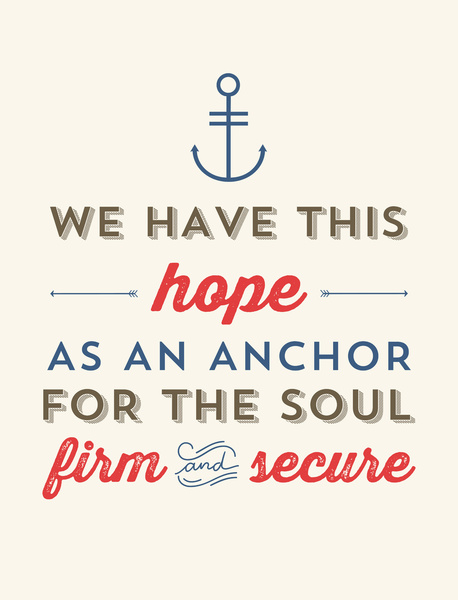
A reason for the hope that is in us

Anchor for the Soul – Allyson Johnson


Today the Episcopal Church commemorates the Oxford Martyrs — Hugh Latimer and Nicholas Ridley, bishops burned at the stake together under the Roman Catholic Queen Mary in 1555, and Thomas Cranmer, Archbishop of Canterbury, burned at the stake in 1556.

As James Kiefer writes on the Lectionary Page, Latimer’s last words at the stake are well known: “Be of good cheer, Master Ridley, and play the man, for we shall this day light such a candle in England as I trust by God’s grace shall never be put out.” Latimer and Ridley bore enduring witness to the power of Christ’s transforming love, cheerfully joining their suffering to his.

Cranmer was trapped between his Protestant beliefs and his understanding that the monarchy in England was ordained by God. Ordered to submit to the Roman Catholic obedience — and to the Pope — by Queen Mary, he finally signed a letter of submission, but she didn’t believe he was sincere. When he was sent to the stake, he said, “I have sinned, in that I signed with my hand what I did not believe with my heart. When the flames are lit, this hand shall be the first to burn.”

The primary work of Cranmer’s hand, the Book of Common Prayer for which he was largely responsible, stands as his enduring witness. Nearly 465 years after its first printing, it is still the means by which Anglicans shape our lives of prayer and Scripture reading, celebrate our common life in Christ around the Communion table, mark the seasons of our human life and death, and make ourselves “ready to give a reason for the hope that is in us” (BCP 247).

Collect of a Martyr

Almighty God, who gave to your servants Hugh Latimer, Nicholas Ridley, and Thomas Cranmer boldness to confess the Name of our Savior Jesus Christ before the rulers of this world, and courage to die for this faith: Grant that we may always be ready to give a reason for the hope that is in us, and to suffer gladly for the sake of our Lord Jesus Christ; who lives and reigns with you and the Holy Spirit, one God, for ever and ever. Amen. (BCP 246)

Psalmody and Simony

20130525-184141.jpg

Seven times a day do I praise you, *
because of your righteous judgments. 
Great peace have they who love your law; *
for them there is no stumbling block. 
I have hoped for your salvation, O LORD, *
and have fulfilled your commandments. 
I have kept your decrees *
and I have loved them deeply. 
I have kept your commandments and decrees, *
for all my ways are before you. (Psalm 119:164-168)

This verse from Psalm 119 is behind the Benedictine rule of daily prayer in the monasteries — seven times of prayer which since the 6th century or so have been known as Matins, Lauds, Terce, Sext, Nones, Vespers, and Compline.

The Benedictine round of prayer is a workmanlike approach to prayer. Each office is relatively short, all 150 psalms are appointed to be read in the course of every week, and there is only minor variation from day to day, season to season, year to year.

The Daily Office in our Book of Common Prayer definitely springs from that Benedictine tradition. The fruits of the Daily Office are revealed only after long use and steady practice. It takes time for the words of the Psalms and of the rest of Scripture to soak into your mind and heart, time and repetition. I’ve been saying the Daily Office regularly for 20 years now, and I’m only getting started.

Now contrast this with the story appointed for today from the Acts of the Apostles, the story of Simon the magician.

Simon was a magician who did deeds of power in Samaria, but when he saw the disciples and their faith he turned to the Lord and was baptized. Apparently, however, he and the other Samaritans who were baptized did not receive the Holy Spirit, so Peter and John came down to lay hands on them. “Now when Simon saw that the Spirit was given through the laying on of the apostles’ hands, he offered them money, saying, ‘Give me also this power so that anyone on whom I lay my hands may receive the Holy Spirit.'” (Acts 8:18-19).

It’s from this man Simon that we get the word simony, which means making a profit out of sacred things or buying and selling a position in the Church. The word really comes from the Middle Ages, when the wealthy would buy a bishopric or buy a position as abbot for a family member.

The gift of the Spirit is just that, a gift, and you can’t buy it. And the fruits of the Spirit are revealed over time, too — you can’t just leap to the end state.

I’ll bring it back to the Daily Office with an example.

There are several very marvelous iPhone apps that make saying the Daily Office much easier. My favorite is the app (and website) by Forward Movement called Day by Day. Just open the app or the website, click on Daily Prayer, and the office unfolds before you — no fussing with ribbons or bookmarks, no worrying about whether you’ve picked the right collect. Just click and pray.

Here’s the thing, though. The app makes it easy, but you still have to actually pray.

You still have to put in the time in order to give the Word a chance to soak in. So be like Simon — eager for the gift of the Spirit — but don’t be like Simon in his haste to skip over the work.

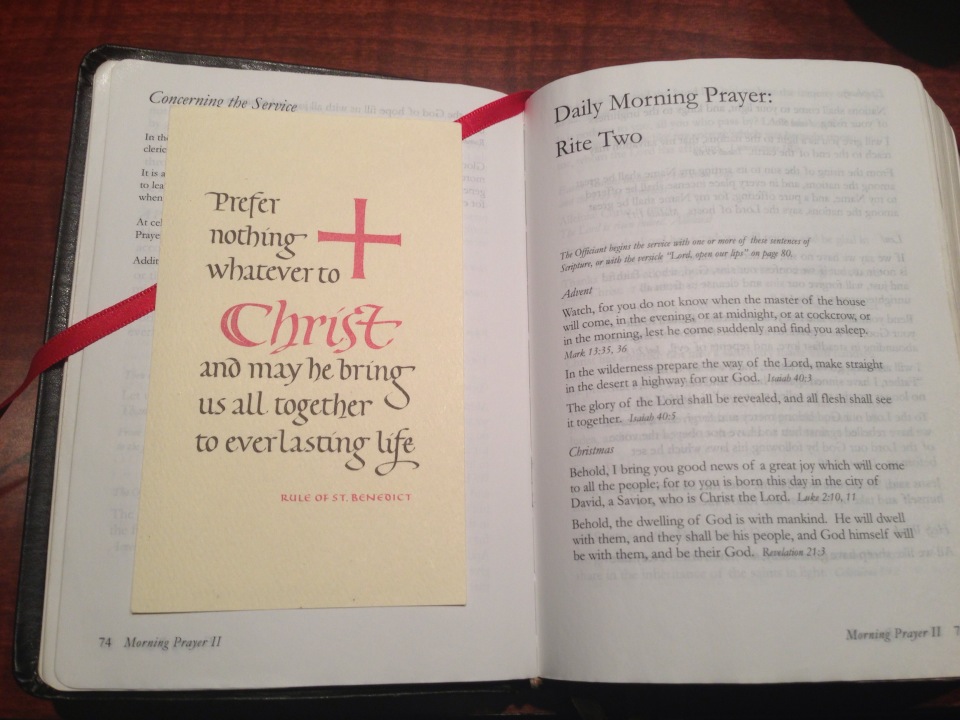
Prefer nothing whatever to Christ

Prefer Nothing to Christ

A member of my parish offers reflections on his Healing Journey Daily Blog on Facebook, and I appreciate his post yesterday from Oswald Chambers reflecting on Paul’s insight into Christ and his determination to “know nothing among you except Christ, and him crucified” (1 Cor 2:2).

Chambers says, “The lasting characteristic of a spiritual man is the ability to understand correctly the meaning of the Lord Jesus Christ in his life, and the ability to explain the purposes of God to others. The overruling passion of his life is Jesus Christ. Whenever you see this quality in a person, you get the feeling that he is truly a man after God’s own heart” (My Utmost for His Highest).

One of the lenses that helps me find insight into Christ is the Prayer Book pattern of orderly prayer — especially the Daily Offices — which was inspired in large part by the monastic pattern established by Benedict in the sixth century.

“Prefer nothing whatever to Christ,” says Benedict, “and may he lead us all together into everlasting life” (Rule 72). The Rule, the pattern of prayer, study, and work that Benedict established for his monks, was intended to free them from distractions and enable them to focus on worshiping God.

In a similar way, the Prayer Book pattern of Daily Offices and weekly Eucharist is intended to shape our lives and help us maintain our focus on the face of Christ in the face of a very distracting world. It doesn’t matter whether you use the Prayer Book itself or the online offices from Forward Movement or Mission St. Clare or some other daily devotional; all of them promote the same rhythmic, steady, daily approach to prayer.

If our guides are doing their work — Chambers or Benedict or the Prayer Book or any other guide — they help us understand how Christ is present in our lives right now, and they encourage us to share that insight with others.

May we prefer nothing whatever to Christ, and may he lead us all into everlasting life. Amen.

Rejoice now!

Exsultet at Holy Communion

This is the night, when you brought our fathers, the children of Israel,
out of bondage in Egypt, and led them through the Red Sea on dry land.

This is the night, when all who believe in Christ
are delivered from the gloom of sin,

and are restored to grace and holiness of life.

This is the night, when Christ broke the bonds of death and hell,
and rose victorious from the grave.

+ + + + +

At the Great Vigil of Easter tonight, we will renew our Baptismal Vows (BCP 292) in much the same fashion as early catechumens “handed back the creed” before their baptism in a series of questions and answers with the bishop, who had taught them in a series of sermons in the weeks leading up to Easter.

After the vigil readings and their questioning, the catechumens were led to the baptismal pool and immersed three times “in the Name of the Father, and of the Son, and of the Holy Spirit.” They were then anointed with oil, clothed in a garment of white linen, and brought back into the church to receive communion for the first time. According to Robert Louis Wilken, “At their first Eucharist they received a cup of milk and honey, and during Easter Week they attended services in their white garments” (Spirit of Early Christian Thought 39).

That same spirit of joy permeates both the Eucharist and the Daily Office not just tonight and tomorrow, but throughout the Great 50 Days of Easter.

Not only do we adorn the Eucharist with white vestments and altar hangings, we also sing Alleluias throughout the service.

Not only do we begin and end the Office with Alleluias, we also say the Invitatory canticle “Christ our Passover” (BCP 83) every morning, and we “hand back the creed” — the Apostles’ Creed — as a daily reminder of our dying and rising with Christ and our baptismal unity with the apostles.

+ + + + +

How holy is this night, when wickedness is put to flight,
and sin is washed away.

It restores innocence to the fallen, and joy to those who mourn.
It casts out pride and hatred, and brings peace and concord.

How blessed is this night, when earth and heaven are joined,
and we are reconciled to God.

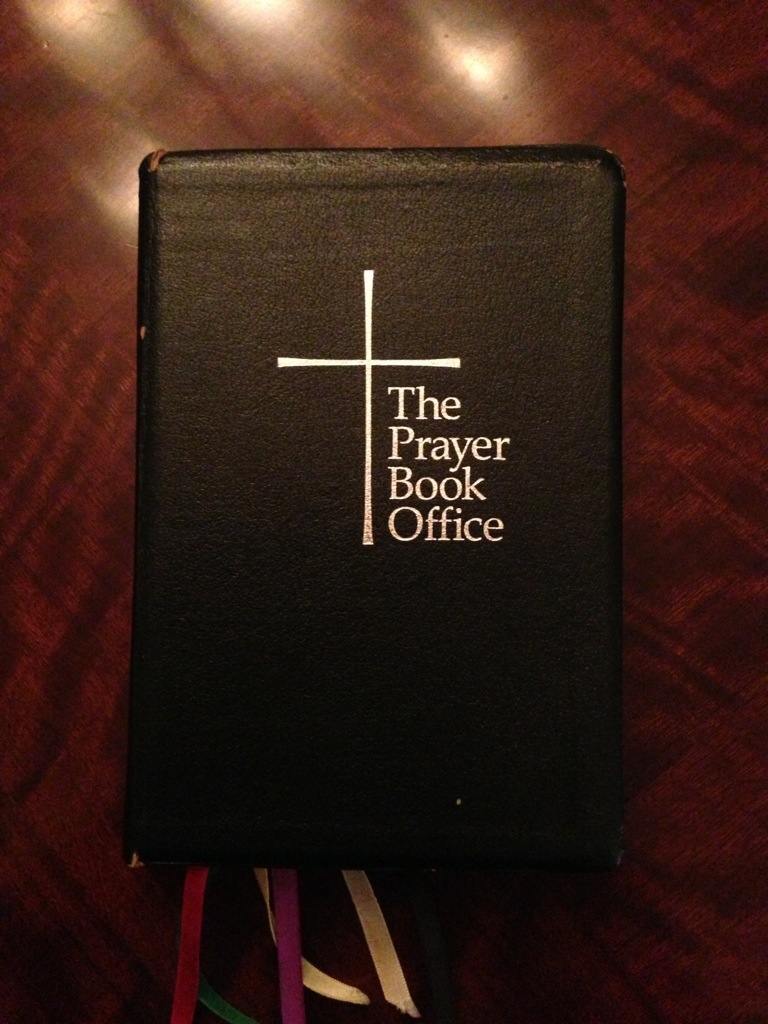
The Prayer Book Office

20121221-173602.jpg

On a lighter note, tonight marks 20 years since I began seriously to use the Daily Office as a regular part of my spiritual discipline.

Howard Galley’s two volumes, The Prayer Book Office and Morning and Evening Prayer, were invaluable to me as I took the first steps and felt my way into this way of praying.

Regrettably, The Prayer Book Office remains out of print. One can occasionally find a copy of Morning and Evening Prayer, a nice volume with selected readings and psalms suited for the beginner or those who prefer a simpler version of the office.

Anyway, on this anniversary day, whether you’re just starting out or celebrating many years following the Prayer Book pattern, I pray that “the God of hope will fill you with all joy and peace in believing, through the power of the Holy Spirit.”

The Christmastide Lectionary

ChristmastideI know it’s still Thursday in the Third Week of Advent, but I want to give you all a jump on the complicated lectionary for the days after Christmas so that you can enjoy the holiday with minimal frustration.

Because Christmas Day occurs on a fixed date and several Major Feasts fall on the next few days after it, the Daily Office lectionary has to supply several options for the days between Christmas and the Epiphany, which also falls on a fixed date.

Here’s the crib sheet for the offices during Christmastide this year. You may wish to print it out and fold it into your prayer book for easy reference.

(The abbreviations MP and EP, as you might expect, stand for Morning Prayer and Evening Prayer; BCP for the page number in the Book of Common Prayer):

Dec. 23 – Fourth Sunday of Advent
MP and EP as on BCP 938
Collect on BCP 212

Dec. 24 – Christmas Eve
MP as on BCP 938 “Dec. 24”
MP Collect on BCP 212 (4 Advent)
EP as on BCP 938 “Christmas Eve”
EP Collect on BCP 212 (Christmas Day – second option)

Dec. 25 – Christmas Day
MP and EP as on BCP 940
Collect on BCP 212-13

Dec. 26 – Saint Stephen, Deacon and Martyr
MP and EP as on BCP 996
Collect on BCP 237

Dec. 27 – Saint John, Apostle and Evangelist
MP and EP as on BCP 996
Collect on BCP 238

Dec. 28 – The Holy Innocents
MP and EP as on BCP 996
Collect on BCP 238

Dec. 29 – Saturday after Christmas Day
MP and EP as on BCP 940 “Dec. 29”
Collect of a Martyr on BCP 246 (Thomas Becket)

Dec. 30 – First Sunday after Christmas Day
MP and EP as on BCP 940
Collect on BCP 213

Dec. 31 – Monday after 1 Christmas
MP as on BCP 940 “Dec. 31”
MP Collect on BCP 213 (1 Christmas)
EP as on BCP 940 “Eve of Holy Name”
EP Collect on BCP 213 (Holy Name)

Jan. 1 – The Holy Name of Our Lord Jesus Christ
MP and EP as on BCP 940
Collect on BCP 213

Jan. 2-4 – Weekdays after 1 Christmas
MP and EP as on dated days on BCP 940
Collect on BCP 213 (1 Christmas)

Jan. 5 – Saturday after 1 Christmas
MP as on BCP 940 “Jan. 5”
MP Collect on BCP 213 (1 Christmas)
EP as on BCP 940 “Eve of Epiphany”
EP Collect on BCP 214 (Epiphany)

Jan. 6 – The Epiphany
MP and EP as on BCP 942
Collect on BCP 214