Author Archives: Rodger Patience

Unknown's avatar

About Rodger Patience

I am an Episcopal priest, and I am a person in recovery. My aim is to build hope in everything I do.

12 Steps of Christmas | Holy Innocents

Step Five – “Admitted to God, to ourselves, and to another human being the exact nature of our wrongs.”

The readings for the Eucharist on the Feast of the Holy Innocents can be found here. Additionally, the Gospel reading appointed for Morning Prayer is here.

This doesn’t feel like Christmas!

Having confronted the darkness inside us with John yesterday, we confront a ruler’s murderous rage and the killing of innocent children today.

Gentle Jesus, meek and mild, sure stirs up fierce reactions in us and in the society around us.

But as we considered in Step Four yesterday, we have done a lot of stirring up ourselves — causing grief and pain within ourselves and harm to those around us. Our moral inventory is a long list of the wrongs we have done to ourselves and to others.
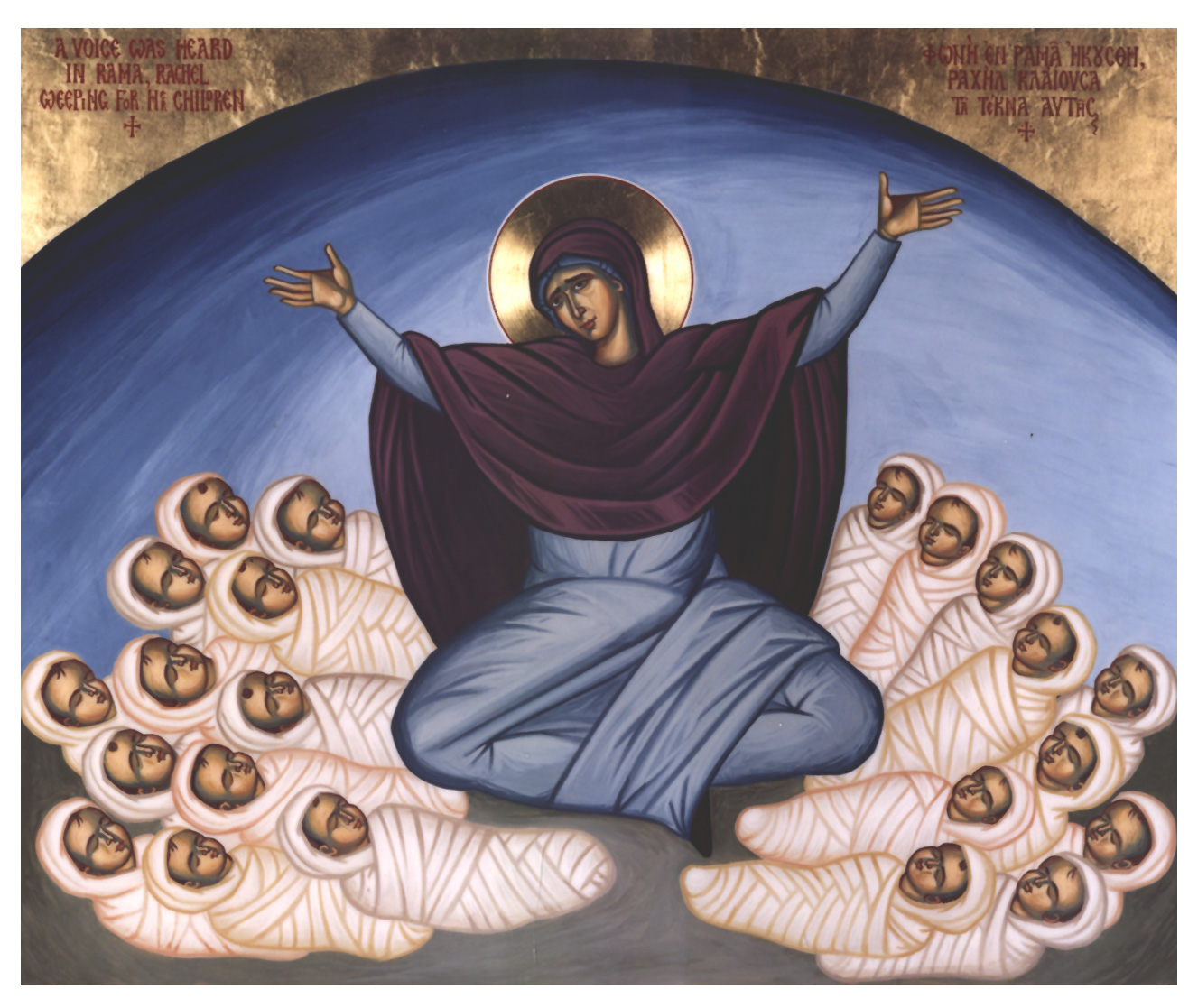
holy-innocents-rachel-weeping

Today, Step Five invites us to take the next critical step in admitting our faults. We must talk to someone about them.

So intense, though, is our fear and reluctance to do this, that many A.A.’s at first try to bypass Step Five. We search for an easier way—which usually consists of the general and fairly painless admission that when drinking we were sometimes bad actors. Then, for good measure, we add dramatic descriptions of that part of our drinking behavior which our friends probably know about anyhow. But of the things which really bother and burn us, we say nothing. Certain distressing or humiliating memories, we tell ourselves, ought not be shared with anyone. These will remain our secret. Not a soul must ever know. We hope they’ll go to the grave with us. (55)

Along with good insight about the importance of spiritual counsel, Step Five also highlights two difficulties we will face in the process of making our confession real — for that is what we are talking about — and then of understanding what we must do next.

The first difficulty

Many people think they understand confession in a religious sense, but we too often caricature the worst examples of each other’s positions.

In the Roman Catholic Church, largely because it comprises half of the world’s Christians, the problem with confession to a priest — basically what Step Five is describing — is the sheer volume. If everyone really ought to confess before they go to Mass on Sunday, then priests have to hear too many confessions to make them very personal at all.

Until we actually sit down and talk aloud about what we have so long hidden, our willingness to clean house is still largely theoretical. When we are honest with another person, it confirms that we have been honest with ourselves and with God. (60)

Confession, or seeking the advice of a spiritual director, can have the benefit of making real the spiritual forgiveness we are promised in Jesus Christ. More than just going to the confessional booth, though, this may need to be a longer conversation with a priest or director.

Sometimes we simply need to say our sins out loud; and sometimes we simply need to hear from another person that we are forgiven before we can really believe it.

The second difficulty

For Protestants, the understanding that one has direct access to God through Christ, without the need for a human mediator — while true — may mean that Christians do not avail themselves of spiritual counsel and the assurance of forgiveness given by another human being

The second difficulty is this: what comes to us alone may be garbled by our own rationalization and wishful thinking. The benefit of talking to another person is that we can get his direct comment and counsel on our situation, and there can be no doubt in our minds what that advice is. (60)

While many Protestants participate in regular Bible studies or in accountability groups, simply talking about your struggles and getting advice from people close to you may not have the sacramental “heft” that enables you to believe Jesus’ assurance that you have been forgiven.

What must we do?

The Gospel reading at Morning Prayer is an example of “prophetic hyperbole” — Jesus is using exaggeration in order to make a point.

But Jesus’ point is clear: we must be bold and decisive in admitting our wrongs and working to eliminate them from our lives.

If your hand or your foot causes you to stumble, cut it off and throw it away; it is better for you to enter life maimed or lame than to have two hands or two feet and to be thrown into the eternal fire. And if your eye causes you to stumble, tear it out and throw it away; it is better for you to enter life with one eye than to have two eyes and to be thrown into the hell of fire. (Matt. 18:8-9)

Step Five couldn’t support this notion more fully:

Provided you hold back nothing, your sense of relief will mount from minute to minute. The dammed-up emotions of years break out of their confinement, and miraculously vanish as soon as they are exposed. As the pain subsides, a healing tranquillity takes its place. And when humility and serenity are so combined, something else of great moment is apt to occur. Many an A.A., once agnostic or atheistic, tells us that it was during this stage of Step Five that he first actually felt the presence of God. And even those who had faith already often become conscious of God as they never were before. (62)

So the process of speaking to another person about our wrongs gives us the opportunity to turn and make a new start on our lives.

But on this feast day of the Holy Innocents we must also be mindful that making Step Five also commits us to undoing the harm that our actions have brought to others — the process of making amends that is the subject of Steps Eight and Nine.

May your new start — begun with the honest admission of your wrongdoing — give you the strength to continue making the changes that are ahead of you.

As for me, I will live with integrity;
redeem me, O Lord, and have pity on me.

My foot stands on level ground;
in the full assembly will I bless the Lord. (Ps. 26:11-12)
12 Steps of Christmas | St. John the Evangelist

Step Four – “Made a searching and fearless moral inventory of ourselves.”

The readings for the Eucharist on the Feast of St. John the Evangelist can be found here.

We deceive ourselves

If we say that we have no sin, we deceive ourselves, and the truth is not in us. If we confess our sins, he who is faithful and just will forgive us our sins and cleanse us from all unrighteousness. (1 John 1:9)

Right away, in the first chapter of his first letter, John lays it out for us: either deceive ourselves or confess our sins.

Step Four similarly faces our defects head-on. When confronted with our out-of-control desires for sex, for security, for companionship, we realize that our instincts have turned into liabilities.

By discovering what our emotional deformities are, we can move toward their correction. Without a willing and persistent effort to do this, there can be little sobriety or contentment for us. Without a searching and fearless moral inventory, most of us have found that the faith which really works in daily living is still out of reach. (43)

If we say we have no liabilities, we deceive ourselves, but if we face them head-on we may have a chance at “the faith that really works.”

However,

This perverse soul-sickness is not pleasant to look upon. Instincts on rampage balk at investigation. The minute we make a serious attempt to probe them, we are liable to suffer severe reactions. (44)

Step Four is usually taken with a sponsor for this very reason. We need someone to walk us through a deliberate, step by step process — perhaps over several weeks, as my sponsor did — or else we’ll despair at tackling such a mess.

During those weeks, we go back and forth between darkness and light.

Light and darkness

In both the Gospel and the letters that bear his name, John speaks in terms of light and darkness.

“In the beginning was the Word,” we heard in yesterday’s Gospel. “What has come into being in him was life, and the life was the light of all people. The light shines in the darkness, and the darkness did not overcome it” (John 1:1; 4-5).

Later in his Gospel, John observes that

This is the judgment, that the light has come into the world, and people loved darkness rather than light because their deeds were evil. For all who do evil hate the light and do not come to the light, so that their deeds may not be exposed. But those who do what is true come to the light, so that it may be clearly seen that their deeds have been done in God. (John 3:19)

And Jesus tells his disciples that

The light is with you for a little longer. Walk while you have the light, so that the darkness may not overtake you. If you walk in the darkness, you do not know where you are going. While you have the light, believe in the light, so that you may become children of light.” (John 12:35-36)

Believing in the light, coming to the light, means we must act like seeing makes a difference. If we want to know where we are going, we must open our eyes.

The need for a list

But all this religious-sounding talk of light and darkness may keep us from doing the actual work of making a list of our own specific failings.

It feels easier to keep what’s hidden “in the dark,” so to speak, as if ignoring it would make the problem go away.

Now let’s ponder the need for a list of the more glaring personality defects all of us have in varying degrees. To those having religious training, such a list would set forth serious violations of moral principles. Some others will think of this list as defects of character. Still others will call it an index of maladjustments. Some will become quite annoyed if there is talk about immorality, let alone sin. But all who are in the least reasonable will agree upon one point: that there is plenty wrong with us alcoholics about which plenty will have to be done if we are to expect sobriety, progress, and any real ability to cope with life. (48)

If we are to become sober (not only free from drink but balanced in our behavior) we must face what we have done squarely.

My sponsor walked me through a series of actual checklists and had me fill them in, writing down specific actions, the names of specific people. It took several weeks to work through, and it was an ugly process.

 A wonderful, fruitful light

Looking at our own failings is hard, and we don’t like to do it.

Both [the newcomer’s] pride and his fear beat him back every time he tries to look within himself. Pride says, “You need not pass this way,” and Fear says, “You dare not look!” But the testimony of A.A.’s who have really tried a moral inventory is that pride and fear of this sort turn out to be bogeymen, nothing else. Once we have a complete willingness to take inventory, and exert ourselves to do the job thoroughly, a wonderful light falls upon this foggy scene. As we persist, a brand-new kind of confidence is born, and the sense of relief at finally facing ourselves is indescribable. These are the first fruits of Step Four.

Having filled in the checklists, I began to see them less as lists of dark behavior, but as work that was slowly bringing me into the light, bringing me toward real life.

John puts it this way: “My Father is glorified by this, that you bear much fruit and become my disciples” (John 15:8).

No longer servants but friends

Discipleship basically means a “willingness … to exert ourselves to do the job thoroughly.”

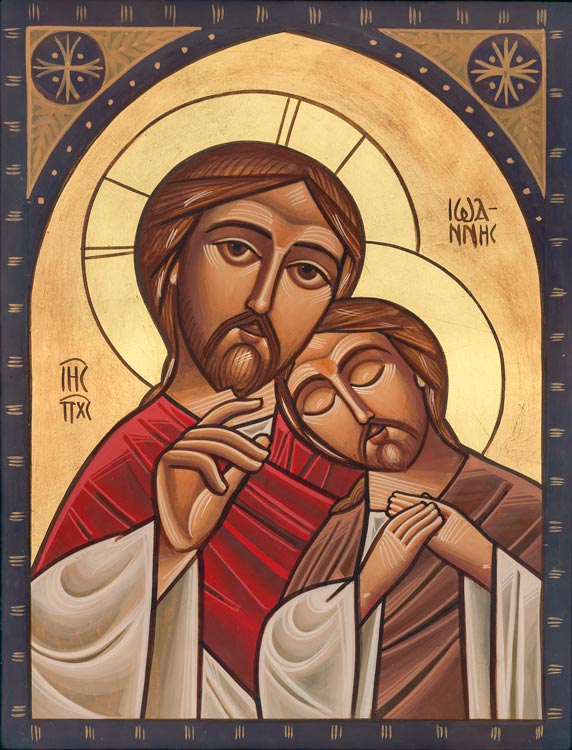
The defining character of John the Evangelist is that he is “the disciple whom Jesus loved.” He enjoyed a special relationship of intimacy with Jesus beyond mere obedience.

st-john-and-christ-2014

Image from UKCopticIcons.com

At the Last Supper, Jesus widens the circle even further. He says to all of his disciples, “I do not call you servants any longer, because the servant does not know what the master is doing; but I have called you friends” (John 15:15).

This intimacy strikes right at the root of the defects that manifest themselves in our addiction, as our thorough inventory makes clear:

The primary fact that we fail to recognize is our total inability to form a true partnership with another human being …. We have not once sought to be one in a family, to be a friend among friends, to be a worker among workers, to be a useful member of society. Always we tried to struggle to the top of the heap, or to hide underneath it. This self-centered behavior blocked a partnership relation with any one of those about us. Of true brotherhood we had small comprehension. (53)

How proud and arrogant and manipulative I was when I was drinking. People close to me tried to tell me, tried to show me time after time. But it wasn’t until by grace I was able to face facts myself that I could begin turning around.

We can become “a friend among friends” if we willingly face facts and are searching and fearless in addressing our failings.

“The light shines in the darkness,” says John about his friend Jesus, “and the darkness did not overcome it.”

Find someone who will walk with you, and then go ahead and shine the light into your dark corners.

12 Steps of Christmas | First Sunday in Christmas

Step Three – “Made a decision to turn our will and our lives over to the care of God as we understood Him.”

The readings for the Holy Eucharist on this First Sunday after Christmas can be found here.

I’m preaching this morning at St. Thomas Episcopal Church in Menasha, Wisconsin — so today’s reflection will sound a lot like the sermon that it is.

God as we understood Him

There is a supreme irony in reflecting on Step Three on this particular Sunday, given that the Gospel reading from John (which is always read on the First Sunday after Christmas) contains some of the most mind-blowing language about God contained anywhere in Scripture.

In the beginning was the Word, and the Word was with God, and the Word was God. He was in the beginning with God. All things came into being through him, and without him not one thing came into being. What has come into being in him was life, and the life was the light of all people. The light shines in the darkness, and the darkness did not overcome it.

And the Word became flesh and lived among us, and we have seen his glory, the glory as of a father’s only son, full of grace and truth.

From his fullness we have all received, grace upon grace. The law indeed was given through Moses; grace and truth came through Jesus Christ. No one has ever seen God. It is God the only Son, who is close to the Father’s heart, who has made him known. (John 1:1-18 passim)

So, let’s get this straight.

This baby, born in a feed trough in a stable to an unwed mother, is God.

This infant, born far from home because of a government requirement that everyone participate in a census, is Life.

This child, who will grow up to be a perfectly ordinary Jewish man living under Roman occupation, is Light.

This man, framed by religious leaders, arrested by soldiers, and killed by the state as a political criminal, is Grace.

What this man revealed to his friends by his life and teaching, is Truth.

“No one has ever seen God. It is God the only Son, who is close to the Father’s heart, that has made him known.”

OK, that’s perfectly clear, then. Everyone understand?

Grace and truth

Here’s the spiritual heart of John’s magnificent prologue: “The law indeed was given through Moses; grace and truth came through Jesus Christ.”

What we thought we understood about God has been turned upside down.

What we thought was a set of perfectly sensible regulations and statutes and commandments and ordinances — rules that would set us apart as better than others — turns out not to help at all.

What we thought was life was really Law — and we can never live up to what the Law requires. The evidence of our failure is all around us, most especially in the cynical way we talk about principles and values and then just do whatever the hell we want.

Step Three asks us to consider how well our independence has served us. “This brave philosophy, wherein each man plays God, sounds good in the speaking, but it still has to meet the acid test: how well does it actually work?”

Should his own image in the mirror be too awful to contemplate (and it usually is), he might first take a look at the results normal people are getting from self-sufficiency. Everywhere he sees people filled with anger and fear, society breaking up into warring fragments. Each fragment says to the others, “We are right and you are wrong.” Every such pressure group, if it is strong enough, self-righteously imposes its will upon the rest. And everywhere the same thing is being done on an individual basis. The sum of all this mighty effort is less peace and less brotherhood than before. The philosophy of self-sufficiency is not paying off. Plainly enough, it is a bone-crushing juggernaut whose final achievement is ruin. (37)

Into this bitter, barren ruin is born a baby, and John asks us to believe that he is the creative Word of God come to live among us, full of glory, full of grace and truth.

Elsewhere in his Gospel, John says he has “written so that you may come to believe that Jesus is the Messiah, the Son of God, and that through believing you may have have life in his name” (John 20:31).

Our independent, intellectual, self-sufficient selves balk at this idea.

The paradox of willingness and grace

The explanation of Step Three continues, “The more we become willing to depend upon a Higher Power, the more independent we actually are” (36).

What we start to realize is that when Law comes first, we can never succeed — we are crushed by our failure to live up to its demands.

But when grace comes first, we find that all we have to be is willing to take the next step. Our willingness helps us to exert ourselves in the tasks placed before us.

All of the Twelve Steps [what Richard Rohr refer to as “the coded Gospel”] require sustained and personal exertion to conform to their principles and so, we trust, to God’s will. It is when we try to make our will conform with God’s that we begin to use it rightly. (40)

The paradox of willingness is that depending upon God makes us more free.

The paradox of grace is that it makes us more willing to pay back what we owe to God who gave away everything — power, might, majesty, freedom, even his human life — in order to live among us, show us his truth, and reconcile us to himself and to each other.

In the words of my favorite hymn, “Come Thou Fount of Every Blessing”:

Jesus sought me when a stranger,
wandering from the fold of God;
he, to rescue me from danger,
interposed his precious blood.

O to grace how great a debtor
daily I’m constrained to be!
Let thy goodness, like a fetter,
bind my wandering heart to thee.
Prone to wander, Lord, I feel it,
prone to leave the God I love;
here’s my heart, O take and seal it,
seal it for thy courts above.

The opening of John’s Gospel is another hymn: “From his fullness we have received, grace upon grace.” Grace comes first, and always has since the time that the Word was with God, making the light that shines in the darkness. Grace comes first.

All that God asks of us in return is that we be willing, willing to follow the only Son, who is close to the Father’s heart, as best as we can understand him, along “the way to a faith that works” (34).

I’m willing to try today. How about you?

12 Steps of Christmas | St. Stephen, deacon and martyr

Step Two – “Came to believe that a Power greater than ourselves could restore us to sanity.”

Morning Prayer for the Feast of St. Stephen, Deacon and Martyr, can be found here.

My heart trusts in him, and I have been helped

December 26, on the Western Christian calendar, is the feast of St. Stephen, one of the first martyrs who witnessed to his faith in Jesus as Lord even in the face of death by stoning.

Stephen’s story, told in Acts 6-7, is about trusting in a new revelation of God. In this case, the revelation is that Jesus himself was God and was the fulfillment of Jewish prophecy.

His witness, the sermon Stephen preached indicting the Sanhedrin (the religious leaders of Jerusalem) for opposing the Holy Spirit, is a reinterpretation of Jewish history that they cannot stand for.

Stephen’s trust in the Son of God and in this new revelation is so complete that he is not afraid to die. He is filled with a power greater than himself.

Higher Power

Many people I have met in AA meetings talk about how difficult it was for them to accomplish  Step Two.

They struggled to believe in, let alone acknowledge the existence of “a Power greater than ourselves” — which (with a capital P, of course) would seem to refer to the God of Christianity, especially of the Roman Catholic or Lutheran churches so prevalent where I live.

I did not have that particular struggle. As a person brought up in the church and serving for 20 years as an ordained minister, I have always trusted in the existence of God.

But I’m not sure I ever trusted God to “restore me to sanity.”

What really struck me about Step Two was its suggestion that the AA group itself might serve as one’s “Higher Power” as far as recovery goes. The point is, the group has wisdom that I don’t. In that sense, they are greater than I am.

I do well to listen to their counsel, to their stories of “experience, strength, and hope,” to their trust in a Higher Power, as I deal with my own issues.

The wisdom of tradition

There are clear ties here, in my mind, to the traditions of the church and the humility that we might be called to exercise in the face of 2,000 years of the lived experience of the saints.

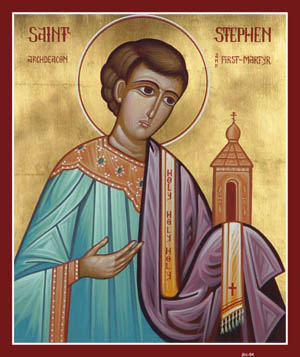
St. Stephen, the first to demonstrate such a powerful faith, is often pictured holding up a church. Perhaps we are sustained, held up, by the faith of those who came before us.

perseverar-em-Jesus-3We are not the first believers to struggle in our faith, or to suffer because of our belief, or to doubt the presence of God in our lives. We are not the first to face ridicule, or to feel dryness in our prayers, or to question the dogmas that are being pushed on us.

Humility simply means admitting that we might have something to learn from believers who have wisdom that we don’t.

Putting away all earthly anxieties

But more is needed than just learning from the AA group or the church’s traditions if our Higher Power is to  “restore us to sanity.”

What shines through the stories of recovery I have heard is transformed lives. People talk about a whole new way of living that is not based on fear or addiction, but on gratitude and sobriety.

What is even more remarkable is the way people long in recovery maintain their poise even in the face of repeated trials and the need to “keep working the program.” Some even make the astonishing claim that hitting rock bottom was the best thing that ever happened to them.

In the face of struggles and doubts, people in the group “completely give themselves to this simple program” (Big Book 58) which is laid out in the remaining Steps.

It may not be quite the same as facing death by stoning, but practicing recovery — especially coming to believe that a Power greater than ourselves will restore us to sanity — seems to call forth from people a willingness to face difficult situations and people head on but without anxiety.

May we, like Stephen, give ourselves completely to this Power greater than ourselves in trust that we will be restored.

Collect of the Day

We give you thanks, O Lord of glory, for the example of the first martyr Stephen, who looked up to heaven and prayed for his persecutors to your Son Jesus Christ, who stands at your right hand; where he lives and reigns with you and the Holy Spirit, one God, in glory everlasting. Amen.

A Collect for Saturdays

Almighty God, who after the creation of the world rested from all your works and sanctified a day of rest for all your creatures: Grant that we, putting away all earthly anxieties, may be duly prepared for the service of your sanctuary, and that our rest here upon earth may be a preparation for the eternal rest promised to your people in heaven; through Jesus Christ our Lord. Amen.

12 Steps of Christmas | Christmas Day

Step One – “We admitted we were powerless over alcohol – that our lives had become unmanageable.”

Today’s service of Morning Prayer for Christmas Day can be found here.

Humility

“Who cares to admit complete defeat? Practically no one, of course.”

So begins the explanation of Step One of Alcoholics Anonymous in the book Twelve Steps and Twelve Traditions (21).

In my own case, the fall was both abrupt and literal — from a successful performance at a client event in the morning to a bruising, drunken fall in front of clients and colleagues on the marble floor of the hotel lobby that evening.

The next day I flew home knowing I would be fired, then waited, head in my hands, to tell my wife the news.

I had, through my drinking, lost a job I loved and any self-respect and self-confidence I had clung to in the face of growing concerns about my alcohol use.

“Once this stark fact is accepted,” says Step One, “our bankruptcy as going human concerns is complete” (21).

Imitating God in his lowliness

According to the Christian tradition, humanity generally was pretty much bankrupt and definitely in need of God when God decided to send his Son to live as one of us. That’s the background to the Christmas feast that we celebrate today.

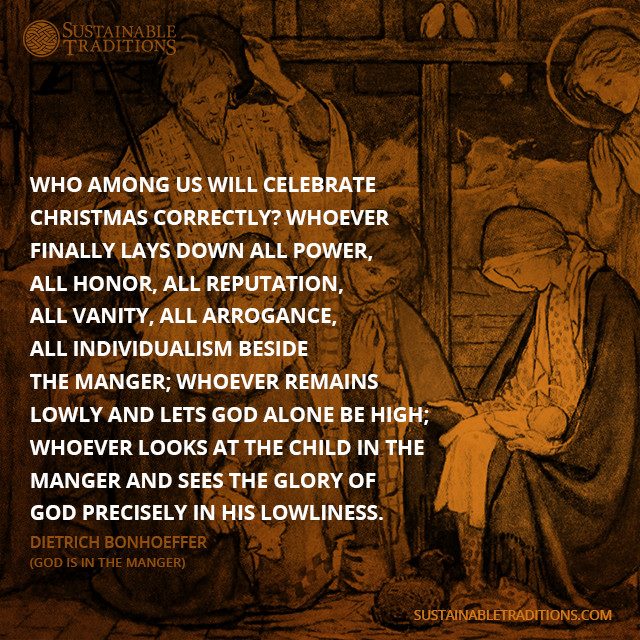
Dietrich Bonhoeffer, the German pastor and theologian, answers his own question: “Who among us will celebrate Christmas correctly?”

10338855_10154090783635681_7938564056947506578_n

Humility, to Bonhoeffer, means “laying down all power, all honor, all reputation, all vanity, all arrogance, all individualism beside the manger.” It means imitating God by remaining lowly.

This resonates with the way early Christians like Paul described Jesus:

who, though he was in the form of God,
did not regard equality with God
as something to be exploited, 
   but emptied himself,
taking the form of a slave,
being born in human likeness.
And being found in human form, 
    he humbled himself
and became obedient to the point of death—
even death on a cross. (Philippians 2:6-8)

“The glory of God precisely in his lowliness” is what we see in the manger at Christmas.

At Christmas God laid down all power, all honor, all reputation and became a human being, vulnerable just like us. Who are we to be anything but vulnerable like him?

Following Jesus in the way of the cross

This morning we have in Morning Prayer one of the juxtapositions that make the Daily Office such a rich source for reflection.

It is Christmas Day, and so in the first of the collects we speak of our gladness and joy and confidence in God.

Because it is also Friday, however, we immediately pray “that we, walking in the way of the cross, may find it none other than the way of life and peace.”

Collect of the Day

O God, you make us glad by the yearly festival of the birth of your only Son Jesus Christ: Grant that we, who joyfully receive him as our Redeemer, may with sure confidence behold him when he comes to be our Judge; who lives and reigns with you and the Holy Spirit, one God, now and for ever. Amen.

A Collect for Fridays

Almighty God, whose most dear Son went not up to joy but first he suffered pain, and entered not into glory before he was crucified: Mercifully grant that we, walking in the way of the cross, may find it none other than the way of life and peace; through Jesus Christ our Lord. Amen.

Humility is not a one-time admission that we get over and done with. Rather, it is an acceptance of our proper place in relationship to God and to other people, who may also be powerless, whose lives may also be unmanageable.

We do not remain bankrupt, however. The explanation of Step One continues: “Our admissions of personal powerlessness finally turn out to be the firm bedrock upon which happy and purposeful lives may be built” (21).

While we do begin to build purposeful lives again, we must also recognize that our daily experience will continue to involve suffering and frustration.

But that is the pattern of falling and rising that Jesus laid down throughout his whole life, from the most humble beginnings as a baby born in poverty, to his preaching and teaching, and to his trial and execution for a crime he did not commit. As Christians we are called to follow him in that pattern of life, that way of the cross.

Like practicing the Christian faith,

Practicing A.A.’s remaining eleven Steps means the adoption of attitudes and actions that almost no alcoholic who is still drinking can imagine taking. Who wishes to be rigorously honest and tolerant? Who wants to confess his faults to another and make restitution for harm done? Who cares anything about a Higher Power, let alone meditation and prayer? Who wants to sacrifice time and energy in trying to carry A.A.’s message to the next sufferer? No, the average alcoholic, self-centered in the extreme, doesn’t care for this prospect—unless he has to do these things in order to stay alive himself. (24)

God, mercifully grant that we, imitating your lowliness and following Jesus in the way of the cross, may find these 12 Steps none other than the way of life and peace; through Jesus Christ our Lord. Amen.

12 Steps of Christmas | Introduction

Before we begin with Step One and Morning Prayer on Christmas Day, here’s a little background information about the Daily Office, the 12 Steps, and my plan for this series that you may find helpful.

About the Daily Office

From the beginning, Christians, like their Jewish forebears, have prayed at set times of the day. (See Acts 3:1, for example.)

Over the centuries, and especially with the rise of monastic communities, Christians gathered to pray as often as seven times a day (emulating Psalm 119:164).

That sevenfold monastic pattern was simplified during the Reformation, and in the Church of England became two “offices” of Morning and Evening Prayer.

The Roman Catholic Church may refer to these prayers as the Liturgy of the Hours, the Orthodox Churches may refer to them as divine services or divine offices, and the Episcopal Church (to which I belong) refers to them as the Daily Office.

Whatever differences there may be — in number of services, times of the day, selections from Scripture to be read at certain times — there is a basic pattern to the Daily Office that’s pretty common.

The Psalter – Reading from the Psalms has for centuries been the foundation of daily prayer.

In the Episcopal Church, the 150 psalms are read at Morning and Evening Prayer on a seven-week cycle.

The Lessons – Readings from the Hebrew Bible (or the Old Testament) and from the New Testament are next. In some churches, those readings are relatively short (maybe just a verse or two) and may be called “chapters.”

In the Episcopal Church, we have inherited a tradition of reading a lot of Scripture in the Daily Office. Over the course of two years, we read most of the Old Testament once and the whole New Testament twice.

The schedule of what Psalms and Scripture lessons are to be read on a particular day is called the “lectionary.”

The Prayers – Beginning with the Lord’s Prayer, we pray for our own needs and those of others and we give thanks to God for the blessings we enjoy.

In the Episcopal Church, there are special prayers called “collects” that set themes for every Sunday of the year, for days of the week, and for special occasions. At each office, we commonly read two or three of these collects.

About the 12 Steps

The 12 Steps of Alcoholics Anonymous, according to the history timeline on the AA website, date to 1938 and to the early experience of the first members.

They are “a group of principles, spiritual in their nature, which, if practiced as a way of life, can expel the obsession to drink and enable the sufferer to become happily and usefully whole.”

The 12 Steps were codified from the “Big Book” titled Alcoholics Anonymous, which also includes stories sharing members’ experience, strength, and hope.

You can read the 12 Steps in short form or in the longer form of the book Twelve Steps and Twelve Traditions.

About this blog

I’ve been praying the Daily Office for about 23 years now, since before my ordination as a deacon in the Episcopal Church, and I’ve been writing and teaching about it for many years.

I’ve only been practicing recovery for a little over two years now, since becoming sober in October 2013.

Three things really stand out for me as I compare the two practices:

The first thing that struck me about AA meetings is the regular reading and re-reading of the Big Book and of the “12 and 12.”

This constant return to the basic texts of AA has a lot in common with the practice of the Daily Office.

Year after year, season after season, week after week, “one day at a time,” the words of the basic texts — Bible or Big Book — soak into your imagination, and you begin a process of incorporating their wisdom into your daily living.

The second thing that I discovered is that both AA and the church talk about similar spiritual practices; we just call them by different names. For example, what AA calls a “daily self-inventory” the church calls “Confession of Sin.”

And third, both practices are done not because you feel like it, but because it’s time to do it.

We pray Morning Prayer each day at 6 am because that’s the time to do it; we go to an AA meeting on Friday evenings because that’s the time to do it. We can enjoy a “daily reprieve contingent on the maintenance of our spiritual condition” (Big Book 85).

The 12 Steps of Christmas

Each day during the 12 Days of Christmas, we will read one of the 12 steps and pray the Daily Office with its psalms and Bible lessons as appointed in the lectionary.

From the resonances between them, perhaps some wisdom will emerge that will help in our “spiritual awakening.”

I look forward to having you join me in the process for the next 12 days, and I invite you to share in the conversation by adding your comments.

Merry Christmas!

12 Steps of Christmas | About

Inspired by the name of an event — “The 12 Steps of Christmas” — that I recently attended at the Solutions Recovery Club in Oshkosh, I will offer reflections on the 12 Steps and the daily office each day of the Christmas season.

I will start with an introductory post on Christmas Eve, December 24, and then posts on Steps 1 through 12 from Christmas Day through the Eve of the Epiphany, January 5.

I’ve been praying the Daily Office — Morning and Evening Prayer — for about 23 years now, but I’ve been practicing recovery for only a little more than two.

Being in recovery has helped me understand what Richard Rohr refers to as “the coded Gospel” of the 12 Steps, and it has revitalized both my prayer practice and my spiritual life.

You don’t have to know anything about the Daily Office or the 12 Steps to join in.

Here are two quick resources that will help you follow along:

Forward Movement offers Daily Prayer Anytime, where you can get the prayers and readings for the Daily Office according to the use of the Episcopal Church (which I serve as an ordained minister).

The 12 Steps of Alcoholics Anonymous are available online as PDF files in short form and in the fuller form of the book Twelve Steps and Twelve Traditions.

Please consider joining me in these reflections by offering your own comments as you read each day’s post, and please share this blog with anyone else you think might enjoy this walk through the season.

Ornaments to God our Savior

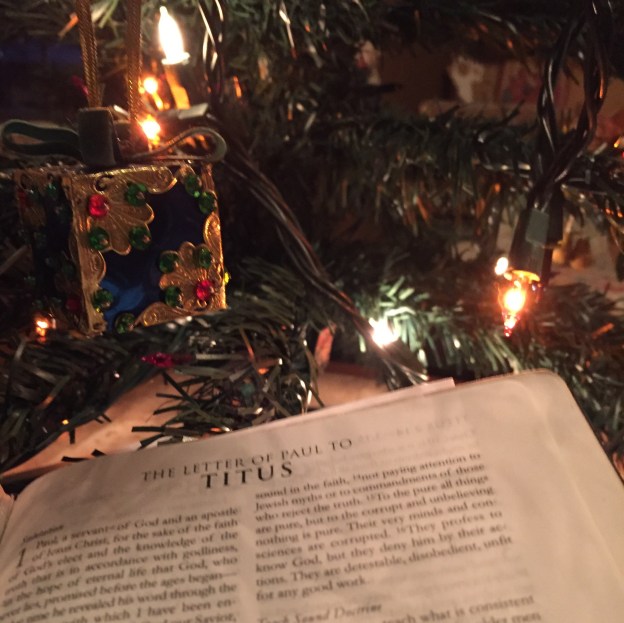
Show yourself in all respects a model of good works, and in your teaching show integrity, gravity, and sound speech that cannot be censured; then any opponent will be put to shame, having nothing evil to say of us. Tell slaves to be submissive to their masters and to give satisfaction in every respect; they are not to talk back, not to pilfer, but to show complete and perfect fidelity, so that in everything they may be an ornament to the doctrine of God our Savior. (Titus 2:7-10)

In his 2012 book The Evolution of the Word: The New Testament in the Order the Books Were Written, Marcus Borg summarizes current scholarship around New Testament authorship and pulls together a timeline that places each book in historical context.

One of the more dramatic conclusions his work reveals is that the early Christian church became notably less radical even during the 70-year period when the New Testament was being written.

The letter of Titus, from which our Epistle this morning is drawn, dates to about the 110s and is one of the last to be written. Borg writes that “the letter is about the need for order and the appointment of authorized leaders — in short, it is about institutionalization” (583).

Today’s letter seems to be as much about societal approval as God’s approval. That is to say, Christians should behave well so that no one can speak ill of them (and therefore of God).

A drunken spectacle

But look at the first of the women featured in today’s other readings — women who are true “ornaments to the doctrine of God our savior.”

Hannah has prayed that God would grant her a son, despite the disapproval of the Temple priest Eli, who sees her silent prayer as drunken rambling.

Her son Samuel will hear and respond to God’s call, and his first act will be to pronounce God’s displeasure with Eli and his sons — “scoundrels; they had no regard for the Lord or the duties of the priests to the people” (1 Sam. 2:12-13).

Hannah’s song, which we read this morning, praises God, who “raises up the poor from the dust; he lifts the needy from the ash heap, to make them sit with princes and inherit a seat of honor” (1 Sam. 2:8).

Those who recognize their need of a savior are the ornaments God chooses.

An unwed mother

Like Hannah before her, Mary is known in part for the song she sings — the canticle we know as the Magnificat.

She sings of the God who “has looked with favor on his lowly servant,” who “has cast down the mighty from their thrones, and has lifted up the lowly” (BCP 91).

Today we read of God’s announcement to Mary, God’s invitation to her, God’s need of her participation in his plan for salvation.

With her response to the angel’s message — “Let it be to me according to your word” — Mary sets in motion the saving work of God, the birth of a son who will turn the Empire and the whole world upside down.

Those who will participate in God’s saving activity are the ornaments God chooses.

A mansion prepared for himself

In these last few days of Advent, we pray to God that “your Son Jesus Christ, at his coming, may find in us a mansion prepared for himself” (BCP 212).

Like a house decorated for Christmas, we can be “ornaments to the doctrine of God our Savior.”

But we shine as we recognize our need of a savior, not as we seek to impress those around us.

We glow when we participate in God’s saving work, not when we win in arguments against our neighbors.

We sparkle when we reflect the Light that is coming into the world to accomplish the work of salvation. We (like John the Baptist) are not the light, but we bear witness to the Light.

This Christmas, may the Light — God’s Son, Jesus Christ — find in each of us a home richly prepared for himself, a fitting ornament to God our savior.

Choose the Kingdom life, you brood of vipers!

Let your gentleness be known to everyone … you brood of vipers!

Look, it’s Gaudete Sunday and we’re lighting a pink candle in the Advent wreath. Who warned you to flee from the wrath to come?

Christmas is just around the corner … but even now the ax is lying at the root of the tree. Every tree therefore that does not bear good fruit is cut down and thrown into the fire!

What a downer! C’mon, John  ….

At least John is just a forerunner, announcing the coming of Jesus.

Gentle Jesus, meek and mild — infant holy, infant lowly — whom we celebrate at Christmas.

+ + + + +

Yeah, we’ve been hearing from that Jesus all week in the Daily Office readings from Matthew 23.

And you know what? He sounds an awful lot like his cousin John.

The scribes and the Pharisees sit on Moses’ seat; therefore, do whatever they teach you and follow it; but do not do as they do, for they do not practice what they teach. They tie up heavy burdens, hard to bear, and lay them on the shoulders of others; but they themselves are unwilling to lift a finger to move them.

But woe to you, scribes and Pharisees, hypocrites! For you lock people out of the kingdom of heaven. For you do not go in yourselves, and when others are going in, you stop them.

Woe to you, scribes and Pharisees, hypocrites! For you cross sea and land to make a single convert, and you make the new convert twice as much a child of hell as yourselves.

Woe to you, scribes and Pharisees, hypocrites! For you tithe mint, dill, and cumin, and have neglected the weightier matters of the law: justice and mercy and faith.

Woe to you, scribes and Pharisees, hypocrites! For you clean the outside of the cup and of the plate, but inside they are full of greed and self-indulgence.

Woe to you, scribes and Pharisees, hypocrites! For you are like whitewashed tombs, which on the outside look beautiful, but inside they are full of the bones of the dead and of all kinds of filth.

Woe to you, scribes and Pharisees, hypocrites! For you say, ‘If we had lived in the days of our ancestors, we would not have taken part with them in shedding the blood of the prophets.’ … You snakes, you brood of vipers! (Matt. 23)

So, yeah, let your gentleness be known to everyone … you brood of vipers!

+ + + + +

I mean, what’s going on here?

What happened to our gentle Lord Jesus?

Well, you see, the Pharisees and the Herodians are plotting together to trap him (Matt. 22:16).

(You remember the Herodians — they follow Herod Antipas, the son of Herod the Great, the guy who had all the babies of Bethlehem killed when Jesus was born. Yeah, that guy.)

The religious and the political powers are converging around Jesus, trying to silence his message, which up until then had been about the kingdom of God, about healing and restoration.

They’ve been badgering him ever since he arrived in Jerusalem on that Sunday, riding on a donkey through the gate of Jerusalem to the shouts of Hosanna from the the palm-waving crowd.

They were probably still upset about the whole tables of the money-changers thing, still smarting from his response about paying taxes, still angry about his undermining their authority and evading their questions.

The chief priests and the scribes, the Pharisees, the Sadduccees, the lawyer … push push push!

But Jesus has probably just about had it, too.

He turns to the crowd and delivers his outburst against the Pharisees and scribes — the hypocrites. He goes all John the Baptist on them.

+ + + + +

But that’s not the end of it.

Jesus does not win over the crowds — or the religious leaders — by railing at them.

In fact, he doesn’t win over the crowds at all.

As he leaves the Temple, he tells his disciples a number of parables, then says: “You know that after two days the Passover is coming, and the Son of Man will be handed over to be crucified.”

Then the chief priests and the elders of the people gathered in the palace of the high priest, who was called Caiaphas, and they conspired to arrest Jesus by stealth and kill him. But they said, “Not during the festival, or there may be a riot among the people.” (Matt. 26:1-5)

It’s hard to tell whether it’s Advent or Lent … whether it’s Christmas or Good Friday.

Christmas is just around the corner, but even now the ax is lying at the root of the tree.

+ + + + +

I’m grateful to my Bishop, Matthew Gunter, who offered this brief meditation at a discernment retreat yesterday:

In response to what’s going on in the world around us, all the fear and violence, we can pick up a hammer and nails, or we can pick up a basin and towel.

The hammer and nails speak in the world’s language, the language of power and victory. The hammer pounds with the force of John the Baptist’s conviction, and the nails ring out with Jesus’ piercing clarity as he argues in the Temple.

But the hammer blows ring out against Jesus two days later, and the troublemaker hangs silent, nailed to a tree.

It seems the authorities have won.

But the basin and towel turn everything upside down.

“Do you know what I have done to you?” Jesus asks after the Last Supper is concluded, as he dries his hands on the towel around his waist.

You call me Teacher and Lord—and you are right, for that is what I am. So if I, your Lord and Teacher, have washed your feet, you also ought to wash one another’s feet. For I have set you an example, that you also should do as I have done to you (John 13).

The basin and towel set an example for us of Kingdom living, of a new way of acting in the face of the world’s power and violence.

The basin and towel wash our feet and set them on the way of the cross, which is paradoxically the way of life and peace.

The basin washes us just like Jesus’ baptism at the Jordan washed him.

Jesus, at the very end of his life, shows us how we should live, what we should do.

+ + + + +

“What then should we do?” the crowds asked John the Baptist back at the beginning.

In reply he said to them, “Whoever has two coats must share with anyone who has none; and whoever has food must do likewise.” Even tax collectors came to be baptized, and they asked him, “Teacher, what should we do?” He said to them, “Collect no more than the amount prescribed for you.” Soldiers also asked him, “And we, what should we do?” He said to them, “Do not extort money from anyone by threats or false accusation, and be satisfied with your wages.” (Luke 3:10-14)

The Rev. Steve Pankey, on his blog Draughting Theology, writes:

John’s answer is simple. In fact, it is so simple as to be terrifyingly mundane. He doesn’t tell them to fast for 40 days or to move to a cave in the wilderness or to give away everything they own. Instead, he says “share,” “don’t cheat,” and “be satisfied.

Wait… what? Share, don’t cheat, and be satisfied? That’s what Kingdom living looks like? That’s, well, just so easy a child could do it. Which is precisely John’s point.

Kingdom living isn’t difficult, we just choose not to do it, which is why the punishment is so severe.

+ + + + +

Even now the ax is laid at the root of the tree.

So bear fruit worthy of repentance.

Choose the Kingdom life — the basin and towel — instead of the life of power and control that nailed gentle Jesus to the cross on Good Friday.

Let your gentleness be known to everyone … you lovely brood of vipers.

And the peace of God, which surpasses all understanding, will guard your hearts and your minds in Christ Jesus. Amen.

Watching for our undefended Lord

O God, the source of eternal light: Shed forth your unending day upon us who watch for you, that our lips may praise you, our lives may bless you, and our worship on the morrow give you glory; through Jesus Christ our Lord. Amen. (BCP 123)

This Saturday is a sort of New (Church) Year’s Eve, as tomorrow is the First Sunday of Advent, the beginning of the liturgical calendar.

The year ends with a lovely hymn to creation:

Bless the LORD, O my soul; *
O LORD my God, how excellent is your greatness! you are clothed with majesty and splendor.
You wrap yourself with light as with a cloak *
and spread out the heavens like a curtain.
You lay the beams of your chambers in the waters above; *
you make the clouds your chariot; you ride on the wings of the wind.
You make the winds your messengers *
and flames of fire your servants.
You have set the earth upon its foundations, *
so that it never shall move at any time. (Psalm 104:1-5)

Psalm 104 is a playful poem — “There move the ships, and there is that Leviathan, which you made for the sport of it” (27) — and reading it lights up one’s face, making for “a cheerful countenance” (16).

+ + + + +

Light enters the picture in the Gospel appointed for this evening, too.

Jesus and his disciples are leaving Jericho on their way to Jerusalem. He will soon be making his triumphal entry on Palm Sunday, setting in motion the events that will lead to his arrest and crucifixion.

Before they get too far out of Jericho, however, two blind men who are sitting by the road cry out “Lord, have mercy on us, Son of David!”

They stop Jesus in his tracks and he asks “What do you want me to do for you?”

“Lord, let our eyes be opened,” they reply.

+ + + + +

It’s customary before Sundays and Major Feasts to “anticipate the feast,” so that the feast has a first Evening Prayer, then Morning and Evening Prayer on the day itself.

At Evening Prayer tonight we are in a sort of swing time between the end of one year and the beginning of another, and the collects we pray reflect that tension.

We pray on Saturdays that God will “shed forth his unending light on us who watch for [him].”

Looking toward that dawning with our eyes open, we pray the collect for the First Sunday of Advent:

Almighty God, give us grace to cast away the works of darkness, and put on the armor of light, now in the time of this mortal life in which your Son Jesus Christ came to visit us in great humility; that in the last day, when he shall come again in his glorious majesty to judge both the living and the dead, we may rise to the life immortal; through him who lives and reigns with you and the Holy Spirit, one God, now and for ever. Amen. (BCP 211)

With our eyes open, it’s all too easy to see how God’s beautiful, playful creation is soiled by “the works of darkness.”

Fr. Eric Funston, an Episcopal priest and fellow Daily Office blogger, wonders in his post on Wednesday’s readings how the Bible speaks to a world gone mad. He writes,

I think the Scriptures are meant to address a sane world, a world where being “a murderer, a thief, a criminal, or even . . . mischief-maker” is something outside the norm, a world where though “fiery ordeals” may exist they are not understood to be the normative state. That is not our world, however. We live in a world that is mad. We live in a world where mass murder has become a daily reality. We live in a world which is a fiery ordeal.

In a world gone mad, we need more than ever to “put on the armor of light,” to make ourselves secure in the Bible’s vision of order and peace, to arm ourselves with the knowledge of salvation by the forgiveness of our sins (Luke 1:77).

We are armored, therefore, not to stand against other people, but in order to withstand the darkness of despair.

Remember, we follow an undefended Lord, who “came to visit us in great humility,” who even stopped in his journey toward Jerusalem and the cross — the culmination of his purpose — to heal two blind men who called out for mercy.

So with our eyes open to the darkness around us, we look for the light.

We look for the humble Christ in other people, just as he urged us to do.

We attend to those who cry for mercy, like he did, that with him we may “rise to the life immortal.”


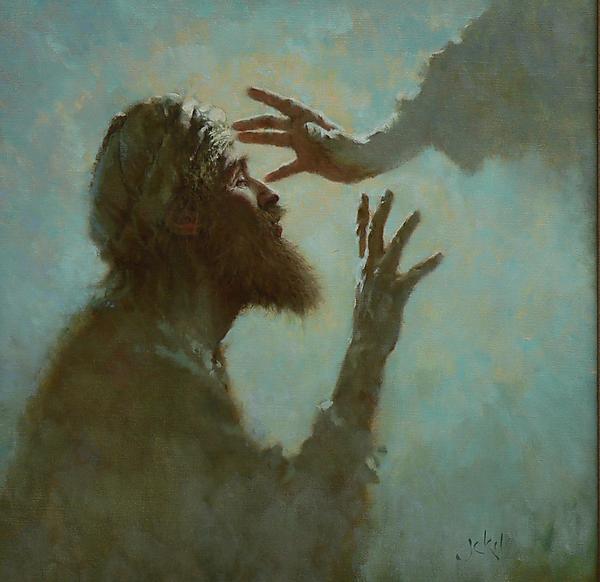
Featured image by Brian Jekel.