Author Archives: Rodger Patience

Unknown's avatar

About Rodger Patience

I am an Episcopal priest, and I am a person in recovery. My aim is to build hope in everything I do.

Trinity Sunday

20130526-064647.jpg

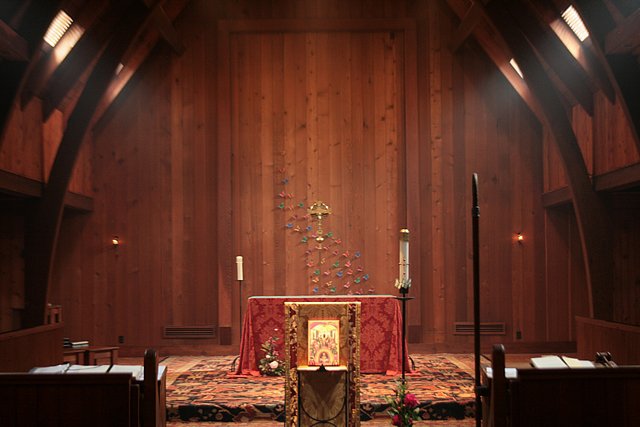
St. Augustine’s Chapel in the Cathedral Church of St. Paul, Fond du Lac

First Sunday after Pentecost: Trinity Sunday

O God, you have given to us your servants grace, by the confession of a true faith, to acknowledge the glory of the eternal Trinity, and in the power of your divine Majesty to worship the Unity: Keep us steadfast in this faith and worship, and bring us at last to see you in your one and eternal glory, O Father; who with the Son and the Holy Spirit live and reign, one God, for ever and ever. Amen. (BCP 228)

+ + + + +

I want to reflect not so much on the doctrine of the Trinity but on the method of Trinitarian faith.

It took more than 400 years of sustained practice and reflection before the Christian church articulated the doctrine of the Trinity. The Apostles’ Creed is first mentioned by Ambrose around 390; the Nicene Creed came after the Council of Nicaea in 325 and was revised by the Council of Constantinople in 381; Augustine wrote On the Trinity in 415; and the Athanasian Creed dates to sometime after the Council of Chalcedon in 451.

+ + + + +

From the beginning Christians gathered to pray daily (just as they had been doing as observant Jews), celebrated the Lord’s Supper, and ministered to those around them, making disciples through the power of the Spirit.

“No one has ever seen God,” writes the author of the Gospel of John. “It is God the only Son, who is close to the Father’s heart, who has made him known” (John 1:18).

“There is one body and one Spirit, just as you were called to the one hope of your calling, one Lord, one faith, one baptism, one God and Father of all, who is above all and through all and in all” (Ephesians 4:4-6).

“Jesus is Lord” rings the cry of faith; “We are one in the Spirit” say the apostles to Jew and Greek, slave and free, male and female; “How good it is to sing praises to our God” we pray every morning and every evening, joining our voices to the Psalmist’s (Ps. 147:1).

The doctrine of the Trinity is the attempt, however mathematical and philosophical it may be, to account for the lived experience of the Church, following the Lord Jesus in the power of God’s Spirit and in praise to the eternal Father — acknowledging the Trinity and worshiping the Unity.

Throughout the world the holy Church acclaims you:
Father, of majesty unbounded,
your true and only Son, worthy of all worship,
and the Holy Spirit, advocate and guide.

(Te Deum laudamus, BCP 95)
Commentary by Bede, the Venerable

20130525-184141.jpg

Matthew 7:7 (Commentary)

Asking is not enough,
says Bede
the venerable

We must diligently seek

Read the blueprint
heart’s desire

Lay the first stone

On stone and stone
the house
reveals itself

Plan becomes a home

I must lay my heart
(rejected stone)
firmly in place

Daily build the home I seek

Rodger Patience
Mepkin Abbey + July 1998

Always faithful to our mission

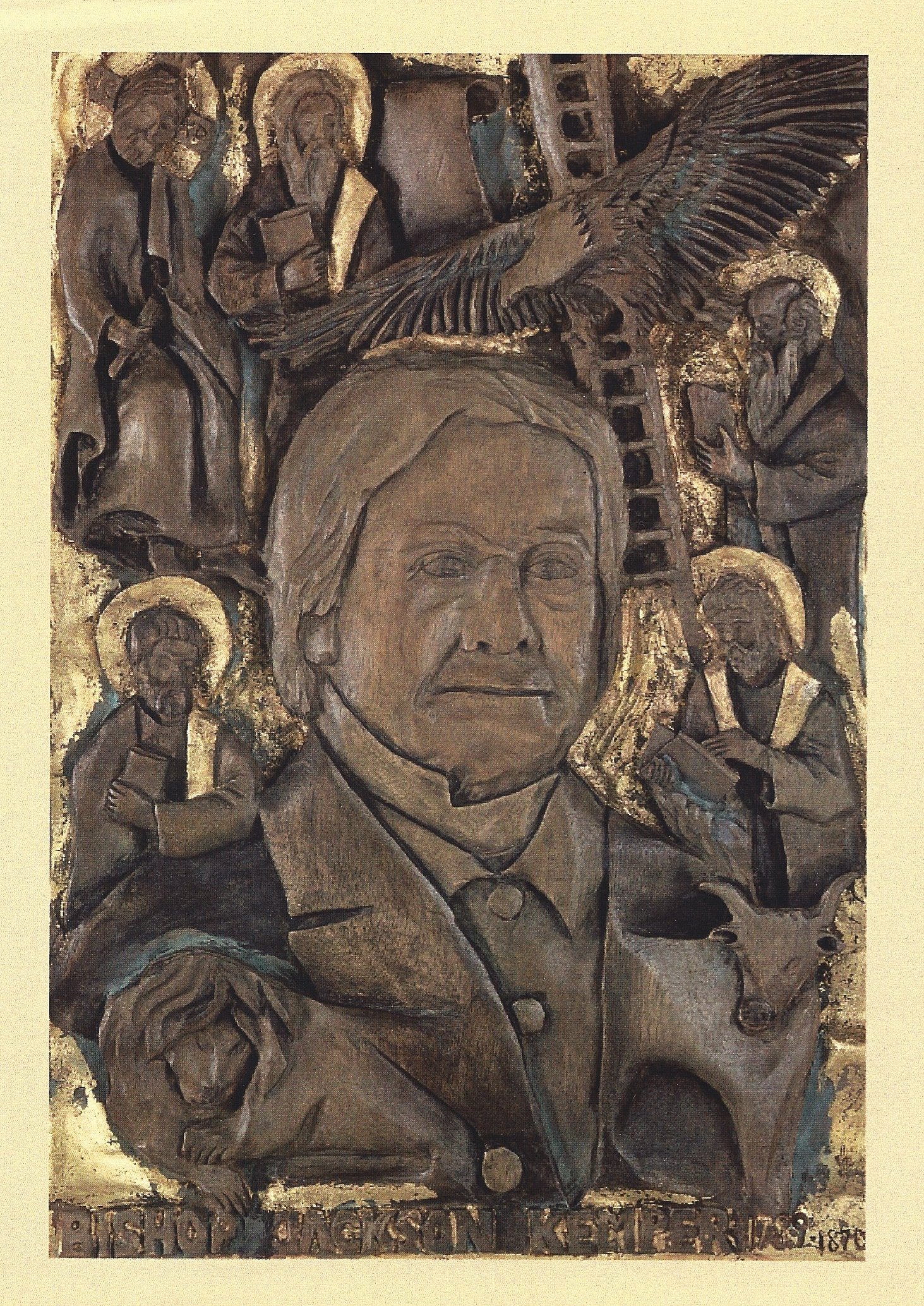
Icon of Jackson Kemper created for the Sesquicentennial of the Diocese of Milwaukee

Icon of Jackson Kemper created for the Sesquicentennial of the Diocese of Milwaukee

Prayer for Mission

Lord Jesus Christ, you stretched out your arms of love on the hard wood of the cross that everyone might come within the reach of your saving embrace: So clothe us in your Spirit that we, reaching forth our hands in love, may bring those who do not know you to the knowledge and love of you; for the honor of your Name. Amen. (BCP 101)

+ + + + +

Today, in addition to the Feast of Jackson Kemper, First Missionary Bishop of the Episcopal Church, we also observe the Ember Days, traditional days of prayer for all ministry, and especially for the ordained leaders of the church.

It’s a very appropriate serendipity, since Jackson Kemper was particularly concerned to ensure that there were clergy trained and suited for ministry in “the scattered settlements of the West.”

With James Lloyd Breck and others, he founded Nashotah House near Delafield, Wisconsin as a Benedictine community from which clergy would go out and minister to the surrounding area. With James DeKoven, he established Racine College, now the DeKoven Center, as a school emphasizing both education and worship in the “Ritualist” (Anglo-Catholic) style.

Jackson Kemper served as the first Bishop of Wisconsin from 1859 until his death, so all three dioceses in the state — Milwaukee, Fond du Lac, and Eau Claire — trace their beginnings to him.

The Episcopal Church in Wisconsin properly honors these “local saints” and their mission to “bring those who do not know Jesus to the knowledge and love of him.” That is the mission we all share to this day.

+ + + + +

For the Ministry (Ember Days)

O God, you led your holy apostles to ordain ministers in every place: Grant that your Church, under the guidance of the Holy Spirit, may choose suitable persons for the ministry of Word and Sacrament, and may uphold them in their work for the extension of your kingdom; through him who is the Shepherd and Bishop of our souls, Jesus Christ our Lord, who lives and reigns with you and the Holy Spirit, one God, for ever and ever. Amen. (BCP 256)

Our common life

20130523-060723.jpg

I had a Twitter exchange with a fellow Episcopalian, Brendan (@indybrendan), last night about the Daily Office.

He said he couldn’t get into Morning Prayer because he’s not a morning person, but he’d be glad to pray for me during Compline before he went to bed.

Megan (@revlucymeg) piped up and said, “that’s why we have a daily cycle — everyone takes an office,” and I promised I’d have Brendan’s back at Morning Prayer. This is how the Church fulfill’s St. Paul’s admonition to “pray without ceasing.”

On Thursdays there’s a baptismal slant in Morning Prayer. Canticle 8 (BCP 85), appointed to follow the Old Testament lesson, recounts the Exodus — linked in Christian imagination to the Easter Vigil and baptism. The Collect for Guidance, customarily read on Thursdays, places our identity and our work in God, in whom “we live and move and have our being” (BCP 100). In the first Prayer for Mission on that same page we pray to our heavenly Father for “all members of your holy church, that in their vocation and ministry they may truly and devoutly serve you.”

I added this morning, in honor of Brendan, a favorite prayer from Compline that underscores our mutual dependence, not only as members of the Church united by Baptism, but also as creatures united by life on God’s round Earth.

O God, your unfailing providence sustains the world we live in and the life we live: Watch over those, both night and day, who work while others sleep, and grant that we may never forget that our common life depends upon each other’s toil; through Jesus Christ our Lord. Amen. (BCP 134)

Ordinary Time

Summer Offices

Now it’s finally summer, so to speak, in the Church Year.

After yesterday’s glorious Feast of Pentecost at St. Thomas — a gracious Rite I service of Holy Eucharist at 8 am, the final class of Episcopal 101 at 9 am, a Spirit-filled Rite II service of Holy Eucharist at 10 am, a “Bake Auction” where we raised $400 for camp scholarships (rhubarb pie is the clear favorite), followed by a double session of EfM and a Choral Evensong at All Saints’ and topped off by a quiet evening on patio and back porch — it felt really good this morning to keep it simple.

We’re back in Ordinary Time.

What this means in the Daily Office — Morning Prayer, especially — is that we pare back the Alleluias a bit, we switch from the Christ our Passover invitatory back to Venite or Jubilate, we turn in the lectionary to BCP 966 (Proper 2 — Week of the Sunday closest to May 18), and we begin the readings in the long, slow “green” season of the Church Year. There will be only a couple of interruptions to this steady flow until late November, about 26 weeks from now.

Half of the Church Year is filled with the seasonal feasts and fasts of Advent, Christmas, Epiphany, Lent, Easter, and Pentecost.

The other half, thank God, is Ordinary Time.

+ + + + +

O God, in the course of this busy life give us times of refreshment and peace; and grant that we may so use our leisure to rebuild our bodies and renew our minds, that our spirits may be opened to the goodness of your creation; through Jesus Christ our Lord. Amen. (BCP 825)

The Spirit renews the face of the earth

20130519-053601.jpg

Alleluia. The Spirit of the Lord renews the face of the earth:
Come let us adore him. Alleluia.

Now we have received not the spirit of the world, but the Spirit that is from God, so that we may understand the gifts bestowed on us by God (1 Cor. 2:12).

Alleluia. The Spirit of the Lord renews the face of the earth:
Come let us adore him. Alleluia.

Praying the Psalms

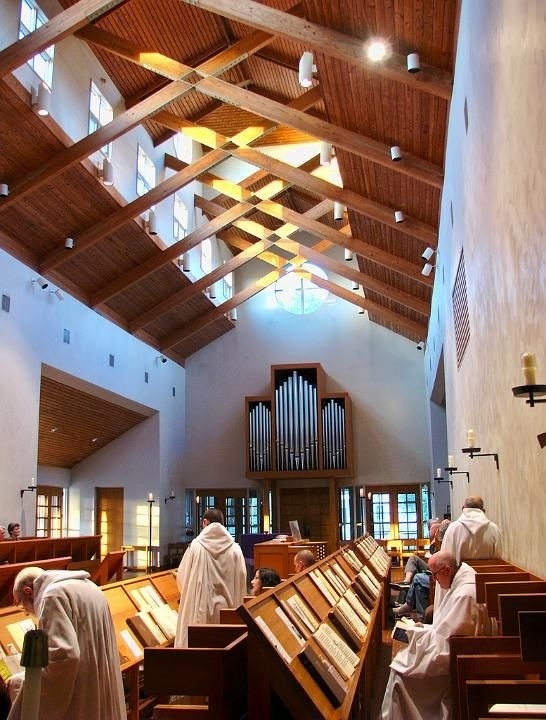
St. Gregory's Abbey Church, Three Rivers MI

St. Gregory’s Abbey Church, Three Rivers MI

From Fr. Steve Rice’s post yesterday, entitled “Who cares about the Kings of Tarshish and Saba?”:

You can’t really explain praying the psalter, you just have to do it. You have to listen to it, observe it, it needs to wash over you as the antiphonal recitation crashes again and again like waves on the beach. And you have to know it will be hard.

Whether you follow Thomas Cranmer’s 30-day outline for praying the Psalms (as Fr. Steve’s parish does), the Daily Office lectionary’s seven-week cycle, the Bible Challenge’s daily passages, or whether you use the Daily Prayer app from Forward Movement on your iPhone, the Psalms form the heart of the Church’s daily prayer.

The seeming randomness by which Psalms are assigned to any given day, no matter what method you use, can cause newcomers to the Office no little confusion.

Br. Abraham of St. Gregory’s Abbey, the Benedictine order in Three Rivers, Michigan, writes this about praying the Psalms in the Easter 2007 Abbey Letter:

This schedule causes us to recite seemingly inappropriate psalms sometimes: happy ones on solemn fasts, and sad ones on happy feasts. It also means that at any time of day, a particular monk might be reciting a psalm that does not match his mood at the time. While that can be distressing for someone not used to it, it has become a great comfort for many people throughout history. It reminds us that our situations and feelings are not permanent; the psalms sung at Friday Sext might not fit a particular monk’s concerns this week, but they might perfectly meet the needs of the monk next to him or of one of the guests in the church, and they might coincide with his own next week. It also reminds us that the prayer is not all about the individual. Corporate prayer is corporate prayer – not private prayer (there are times of day set aside for private prayer).

Psalm 102, appointed for this morning, highlights one of my favorites reasons for praying the Psalms — they give voice to our human concerns, especially our complaints. The psalms are not “pious”:

I lie awake and groan;
I am like a sparrow, lonely on a house-top.
My enemies revile me all day long,
and those who scoff at me have taken an oath against me. (Psalm 102:7-8)

So give yourself permission to plunge into the psalms and take them as they come. Let them speak to you and give voice to your concerns — or to the concerns of those around you if their mood does not match yours. And let the psalms, day by day, week by week, lift you from your concerns to contemplate God’s goodness.

In the beginning, O LORD, you laid the foundations of the earth,
and the heavens are the work of your hands;
They shall perish, but you will endure; they all shall wear out like a garment;
as clothing you will change them,  and they shall be changed;
But you are always the same,
and your years will never end.
The children of your servants shall continue,
and their offspring shall stand fast in your sight. (Psalm 102:25-28)

A sure and steadfast anchor

20130514-073140.jpg

Three times in the two-year cycle of Daily Office readings we get the chance to celebrate the “patronal feast,” so to speak, of the Daily Office Anchor Society.

“We have this hope, a sure and steadfast anchor for the soul” (Heb. 6:19).

The other readings assigned for today give us a sense of the particular flavor of the Christian hope.

Ezekiel is prophesying against Israel, speaking God’s word of wrath against the wayward people. “According to their way I will deal with them; according to their own judgments I will judge them. And they shall know that I am the Lord” (Ezek. 7:27). God is mighty and holy, and we are prone to fall away into sin and forget how we have been blessed.

Canticle 13, suggested for Tuesday mornings, is a song of praise, but it underscores God’s remoteness as we sing of God “seated between the Cherubim … in the high vault of heaven” (BCP 90).

In the reading from the Letter to the Hebrews, however, we see Jesus, our great high priest, bridging the gap between us and God. For “we have this hope, a sure and steadfast anchor of the soul, a hope that enters the inner shrine behind the curtain, where Jesus, a forerunner on our behalf, has entered, having become a high priest forever according to the order of Melchizedek” (Heb. 6:19-20).

No longer are we distant from the mighty and holy God, who in “Christ Jesus came into the world to save sinners” (1 Tim. 1:15). No longer can anything separate us from the love of God, for now God’s only Son intercedes for us. Jesus, having ascended into heaven, takes our humanity — takes us — with him into the inner shrine, into the presence of God. We now live for all time in the heart of God.

That intimate and enduring union with God is ours through Jesus, the “forerunner on our behalf,” and this particularly Christian hope is indeed a “sure and steadfast anchor” for our souls.

Meant for a sign

20130513-192835.jpg

“Ford was humming something. It was just one note repeated at intervals. He was hoping that someone would ask him what he was humming, but nobody did. If anybody had asked him he would have said he was humming the first line of a Nöel Coward song called ‘Mad About the Boy’ over and over again. It would then have been pointed out to him that he was only singing one note, to which he would have replied that for reasons that he hoped would be apparent, he was omitting the ‘about the boy’ bit. He was annoyed that nobody asked.” ~Douglas Adams, Life, The Universe and Everything

Reading today’s passage from the Book of Ezekiel reminds me of this bit from the third of five books in the Hitchhiker’s Guide to the Galaxy trilogy.

Ezekiel is doing something with Legos, and then he’s putting up a wall and very pointedly staring at it, and then he is lying on one side, and then on the other, and then he is making some really disgusting bread and burning it over a fire made of — what is that! — oh, it’s just cow’s dung.

… oh, whatever!

I’ll bet Ezekiel’s annoyed that no one has asked him what he’s doing. If he tried to explain it, though, he’d have about as much luck as Douglas Adams’ Ford Prefect making anyone understand.

The weird things we do — like going to church on Sundays, praying out of a book twice a day, or reading (on purpose, yet!) about crazy old Ezekiel — are meant for a sign. It’s not the actions themselves that are the sign, though.

We’re the ones who are meant to be transformed by our discipline of prayer and Scripture study, transformed more and more by our obedience into the likeness of Christ, living into our calling to be a light to the nations. I think people will ask us what we’re doing when what we’re doing has made us more peaceful and made a visible difference in the lives of those around us.

So don’t be annoyed and don’t be a one-note Johnny — and don’t, for goodness’ sake, cut off half your beard like Ezekiel will do tomorrow! Instead, be faithful, be disciplined, be “Mad About the Boy” who is our living Lord Jesus.

Aids to Prayer

20130512-060338.jpg

It’s hard not to get centered and still when you have two cats stretched out on your legs helping you say Morning Prayer.

What aids to prayer have you incorporated into your daily practice?

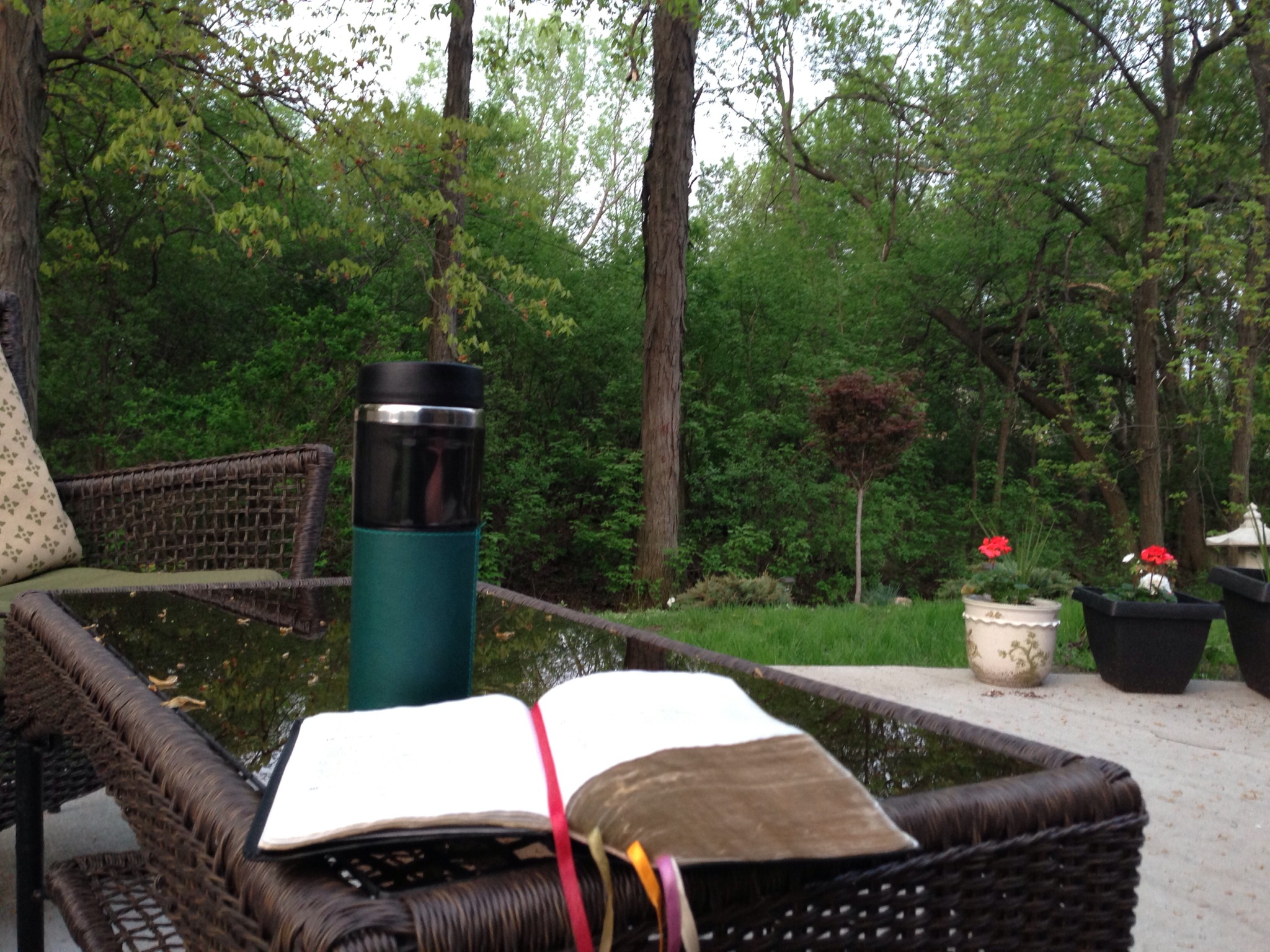
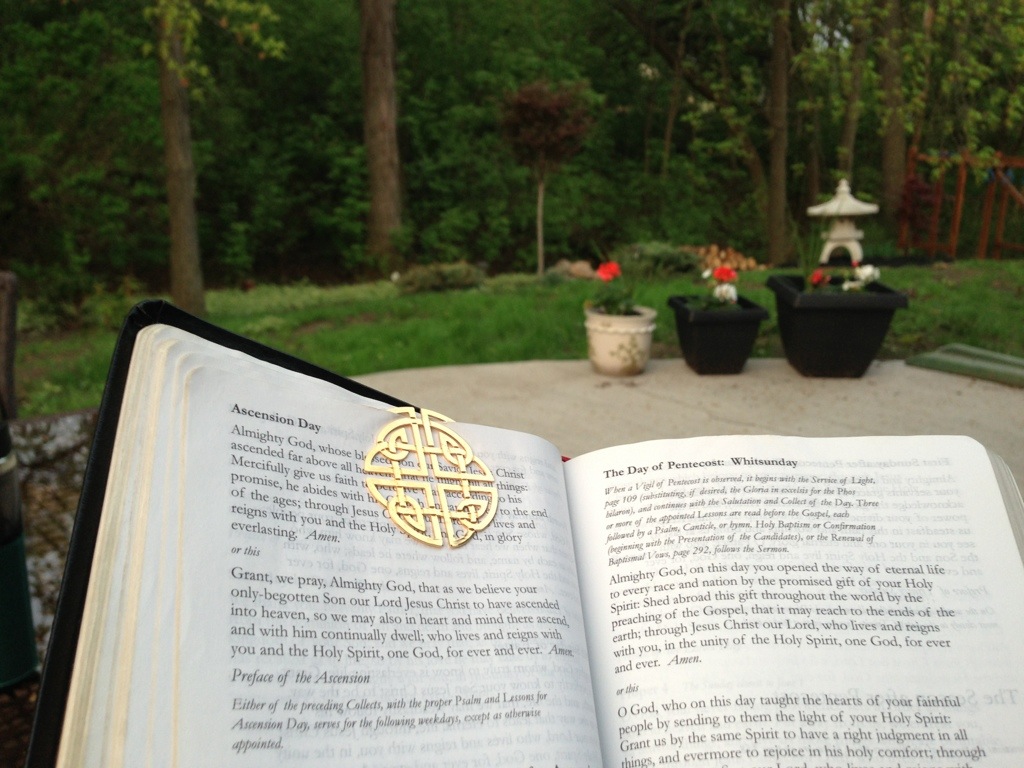
Do you have a favorite place to sit? A mug of coffee or tea close to hand? Music, or silence, or some of each? A favorite picture or icon to look at?

What helps “exalt you to that place where our Savior Christ has gone before,” in the words of today’s Collect (BCP 226)?